





















Ductless mini splits have gotten ridiculously good. The latest models cool faster, heat in subzero weather, and sip electricity at rates that would've seemed impossible five years ago. SEER2 efficiency standards took full effect in 2023, R32 refrigerant is replacing R-410A across the industry, and federal tax credits under IRC 25C still cover up to $2,000 per qualifying heat pump installation through 2032.
We evaluated dozens of units and narrowed the field to five. Each one fills a distinct role. The best ductless air conditioner for a quiet bedroom isn't the same as the best pick for a garage you want to cool on weekends. So we tested for different priorities and matched each recommendation to a specific buyer.
What Makes a Ductless Mini Split Worth Buying in 2026
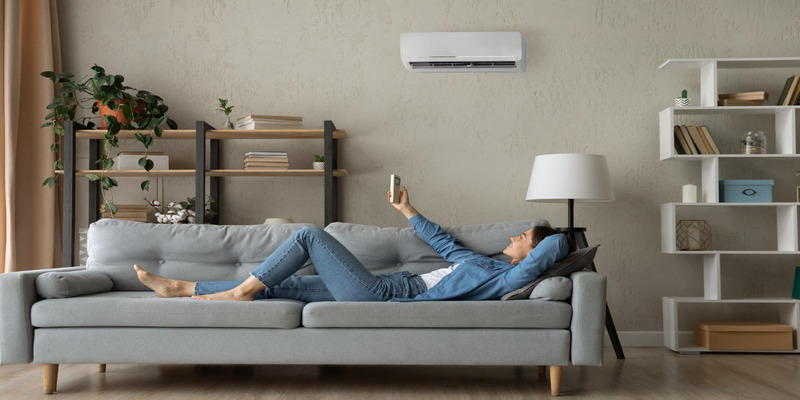
A ductless room air conditioner moves heat between an outdoor compressor and a wall-mounted indoor head through a thin refrigerant line. No ductwork. No 40-pound window unit to wrestle into place twice a year. No energy bleeding through leaky ducts, which the DOE estimates accounts for roughly 30% of a central system's consumption.
They also double as heat pumps. Cool in summer by pulling heat out of indoor air, then reverse the process in winter. The best models now operate at outdoor temperatures as low as -15 F, making them viable primary heating systems even in the Northeast and Upper Midwest.
Prices range from about $700 for a budget single-zone unit (equipment only) to $5,000+ for a premium system fully installed. That gap is significant. The right choice depends on your room size, climate, and how much you value features like smart sensors, air filtration, and cold-weather heating capacity. Every unit on this list requires professional installation except the MRCOOL, so factor $1,500 to $3,000 in labor into your budget for the other four.
How We Evaluated These Units
Any comparison of ductless air conditioners comes down to trade-offs. We scored candidates across seven categories. Cooling and heating output at rated and extreme temperatures. SEER2, HSPF2, and EER2 efficiency numbers. Indoor noise at minimum fan speed. Smart home integration and app quality. Installation complexity. Warranty terms. And the ratio of performance to price, because a 33 SEER2 best mini split that costs $5,000 installed doesn't always make financial sense over a 20 SEER2 unit at half the price.
1. Mitsubishi MSZ-FS Deluxe. Best Overall Ductless Air Conditioner
The i-see 3D infrared sensor is the reason this unit sits at the top. It scans the room continuously, maps thermal zones, and detects where people are sitting or standing. Then it directs conditioned air toward or away from occupants depending on your preference. No other wall-mounted single-room air ductress conditioner system matches that level of precision.
Efficiency numbers back up the tech. The MSZ-FS hits up to 33.1 SEER and 13.5 HSPF, with indoor sound levels that drop to 20 dB at low fan speed. Quieter than a whisper in a library. Dual Barrier Coating on internal coils, vanes, and the fan resists dust and grease buildup, so efficiency doesn't degrade over the years the way it does on cheaper units. Triple filtration (Nano Platinum, Electrostatic, Anti-Allergy Enzyme) handles airborne particles and allergens without a separate purifier.
Need cold-climate heating? The FH variant adds Hyper-Heat capability down to -13 F. BTU options span 6,000 to 18,000, covering rooms from roughly 250 to 800 square feet.
The catch is price. Expect $3,000 to $5,000+ fully installed, and Mitsubishi's Kumo Cloud Wi-Fi adapter runs extra. If you just need to cool a workshop or guest room on a budget, this is overkill. But for a primary living space where comfort, air quality, and long-term reliability matter, we haven't found anything better. Diamond Dealers extend the warranty to 10 years.
|
Capacity |
Coverage |
SEER |
Noise Level |
Warranty |
|
6,000-18,000 BTU |
250-800 sq ft |
Up to 33.1 |
20 dB |
10 yr (Diamond Dealer) |
2. Fujitsu Airstage LZAS1. Best Mini Split for Pure Efficiency
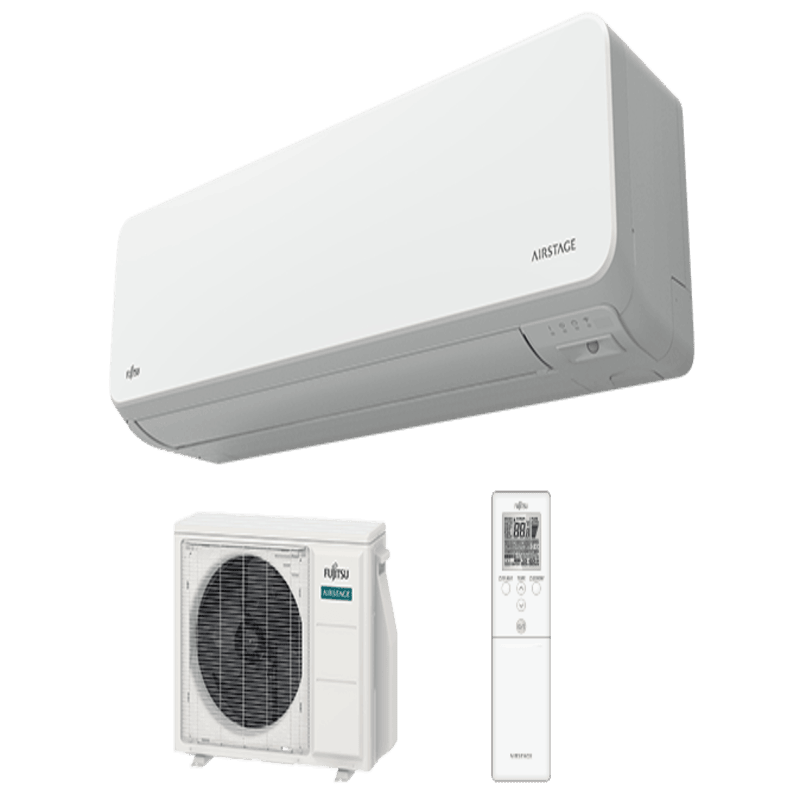 Here's what surprised us about the Fujitsu. The 9K BTU LZAS1 matches Mitsubishi's 33.1 SEER2, but then beats it on heating efficiency with a 14.2 HSPF2. That's the highest we found in any residential mini split. If you're in a cold climate and the system runs as a heat pump through winter, Fujitsu saves you more per month than any other brand we tested.
Fujitsu recently rebranded the Halcyon line to Airstage. The engineering DNA hasn't changed. XLTH (Extra Low Temperature Heating) variants push the operating range down to -15 F, two degrees colder than Mitsubishi's Hyper-Heat. Indoor noise sits around 19 dB at minimum output. Ion deodorization filters handle odors. And installed pricing typically runs $500 to $1,000 less than a comparable Mitsubishi setup.
The trade-off? Fujitsu's US dealer network is smaller. Replacement parts can take longer to source depending on your location. Wi-Fi isn't built into every model, so you may need an add-on adapter. And Fujitsu voids the warranty on any self-installed unit. Zero exceptions, zero gray area.
|
Capacity |
Coverage |
SEER2 |
Noise Level |
Warranty |
|
9,000-15,000 BTU |
350-600 sq ft |
Up to 33.1 |
19 dB |
Up to 10 yr (authorized contractor) |
3. Daikin LV Series. Best Ductless Air Conditioner for Air Quality
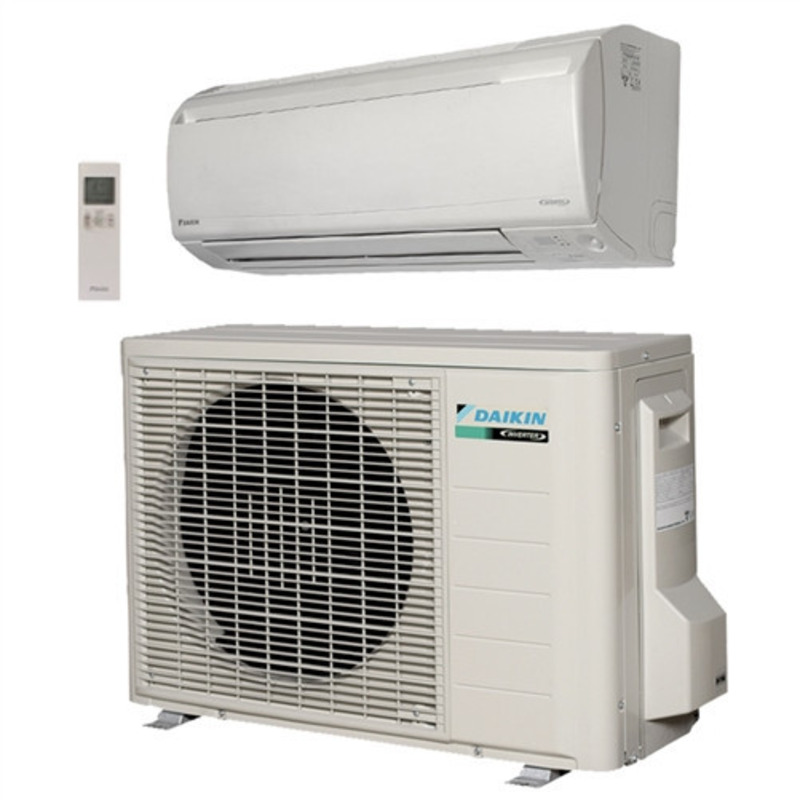 Daikin's SEER2 numbers (19.5 to 21 depending on capacity) don't top this list. The LV Series earned its spot for a different reason.
R32 refrigerant adoption puts Daikin years ahead of most competitors on the AIM Act transition. R32 carries a lower global warming potential and transfers heat more effectively than R-410A, which means slightly better real-world efficiency from the same hardware. But the air quality features sold us. The Titanium Apatite Photocatalytic Air Purifying Filter breaks down odors, dust, and allergens at a chemical level rather than just trapping them behind a mesh screen. That's a meaningful difference for allergy sufferers and homes with pets.
Daikin's Intelligent Eye sensor detects human presence and dials output down when rooms empty out. In our testing, that feature cut energy consumption by roughly 20 to 25% in spaces that sat vacant for portions of the day. Blue Fin coil protection resists salt corrosion for coastal installations. BTU options span 9,000 to 24,000, the broadest range in our lineup.
Two things to watch. The LV 24K weighs roughly 190 pounds and needs reinforced wall mounting. And some Entra owners have reported thermistor failures, though these appear isolated rather than widespread.
|
Capacity |
Coverage |
SEER2 |
Noise Level |
Warranty |
|
9,000-24,000 BTU |
350-1,500 sq ft |
19.5-21 |
31-37 dB |
10-12 yr |
4. MRCOOL DIY 5th Gen. Best Mini Split for Homeowner Installation
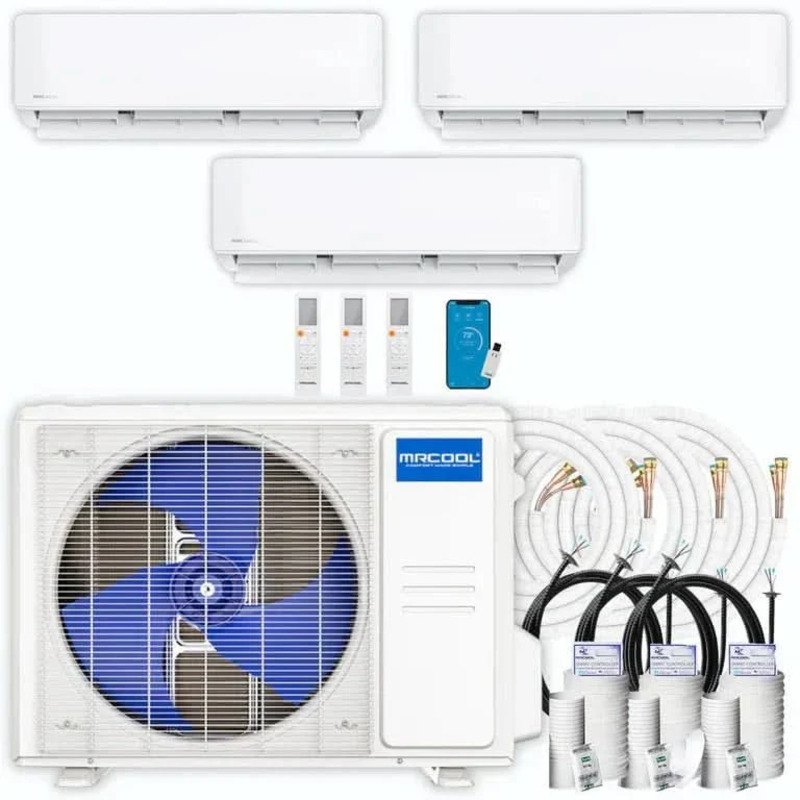 Every other unit on this list voids its warranty if you install it yourself. MRCOOL built its entire brand around the opposite approach.
Pre-charged quick-connect line sets eliminate vacuum pumps and refrigerant gauges. The DIYPRO cable removes the requirement for electrical conduit. MRCOOL's Smart HVAC app walks you through each step. We saved an estimated $1,500 to $2,500 in labor, and the warranty stayed fully intact. That's rare in this industry.
The 5th Gen bumps multi-zone efficiency to 24 SEER2 and single-zone 12K units to about 22 SEER2. Energy Star certification covers the 12K, 18K, and 24K single-zone models. Gold Fin condenser coating resists corrosion, making it a strong pick for Gulf Coast and Atlantic shoreline homes where salt air eats through standard aluminum coils. Size options run from 12,000 to 36,000 BTU in single-zone, with multi-zone configurations supporting up to five indoor heads.
It isn't perfect. MRCOOL still uses R-410A rather than R32, so it's less future-proof than the Daikin. Efficiency trails the Japanese premium brands. Indoor heads are bulkier and less refined-looking. And "DIY" still involves drilling a 3-inch hole through an exterior wall and mounting a 60+ pound unit on a bracket. This isn't hanging a picture frame.
|
Capacity |
Coverage |
SEER2 |
Noise Level |
Warranty |
|
12,000-36,000 BTU |
550-1,550 sq ft |
Up to 24 |
34-40 dB |
Lifetime compressor, 5 yr parts |
5. Senville LETO. Best Value Ductless Room Air Conditioner
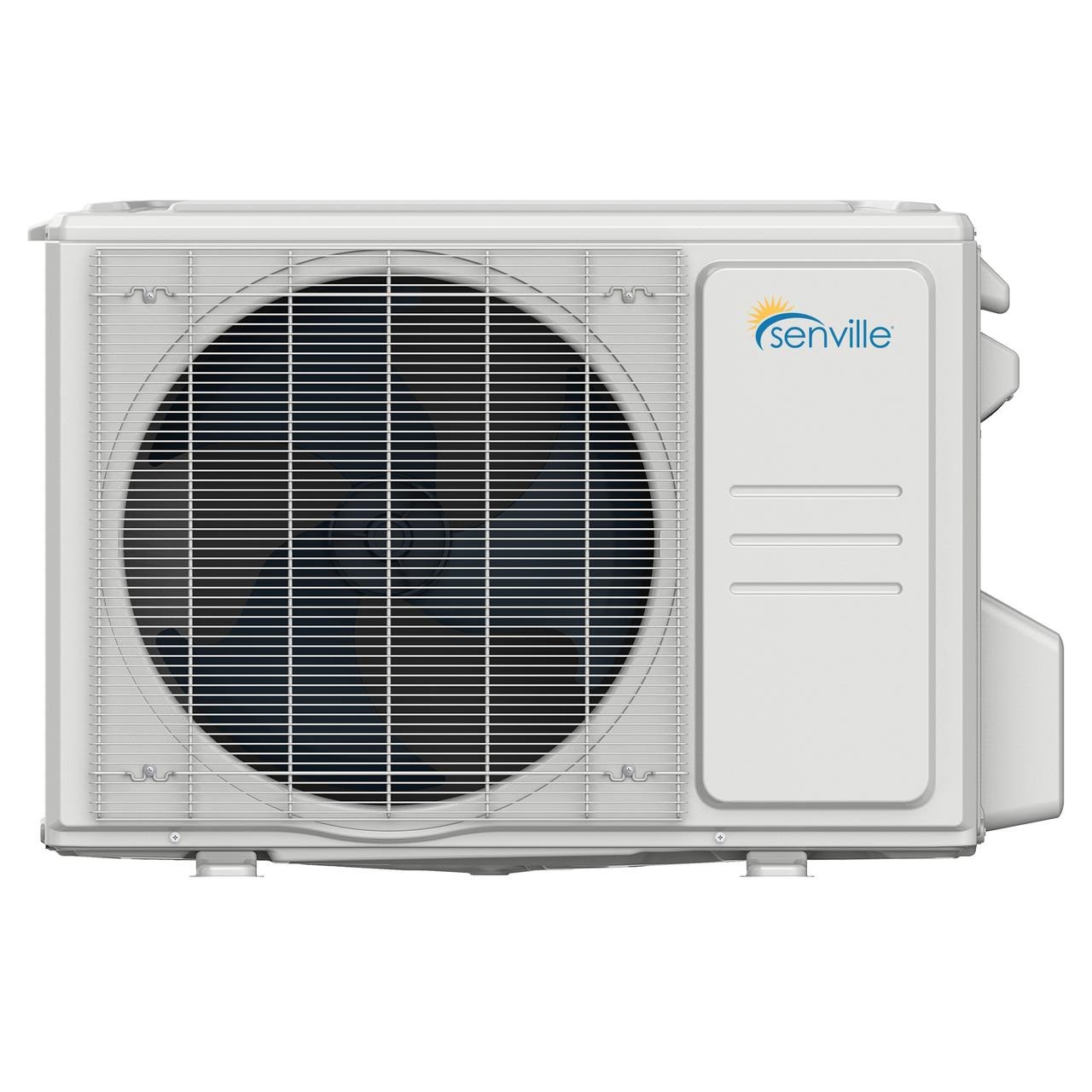 Senville doesn't carry the name recognition of Mitsubishi or Daikin. But the LETO line delivers where it counts, and the price gap is hard to ignore.
The 30,000 BTU model earned Energy Star certification with an 18.6 SEER rating and ships with built-in Wi-Fi and Amazon Alexa voice control out of the box. No adapter. No extra setup. Across the LETO range (9K to 30K BTU), efficiency ratings fall between 18 and 25+ SEER depending on unit size. Select models heat down to 5 F. Pricing starts around $700 for the 9K unit, roughly $800 to $1,500 less than comparable capacity models from the premium brands above.
What you give up at this price point is predictable. The 5-year warranty is shorter than Mitsubishi, Fujitsu, or Daikin. Some models lack Apple HomeKit and Google Home integration. Noise levels run slightly higher than the Japanese competition. And Senville's track record simply doesn't have the decades of field data behind it that the established brands do. For a primary bedroom or main living space, we'd push you toward the Mitsubishi or Fujitsu. For a guest room, bonus room, or garage? The LETO punches well above its price.
|
Capacity |
Coverage |
SEER |
Noise Level |
Warranty |
|
9,000-30,000 BTU |
400-1,500 sq ft |
18-25+ |
35-52 dB |
5 yr |
How to Choose the Right Ductless Mini Split for Your Space
Sizing Your Unit
Start with roughly 20 BTU per square foot. A 300 sq ft bedroom needs about 6,000 BTU. A 500 sq ft living room calls for 9,000 to 12,000 BTU. Bump those numbers up 10 to 15% for high ceilings, heavy sun exposure, poor insulation, or climates where outdoor temps regularly exceed 100 F. Undersized units run constantly without reaching your set temperature. Oversized units short-cycle, waste energy, and fail to dehumidify properly.
SEER2 Ratings and Your Electric Bill
The federal minimum sits at 14.3 SEER2. Moving to a 20 SEER2 unit cuts seasonal cooling energy use by about 29%. At national average electricity rates, that gap translates to roughly $80 to $150 per year on a single-zone system running 8+ hours daily through summer. Over a 15-year lifespan, the savings often exceed the price difference between a mid-tier and premium unit.
Don't forget the tax credit. You can claim 30% of project cost (up to $2,000 per year) under the IRC 25C heat pump credit through 2032.
Single-Zone vs. Multi-Zone
One indoor head handles one room. That's a single-room ductless AC setup, and it's the most cost-effective way to cool or heat a specific space. Multi-zone systems connect two to five indoor heads to a single outdoor compressor and run $3,000 to $20,000+ depending on configuration and brand. Each head operates independently, so you only condition rooms you're using.
Making Any Mini Split Smarter with a Retrofit Controller
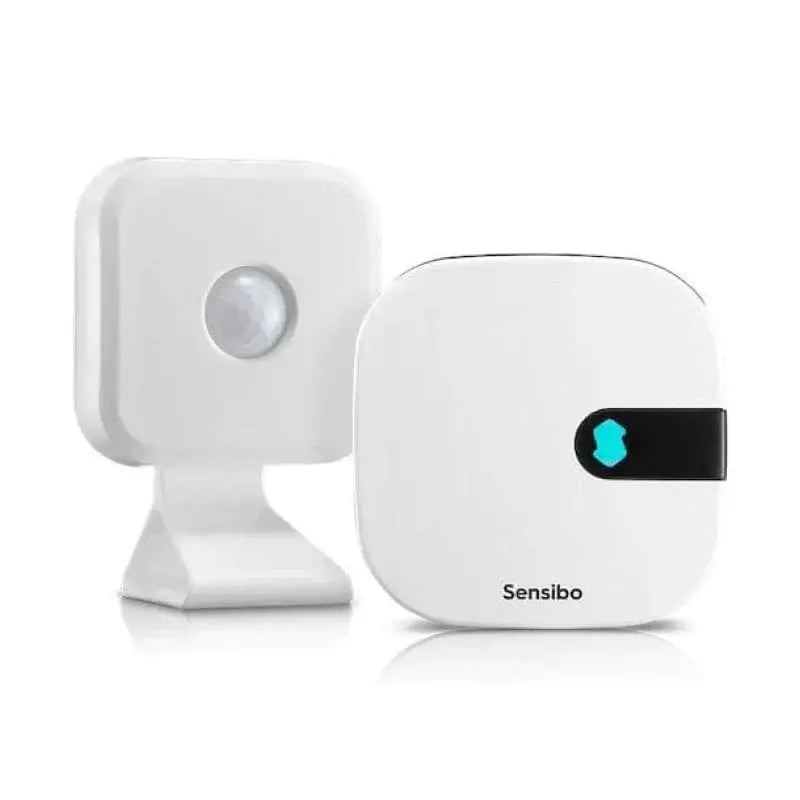
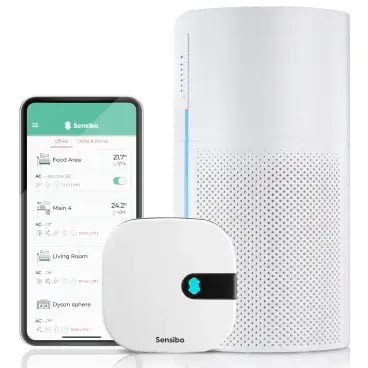
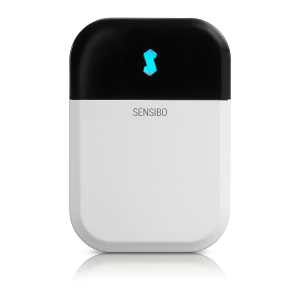
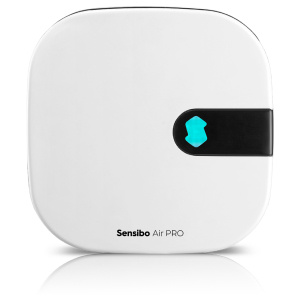
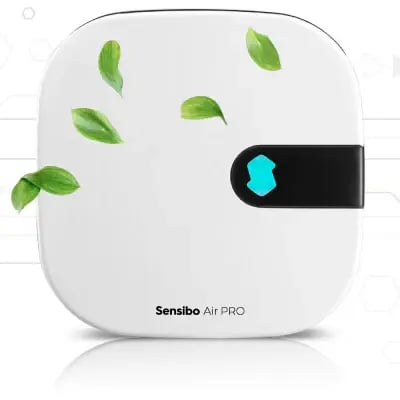
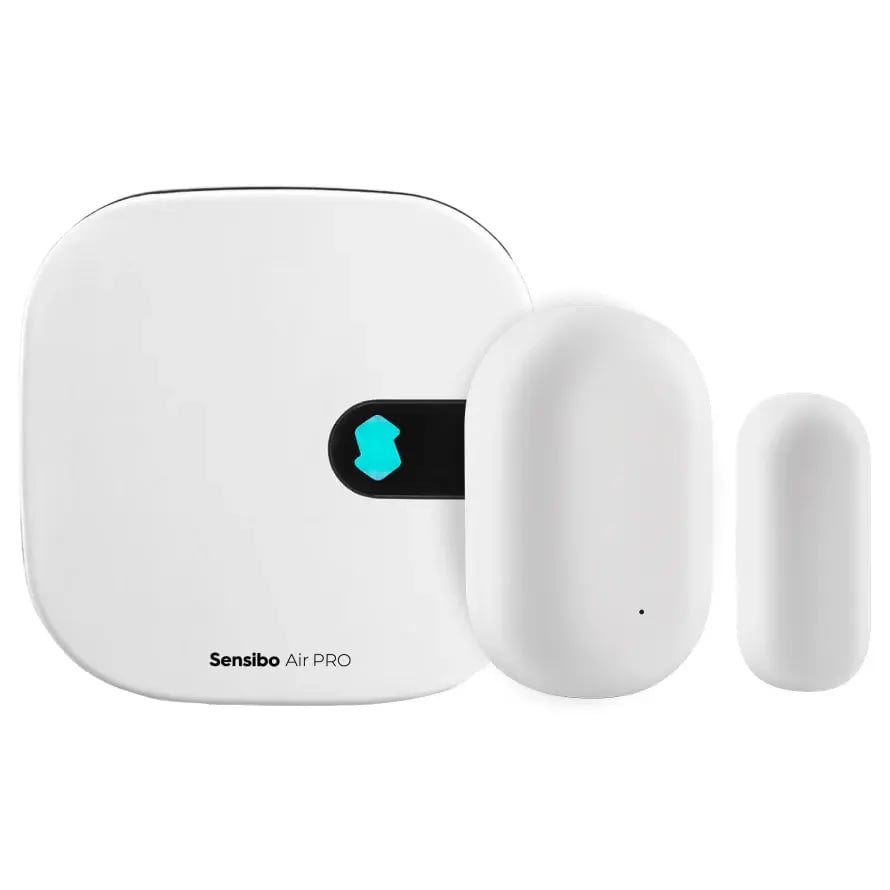
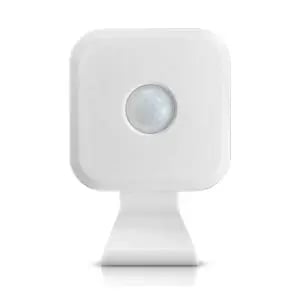
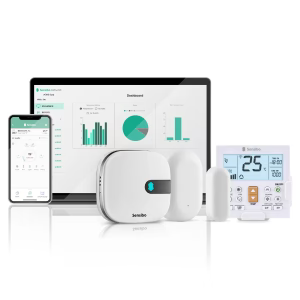
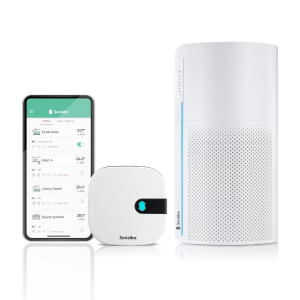
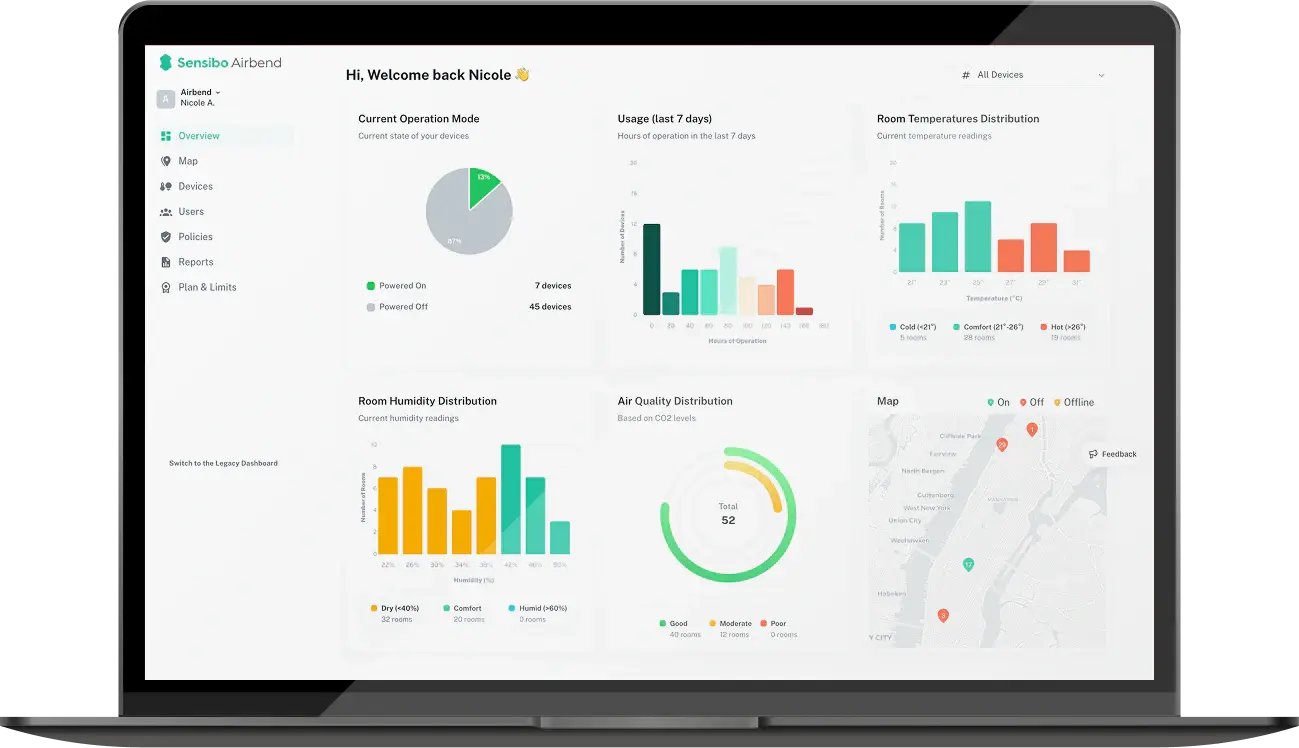
Several of the best mini split systems on this list lack built-in Wi-Fi or ship with basic remote controls. A retrofit smart controller that clips onto any IR-controlled mini split and adds Wi-Fi remote access, 7-day scheduling, geofencing that turns the AC off when you leave and on when you return, and energy consumption tracking through a smartphone app. The Air Pro also monitors indoor air quality (TVOC, CO2 equivalent, PM2.5 particulate levels) and sends push notifications when air quality drops.
At $140 to $215, it's worth comparing against the manufacturer's own Wi-Fi adapter, which typically costs $50 to $150 but only adds remote control without the air quality monitoring or energy tracking.
Your Room Decides, Not the Brand Name
A $5,000 Mitsubishi doesn't cool a guest bedroom any better than a $700 Senville sized correctly for the space. Pick the unit that fits the room, then give it the smarts it needs to run efficiently.
.jpg?height=200&name=close-up-heat-pump-outside-home%20(2).jpg)