
































Mini splits have been standard in Asia and Europe for decades. In the U.S., they're finally catching on — especially as homeowners look for ways to cool room additions, older homes without ducts, or spaces where extending central air would cost a fortune.
But what actually is a mini split? How does it differ from a window unit or central AC? And is it the right choice for your situation?
This guide covers how mini splits work, the difference between ductless and ducted systems, real pros and cons, and how to decide if one makes sense for your home.
Mini Split Basics
A mini split is a cooling (and usually heating) system split into two parts: a compressor that lives outside and an air handler that mounts inside your room. Refrigerant lines connect them through a small hole in the wall — no ductwork required.
The "mini" part? That refers to the compact size compared to traditional central AC equipment. And "split" simply means the system is divided between indoor and outdoor components rather than packaged into one box like a window unit.
Central air conditioning blows cooled air through ducts hidden in your walls and ceilings. Mini splits skip that entirely. The indoor unit delivers conditioned air straight into the room, which cuts out the 25-30% energy loss that the U.S. Department of Energy attributes to ductwork leaks and thermal transfer.
Core Components
Every mini split, regardless of brand or price point, has three parts.
Outdoor Unit
This is the box sitting outside your home on a concrete pad or wall bracket. Inside: a compressor and condenser coil that handle the actual heat exchange. One outdoor unit can power a single indoor unit (single-zone setup) or connect to multiple air handlers throughout your home (multi-zone systems typically support 2-8 zones).
Indoor Air Handler
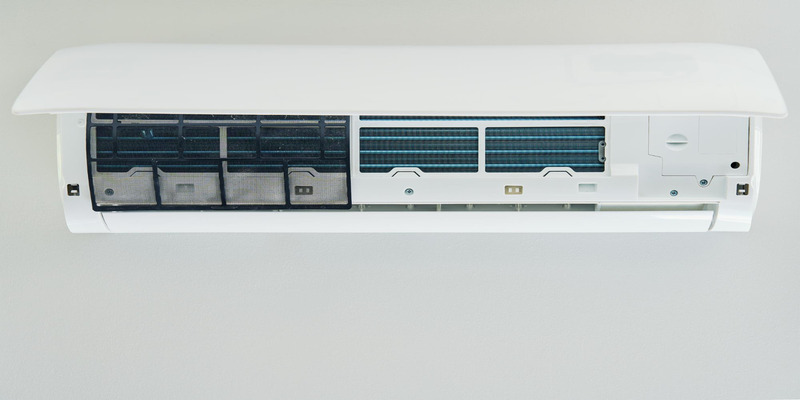
The part you actually see and interact with. It contains the evaporator coil and a fan that pushes cooled or heated air into your space. Wall-mounted units are by far the most common, but you'll also find ceiling cassettes that sit flush overhead, floor-standing consoles, and concealed units that tuck into closets or ceiling cavities.
Refrigerant Lines
Copper tubing that carries refrigerant between the outdoor and indoor units. The whole bundle — refrigerant lines, power cable, condensate drain — fits through a 3-inch hole in your wall. Way less invasive than tearing open ceilings to run ductwork.
Heating and Cooling in One System
Most mini splits on the market today are heat pumps. They cool in summer and heat in winter by reversing refrigerant flow. In cooling mode, the system pulls heat from your indoor air and dumps it outside. In heating mode, it extracts heat from outdoor air — yes, even when it's cold out — and moves it inside. One system, year-round comfort.
 Ductless vs. Ducted Mini Splits
When people say "mini split," they usually mean the ductless kind. But ducted mini splits exist too, and picking between the two types of mini split systems comes down to aesthetics, budget, and how your home is built.
Ductless Mini Split
A ductless mini split mounts the air handler directly in your living space. Wall units are the standard — you've probably seen them in hotels or Airbnbs — but ceiling cassettes and floor consoles work for rooms where wall mounting doesn't make sense.
No hidden components. The unit is right there on your wall, blowing air into the room. Installation is straightforward: mount the indoor unit, drill a 3-inch hole, connect the refrigerant lines to the outdoor unit, done. An experienced installer can finish a single-zone setup in half a day.
The tradeoff? You see the equipment. Some people don't mind. Others hate having a white rectangle on their wall.
Ducted Mini Split
A ducted mini split hides the indoor unit — typically in an attic, closet, or above a drop ceiling — and uses short duct runs to deliver air through vents. From inside the room, it looks like central air. Just vents in the ceiling or wall, no visible equipment.
This setup works well in homes where aesthetics matter or in spaces with existing soffits that can conceal short ducts. New construction sometimes uses ducted mini splits instead of traditional central HVAC to keep equipment smaller and efficiency higher.
The catch: installation costs more. You're adding ductwork (even if it's minimal), which means more labor and materials. And if those ducts aren't sealed properly, you lose some of the efficiency advantage that made mini splits appealing in the first place.
Should You Choose Ductless or Ducted Mini Split?
Ductless fits most homeowners: faster install, cheaper, works in nearly any room. Ducted costs more but hides all equipment behind vents, so it suits spaces where appearance matters — living rooms, master bedrooms, newly finished areas.
Why Choose a Mini Split System? Main Pros
Mini splits skip ductwork installation, deliver higher efficiency (20-30+ SEER2), allow room-by-room temperature control, run quieter than central AC or window units, and offer flexible mounting options for difficult spaces.
No Ductwork Needed
The biggest advantage of mini split systems is skipping ductwork entirely. Installing ducts in a home that doesn't have them runs $2,000–$7,000 or more depending on layout and accessibility. With a mini split, you're drilling a 3-inch hole per zone — not tearing into walls and ceilings for weeks.
Older homes, room additions, converted garages, finished attics — these spaces benefit most because duct installation would be either impractical or absurdly expensive.
Higher Efficiency Than Central Air
One of the main pros of mini split systems is energy savings. Central air loses conditioned air as it travels through ductwork, especially ducts running through hot attics or uninsulated crawl spaces. Mini splits deliver air directly into the room, so there's nothing to leak.
SEER2 ratings tell the story. Entry-level mini splits often start around 18-20 SEER2, while premium models push into the 25-30+ range. Central AC units rarely exceed 20-22 SEER2 unless you're paying top dollar. Over a 15-year lifespan, that efficiency gap adds up.
Room-by-Room Temperature Control
Each indoor unit operates independently — a practical benefit if different family members prefer different temperatures. Run the bedroom unit at night, shut off the living room. Cool the home office during work hours, ignore empty bedrooms. You're not conditioning 2,000 square feet to keep 200 square feet comfortable.
No more thermostat wars.
Quieter Than Central AC or Window Units
Window units rattle. Central AC blowers hum through every vent. Mini split indoor units run between 19-40 decibels depending on fan speed — about the noise level of a library or quiet conversation. Another advantage: the compressor sits outside, so the loudest component isn't in your living space.
Multiple Mounting Options
Wall too narrow? Use a ceiling cassette. No wall space at all? Floor console. Want it hidden? Ducted unit in the closet. This flexibility is a pro that central systems can't match — you can usually find a configuration that works, even in awkward rooms.
 What Are the Downsides of Mini Split Systems?
The main downsides are higher upfront cost ($2,500–$15,000+ installed), visible wall-mounted equipment, needing one indoor unit per zone, bi-weekly filter cleaning during heavy use, and mandatory professional installation.
Higher Upfront Cost
This is the main disadvantage of mini split systems. A single-zone setup runs $2,500 to $6,000 installed, while multi-zone systems range from $6,500 to $15,000+ depending on how many indoor units you need. Central air typically costs less per square foot if your home already has ductwork.
The efficiency savings offset some of this over time. But day one? Mini splits aren't the budget option.
Visible Indoor Units
Wall-mounted air handlers sit on your wall — usually a white rectangle near the ceiling. Ceiling cassettes and ducted units hide the equipment but cost more. If visible hardware bothers you, that's a real con to weigh.
One Unit Per Zone
Central air conditions your whole house through one system. Mini splits need a separate air handler in every room you want to heat or cool. Four rooms means four units mounted throughout the house, which adds to both equipment cost and visual clutter.
More Frequent Filter Maintenance
Most manufacturers recommend cleaning or vacuuming the filters every two weeks during heavy use. The filters are reusable — rinse under water, let dry, slide back in — but it's a task you'll repeat all summer. Central air filters get swapped every 1-3 months, and there's only one.
Professional Installation Required
Refrigerant handling requires EPA Section 608 certification. Improper installation leads to leaks, poor performance, and voided warranties. Most manufacturers won't honor warranty claims unless a licensed HVAC tech did the work.
Is a Mini Split Right for Your Home?
Mini splits work best for homes without existing ductwork, room additions, converted spaces like garages or attics, and situations where you want zone-by-zone control without a full HVAC overhaul. You just need to find your ideal size of an air conditioner. They're less ideal if you already have efficient ductwork or need to condition many rooms at once.
When Mini Splits Make Sense
- Older homes with no ductwork. Adding ducts to a 1920s bungalow or mid-century ranch means tearing into walls, ceilings, and floors. A ductless mini split avoids that entirely.
- Room additions and conversions. Finished basements, attic bedrooms, garage workshops, sunrooms — these spaces often sit outside the reach of existing HVAC. A single-zone mini split solves the problem without extending ductwork.
- Supplementing a weak central system. Got a room that's always too hot or too cold? Adding a mini split to that one problem area often costs less than reworking your entire duct system.
- Multi-family or rental properties. Separate units mean separate temperature control and separate utility tracking. Pair them with a smart AC controller to manage multiple units remotely — useful for landlords and property managers.
- Mild to moderate climates. Mini split heat pumps work year-round, but efficiency drops when outdoor temps fall below 5°F. If you're in Minnesota or Maine, expect to need backup heating for the coldest weeks.
When Central Air Makes More Sense
- Your home already has good ductwork. If ducts are in place, sealed, and running through conditioned space, central air is usually cheaper to install and maintain.
- You need to condition many rooms. A five-zone mini split costs $10,000–$15,000+. At that point, central air with a single outdoor unit and one air handler often wins on cost — assuming ducts exist or can be added reasonably.
You can't stand visible equipment. Even ceiling cassettes and ducted mini splits are harder to hide than simple vents. If that's a hard requirement, central air disappears into your walls more completely.
FAQ

.jpg?height=200&name=close-up-heat-pump-outside-home%20(2).jpg)
.jpg?height=200&name=photo_2024-05-09_19-37-08%20(1).jpg)
.jpg?height=200&name=photo_2025-02-07_20-01-26%20(1).jpg)