









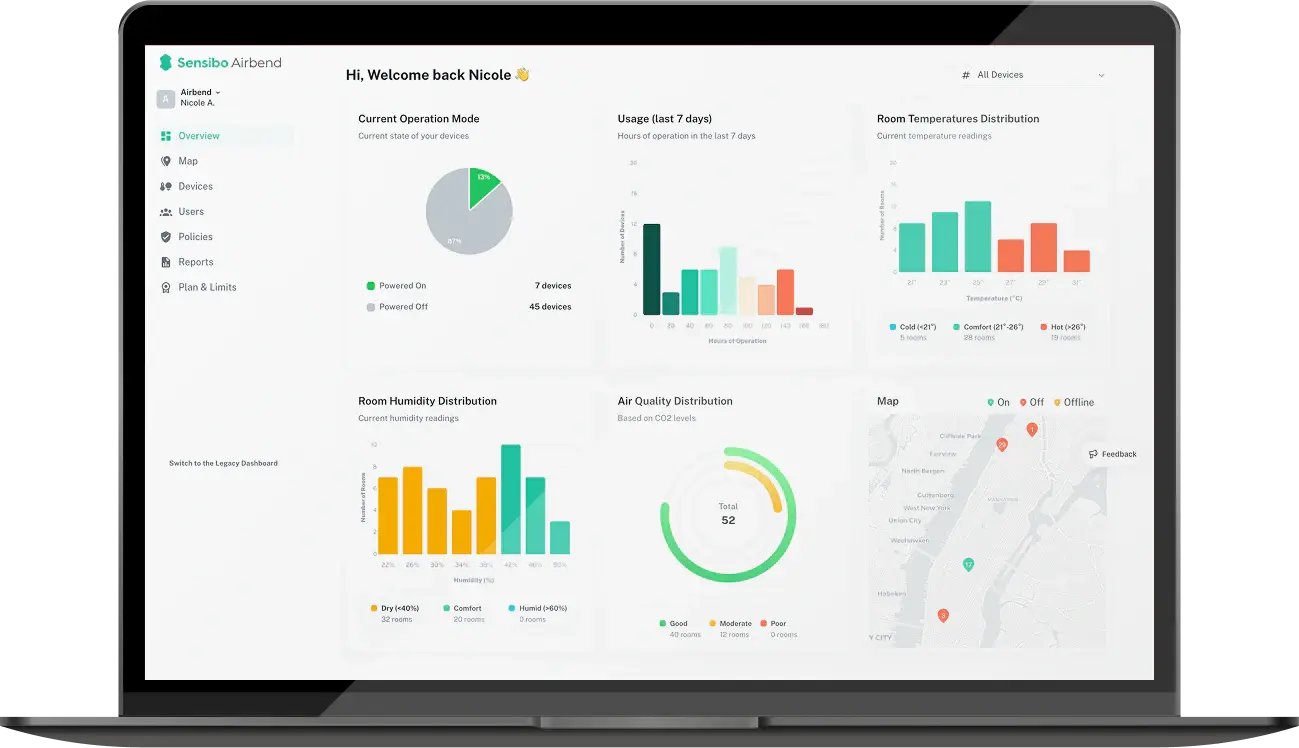











If you're managing climate across an office building, hotel, or retail chain, a consumer Nest or ecobee will not cut it. A commercial smart thermostat gives you centralized control over dozens or hundreds of HVAC units from a single dashboard, enforces temperature policies that tenants and guests cannot override, and feeds back the energy data your operations team needs to justify the spend. We tested five platforms built for that job.
What Makes a Commercial Thermostat Different from a Residential One
A commercial thermostat manages climate across spaces where multiple people, shifting schedules, and varying occupancy patterns all compete for the same HVAC resources. A residential model learns the habits of one household. A commercial platform enforces rules for an entire building, gives different access levels to managers, technicians, and occupants, and produces the energy data that facility teams need to justify operational spending.
|
Capability |
Residential Smart Thermostat |
Commercial Smart Thermostat |
|---|---|---|
|
Number of units managed |
1 per home |
Dozens to hundreds per building or portfolio |
|
User permissions |
Single owner account |
Admin, manager, technician, and end-user tiers |
|
Temperature policy enforcement |
Not available |
Lockout ranges, tamper-proof settings, compliance limits |
|
Energy reporting |
Basic usage history |
Per-zone, per-device, exportable analytics |
|
BMS and PMS integration |
Rarely |
BACnet, Modbus, hotel property management systems, open APIs |
|
Multi-zone HVAC control |
Sensor-based, limited |
Zone grouping, floor mapping, bulk scheduling |
|
Multi-site management |
No |
Single dashboard for multiple buildings |
That functional gap is real. A facility manager overseeing 200 AC units across three buildings cannot rely on a consumer app designed to adjust one thermostat from a couch.
How to Choose the Right Commercial Thermostat for Your Building
The right platform depends on four variables that narrow the field before feature comparisons even begin.
- Identify your HVAC type first. Ducted systems with wired thermostat connections point you toward Trane Pivot, Pelican, Sensi MTM, or ecobee SmartBuildings. Ductless mini-splits and split systems with IR remotes require a platform like Sensibo Airbend.
- Count your units and locations. A 10-thermostat office has different platform needs than a 300-unit hotel chain. Scale-ready platforms offer bulk actions, device grouping, and multi-site dashboards. Simpler tools work fine at smaller scale but create bottlenecks as you grow.
- Check integration requirements. BACnet or Modbus compatibility matters for buildings with existing automation. Hotels need PMS integration. Retail chains may need API access for custom reporting. Match the platform's integration layer to your operational stack.
- Calculate total cost of ownership beyond hardware. Monthly subscription fees, per-thermostat licensing, and professional installation costs add up across large deployments. Free-tier cloud management (Pelican) or low-cost subscriptions (Sensi MTM, Sensibo) reduce long-term spend.
5 Best Smart Thermostats for Commercial Buildings
 We ranked each platform on centralized management, multi-zone HVAC control, policy enforcement, energy analytics, and multi-site scalability. The first four serve ducted HVAC systems with wired thermostat connections. The fifth covers ductless and split systems controlled by infrared remotes.
1. Trane Pivot Smart Thermostat System
Trane built the Pivot system for light commercial applications where each piece of HVAC equipment connects to its own thermostat in a 1-to-1 configuration. The mobile app handles scheduling and user management across multiple buildings, and the system connects to Trane's Tracer Ensemble building automation platform for operators who need enterprise-level oversight across a campus or franchise network.
What sets Pivot apart for facility teams is the contractor portal. Building operators can grant their HVAC service provider remote access to thermostat status, trend data, and diagnostics, cutting down on unnecessary service visits. For franchise owners managing dozens of locations with a mix of building automation and standalone thermostats, the Ensemble integration brings everything under one roof.
⚡Best for light commercial buildings (restaurants, retail shops, small offices) running packaged rooftop units, VRF, or split systems with standard open-protocol controls. Supports multi-building management through a single platform.
2. Pelican Wireless Systems
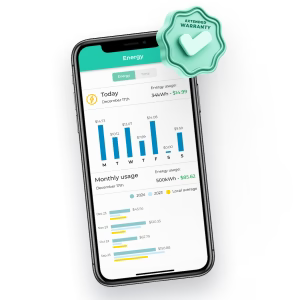
Pelican's platform stands out for one reason that matters to every budget-conscious facility manager. The base cloud management tier through Pelican's Site Manager is free. No monthly subscription, no per-thermostat licensing fee for core scheduling, monitoring, and alert functionality. Advanced usage analytics cost $2.99 per thermostat per year, a fraction of what competing platforms charge.
The system runs on a proprietary wireless mesh network rather than WiFi, which Pelican argues is more reliable for commercial buildings where WiFi coverage can be inconsistent across mechanical rooms, storage areas, and rooftops. Each thermostat monitors its HVAC unit in real time. If the space temperature fails to trend in the right direction for more than an hour after a heating or cooling call, the system sends a maintenance alert to designated staff by email or text.
The optional PEARL economizer module adds demand-control ventilation driven by a built-in CO2 sensor, bringing fresh outdoor air into the space only when occupancy levels require it. That feature alone addresses ventilation code requirements while cutting the energy penalty of conditioning unnecessary outside air.
⚡Best for small-to-mid commercial buildings (offices, retail chains, worship facilities, restaurants) with rooftop units. Particularly strong for multi-location operators who need unlimited thermostats on one login without recurring software costs.
 3. Sensi Multiple Thermostat Manager (Copeland/Emerson)
Sensi MTM gives facility managers a lightweight, web-based portal that consolidates all Sensi smart thermostats across a property into a drag-and-drop dashboard. The system covers the operational basics that most office and rental property managers need without the complexity of a full BMS.
Batch scheduling across grouped thermostats. Per-thermostat button lockout (choose which controls stay accessible to occupants). Temperature and humidity deviation alerts. Adjustable temperature ranges that prevent end-user misuse of HVAC systems.
The interface is deliberately simple. Sensi positions MTM as the step between manual thermostat rounds and a full building automation investment. For a property manager who previously walked floor to floor adjusting thermostats by hand, the time savings alone justify the cost. One office facility manager reported managing every thermostat in the building in under three minutes after switching to MTM.
⚡Best for office buildings, rental properties, and retail facilities with standard ducted HVAC (conventional or heat pump). Ideal as a first step toward centralized climate control for buildings that have not yet invested in full automation.
4. ecobee SmartBuildings
ecobee extended its residential thermostat line into the commercial and multifamily space through the SmartBuildings platform. The web portal allows administrators to make changes to a single thermostat or hundreds at once, set temperature limits that occupants cannot override, assign staff permission levels, and protect settings with passcodes.
The hardware side brings advantages that matter for commercial reliability. ecobee thermostats are hardwired (no batteries), which eliminates the maintenance burden of replacing batteries across a large property. A 3-year standard warranty extends to 5 years when a professional handles installation. SmartSensor accessories placed in individual rooms help manage hot and cold spots within zones, adding a layer of precision that single-point thermostats miss.
ecobee's strength is ecosystem breadth. The thermostats work with Amazon Alexa, Apple Home, Google Home, and Samsung SmartThings, making them a fit for mixed-use properties where residential tenants expect smart home compatibility alongside commercial-grade management for the property team.
⚡Best for multifamily buildings, mixed-use developments, and commercial properties running 24VAC systems (conventional, heat pump, fan coil units). Strong choice when tenant-facing smart home compatibility and administrative lockdown both matter.
5. Sensibo Airbend
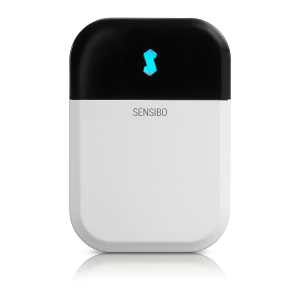
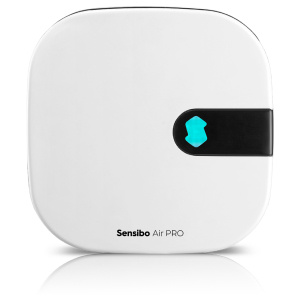
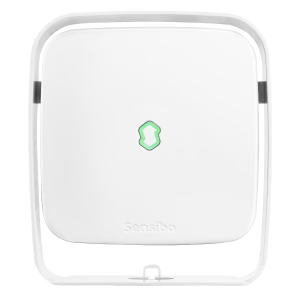
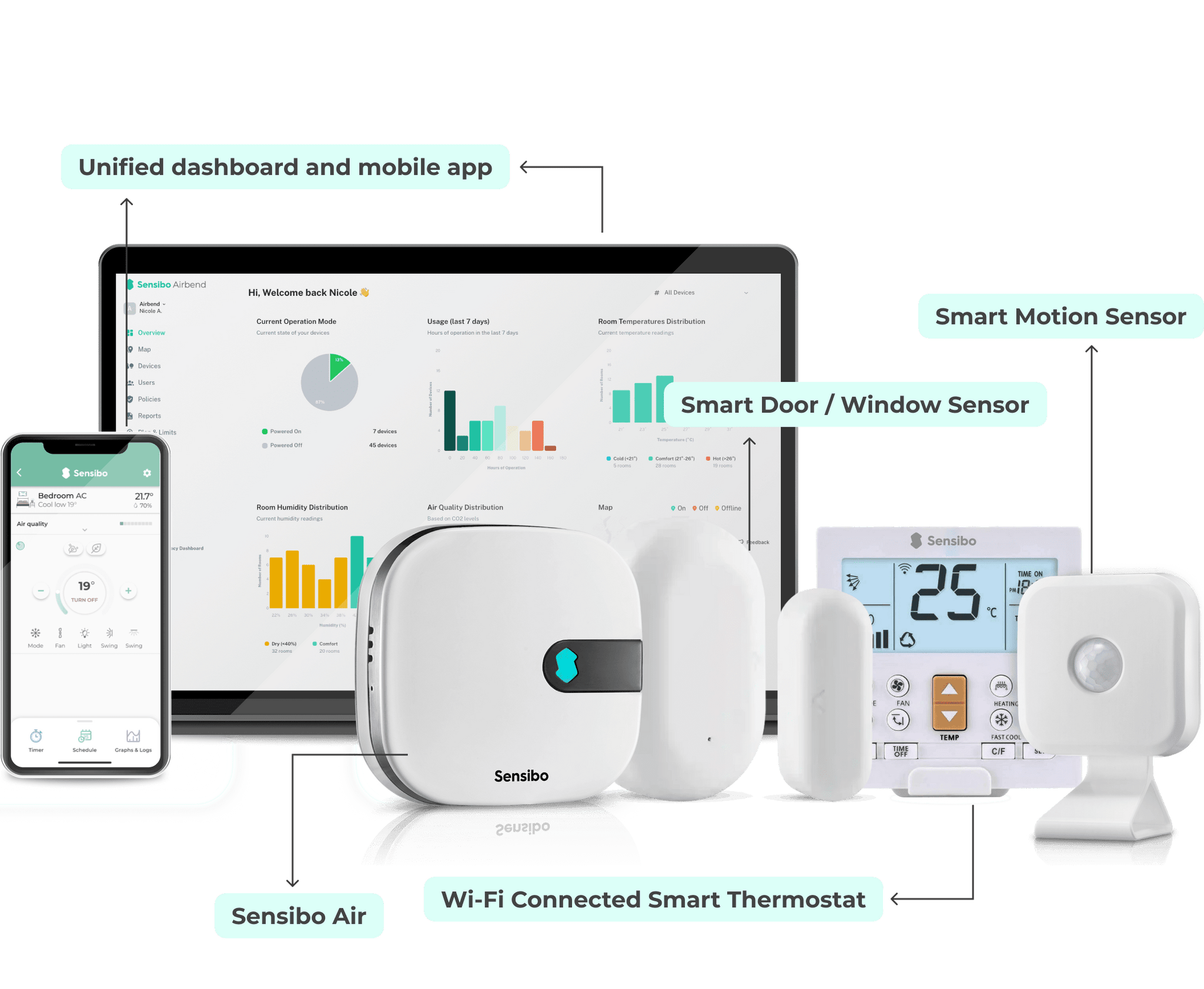 Every platform above targets ducted HVAC systems controlled by wired thermostats. Our Airbend platform fills a different gap entirely. It manages ductless mini-splits, split systems, and window AC units that rely on infrared remote controls, the dominant HVAC type in hotels, schools, retail stores, and commercial buildings across Asia, Southern Europe, the Middle East, Australia, and increasingly in North American heat pump installations.
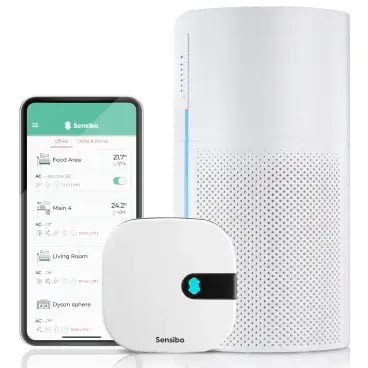
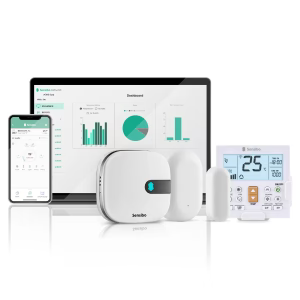
The Airbend dashboard organizes devices by location, floor, zone, or custom tags (such as "Deluxe Rooms" or "Conference Floor"). Facility managers apply bulk actions to change temperature, mode, and fan speed across hundreds of units simultaneously. Policy enforcement sets temperature ceilings and floors that occupants cannot exceed, and Climate React automation adjusts AC state based on real-time temperature and humidity thresholds.
For hotels, an open API connects Airbend to property management systems (PMS), syncing HVAC schedules to check-in and check-out events. Rooms drop to energy-saving setpoints at departure and pre-cool before the next guest arrives. This is where an energy-efficient thermostat platform pays for itself fastest, since hotel rooms sit empty up to 70% of the time yet still draw the majority of their peak energy load.
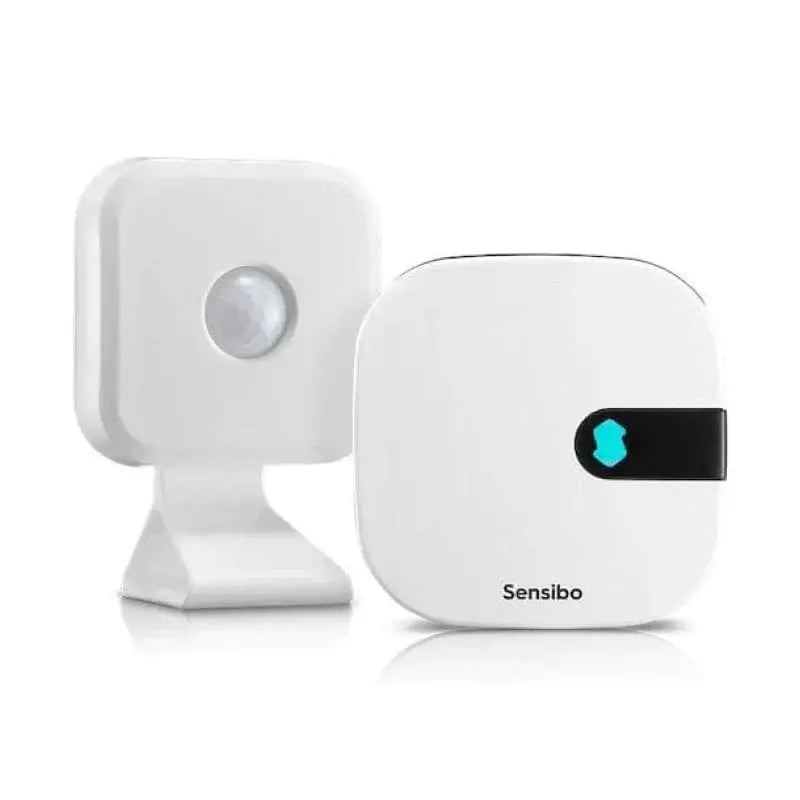
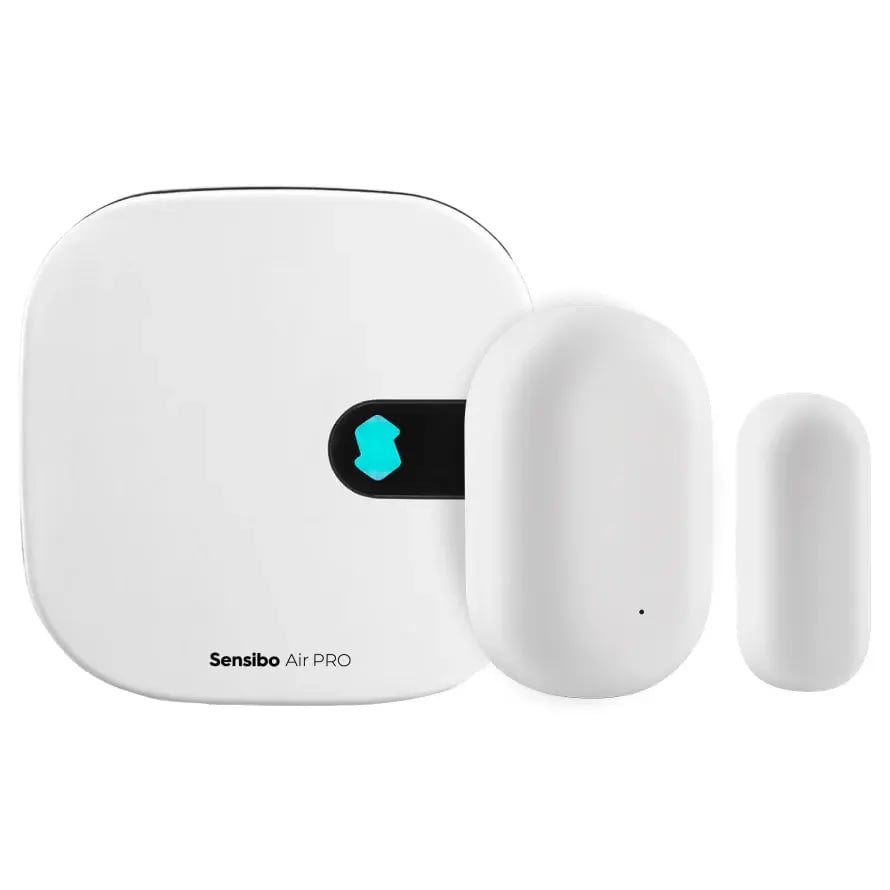
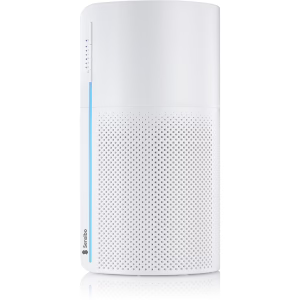
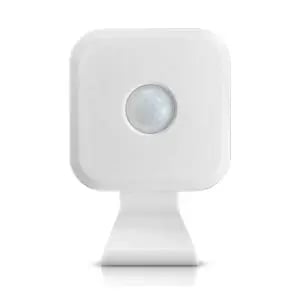
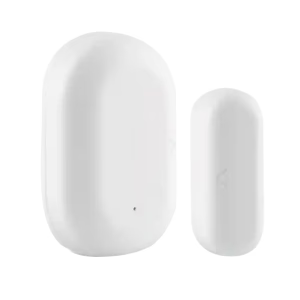
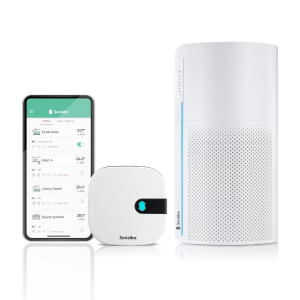
Occupancy and door sensors shut down AC when no one is present or when balcony doors stay open, and built-in air quality monitoring tracks CO2, PM2.5, TVOC, temperature, and humidity across the property. Airbend users have reduced AC energy costs by up to 40% through these automation layers, making it the best commercial smart thermostat for ductless HVAC at enterprise scale.
⚡Best for hotels, schools, retail spaces, and office buildings running ductless mini-splits or split systems with infrared remotes, particularly across multiple locations or large unit counts.