

























.jpg)
Hotel guest rooms sit empty about 60% of the time, even when someone is paying for them. The HVAC keeps running. After labor, energy is the single largest controllable expense on a hotel's operating budget.
Choose the wrong hotel air conditioning system and you're stuck with high energy bills, noise complaints bleeding into your online reviews, and maintenance headaches that compound every summer. Choose the right one and it quietly pays for itself.
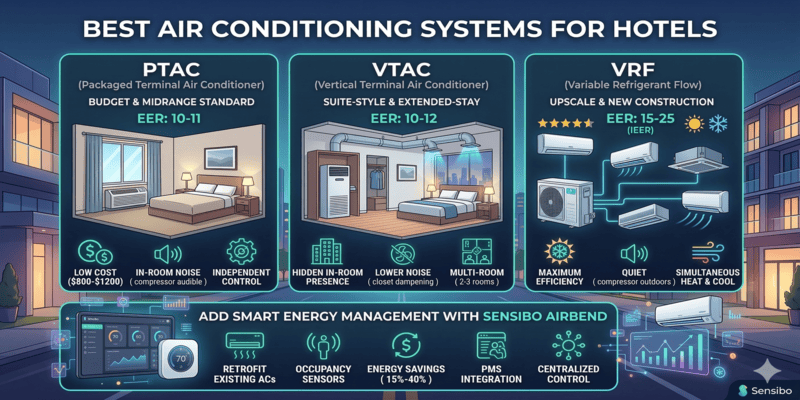
Three system types dominate hotel guestrooms today. PTACs (packaged through-the-wall units) are the budget-to-midrange default. VTACs (vertical closet-mounted variants) give suite-style properties a cleaner look. VRF (variable refrigerant flow) delivers premium efficiency for upscale and new-construction projects.
Each type of air conditioner for hotel rooms fits a different budget, property layout, and guest expectation. Below, we break down all three, plus the sizing math, efficiency ratings, and smart control layers that make the real difference.
 PTACs — The Hotel Industry Standard
A PTAC (Packaged Terminal Air Conditioner) is a self-contained heating and cooling unit installed through an exterior wall, typically below a window. These systems range from 7,000 to 19,000 BTU, require no ductwork, and handle one room independently. PTACs have been the default hotel air conditioner across budget and mid-range properties for decades.
The math explains why. A single unit runs $800 to $1,200. Guests control their own temperature without calling the front desk. When one fails, your maintenance staff pulls it from the wall sleeve and drops in a replacement without touching any other room on the floor. No ductwork also means no duct losses. Central ducted systems can waste up to 40% of conditioned air before it reaches the guest.
But the things that make PTACs cheap and simple also create their ceiling.
Noise is the first problem. The compressor lives inside the guest room. Every on/off cycle is audible. That characteristic hum-click-hum shows up in review complaints regularly.
Then there's the look. That bulky box under the window signals "mid-tier" the moment a guest walks in. Luxury and boutique properties avoid PTACs for this reason alone, even when the numbers work.
Efficiency tops out around 10 to 11 EER for most PTAC models. Acceptable for a standalone room unit, but nowhere near what a VRF system delivers at partial load. And because each PTAC operates on its own, there's no way to share recovered heat between rooms. One room's AC throws waste heat outside while the room next door runs its electric strip heater at full power.
The best fit for a hotel air conditioning system built around PTACs is a budget to mid-range property where per-room cost control and easy maintenance outweigh noise concerns and aesthetics.
 VTACs — The Hidden Upgrade
A VTAC (Vertical Terminal Air Conditioner) is a PTAC stood upright and installed inside a closet against an exterior wall. Short ductwork routes conditioned air to ceiling registers, so guests see vents instead of a box, but the system is still self-contained in a single unit.
VTACs earn their place in suite-style and extended-stay properties. One unit serving a living room and bedroom through ducted output costs less than installing two separate PTACs. The BTU range (9,000 to 24,000) covers everything from a compact studio to a full two-room suite.
There are trade-offs. No manufacturer has standardized the installation method, so the framing, closet dimensions, and ductwork routing fall on the property's design team. Expect a lifespan around 12 years, though geography and filter maintenance shift that number in both directions. And the core PTAC limitation carries over. The compressor still lives in the room. It's behind a closet door now instead of under a window, which dampens noise, but doesn't eliminate it.
VTACs fit mid-range to upscale suite hotels where eliminating the visible wall unit matters and multi-room air conditioner for hotel rooms coverage needs to come from a single packaged system.
VRF Systems — Maximum Efficiency, Maximum Investment
Variable Refrigerant Flow (VRF) connects one outdoor condensing unit to multiple indoor fan coils through refrigerant piping instead of ductwork. An inverter compressor modulates output from 10% to 100% capacity, matching exact demand per zone rather than cycling fully on or fully off like a PTAC.
The efficiency gap is large. VRF systems run 20% to 30% more efficient than conventional HVAC setups, and heat-recovery configurations can push savings up to 55% over comparable unitary equipment. The inverter is why. On a night with 50% occupancy, the compressor scales down to meet 50% of the load.
Simultaneous heating and cooling is the other headline feature. One guest wants 68°F. The room next door wants 74°F. A conference room needs cooling while the lobby needs heat. A VRF heat-recovery system handles all of that from a single outdoor unit.
|
Factor |
PTAC |
VTAC |
VRF |
|
Upfront cost per room |
$800–$1,200 |
$1,000–$1,500 |
$2,500–$5,000+ |
|
Energy efficiency (EER) |
10–11 |
10–12 |
15–25 (IEER) |
|
Noise in guest room |
Moderate (compressor in-room) |
Lower (closet-mounted) |
Quiet (compressor outdoors) |
|
Multi-zone from one unit |
No |
Yes (2–3 rooms) |
Yes (up to 24–80 indoor units) |
|
Maintenance complexity |
Low |
Low-moderate |
High (certified VRF techs required) |
|
Simultaneous heat + cool |
No |
No |
Yes (heat recovery models) |
|
Best for |
Budget to midrange hotels |
Suite / extended-stay |
Upscale, mixed-use, new construction |
The upfront cost is 2 to 4 times a PTAC fleet. That payback math works for properties with high occupancy variance, aggressive sustainability targets, or new construction where eliminating ductwork offsets equipment cost. The 150-room Moxy Columbus Short North in Ohio runs 215 tons of VRF, but that was a new-build decision, not a retrofit. For an existing property looking to swap out aging PTACs, a full VRF conversion rarely pencils out unless a gut renovation is already on the table.
A hotel air conditioning system built around VRF is the strongest long-term play for upscale properties, mixed-use buildings, and new construction.
 Sizing, Power, and Efficiency of AC Units for Hotels
The sizing rule of thumb is 20 BTU per square foot. A standard 300 sq ft hotel room needs roughly 6,000 BTU. A 500 sq ft suite pushes past 10,000. But climate, window exposure, floor level, and insulation all shift the calculation. Oversizing is the most common contractor mistake in hotels. The unit cools fast but never runs long enough to pull moisture from the air, leaving rooms cold and clammy.
EER (Energy Efficiency Ratio) is the metric that matters most for choosing an air conditioner for hotel rooms. It's calculated by dividing BTU output by watts consumed at peak conditions (95°F outdoor). Most hotel PTACs land between 10 and 11 EER. VRF systems reach 15 to 25 on the IEER scale, which accounts for partial-load performance across a full season. SEER measures seasonal average efficiency and applies to central and split systems, but PTACs are rated on EER. As of January 2023, the DOE moved to a stricter EER2 testing standard.
The per-room math adds up fast.
A 12,000 BTU unit at EER 10 draws 1,200W. The same capacity at EER 12 draws 1,000W. Across a 200-room hotel running 10 hours a day, that 200W gap per room means 400 kWh saved daily.
US regulations under the AIM Act and the Kigali Amendment require A2L low-GWP refrigerants for commercial HVAC equipment starting January 1, 2026. R-32 is replacing R-410A across PTAC and VRF product lines. Any hotel air conditioner purchased now should run on R-32 to avoid early obsolescence.
Smart Controllers and Energy Management are Where the Real Savings Hide
The hardware sets the efficiency floor. Software decides how close to that floor you run.
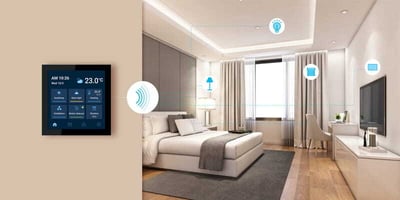
Even a well-sized, high-EER system wastes energy when it heats or cools empty rooms at full setpoint. Smart energy management thermostats cut that waste by 15% to 40%, depending on climate, system type, and how the controls are configured.
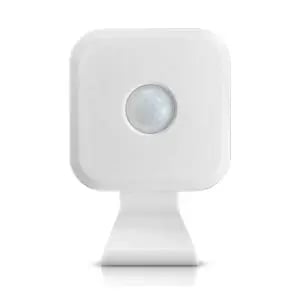
The mechanics are straightforward. Occupancy sensors detect when a room is empty and pull the temperature setpoint back. PMS (property management system) integration pre-cools or pre-heats rooms before check-in and resets to energy-saving mode at checkout. Temperature limiters stop guests from setting the AC to 60°F and leaving for the day. Door and window sensors pause the system when a balcony door sits open.
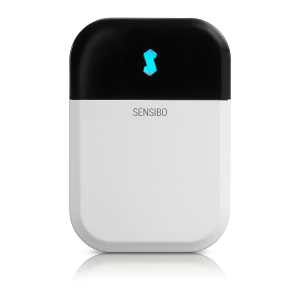
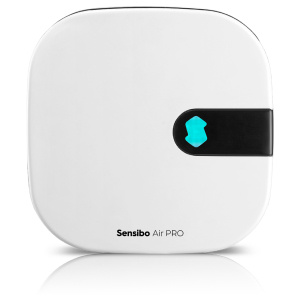
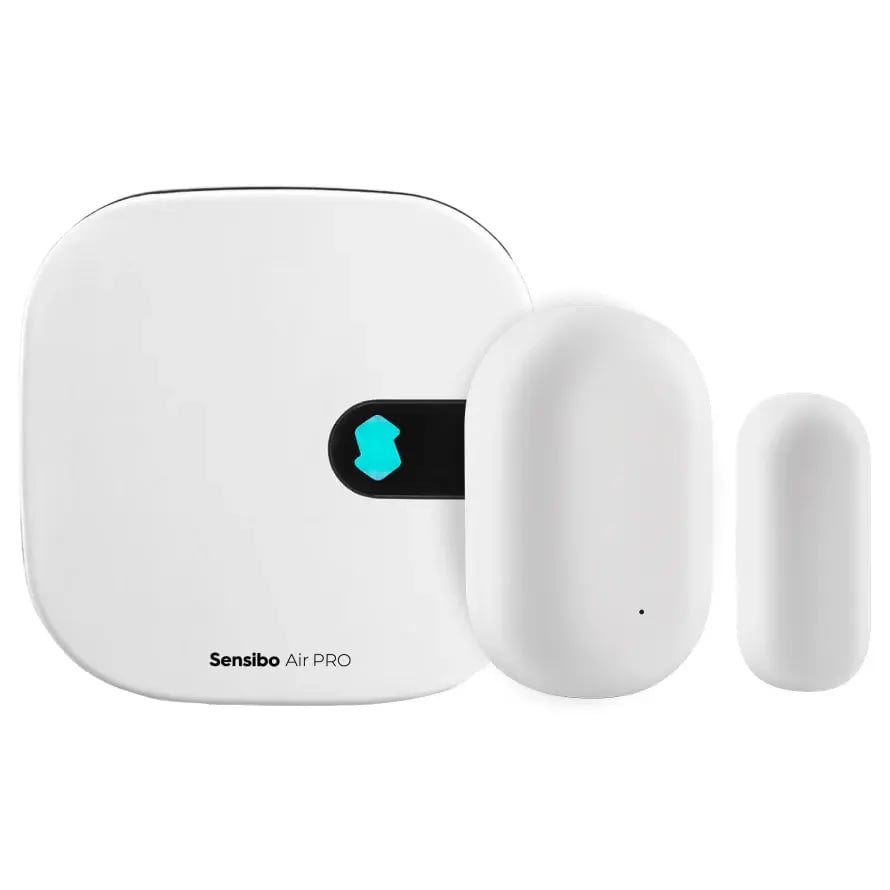
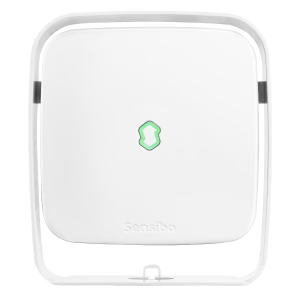
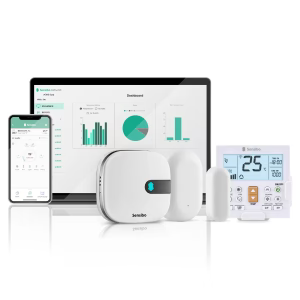
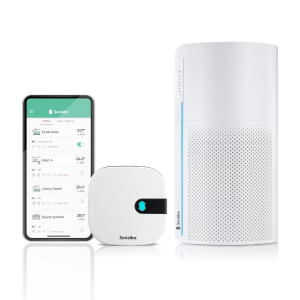
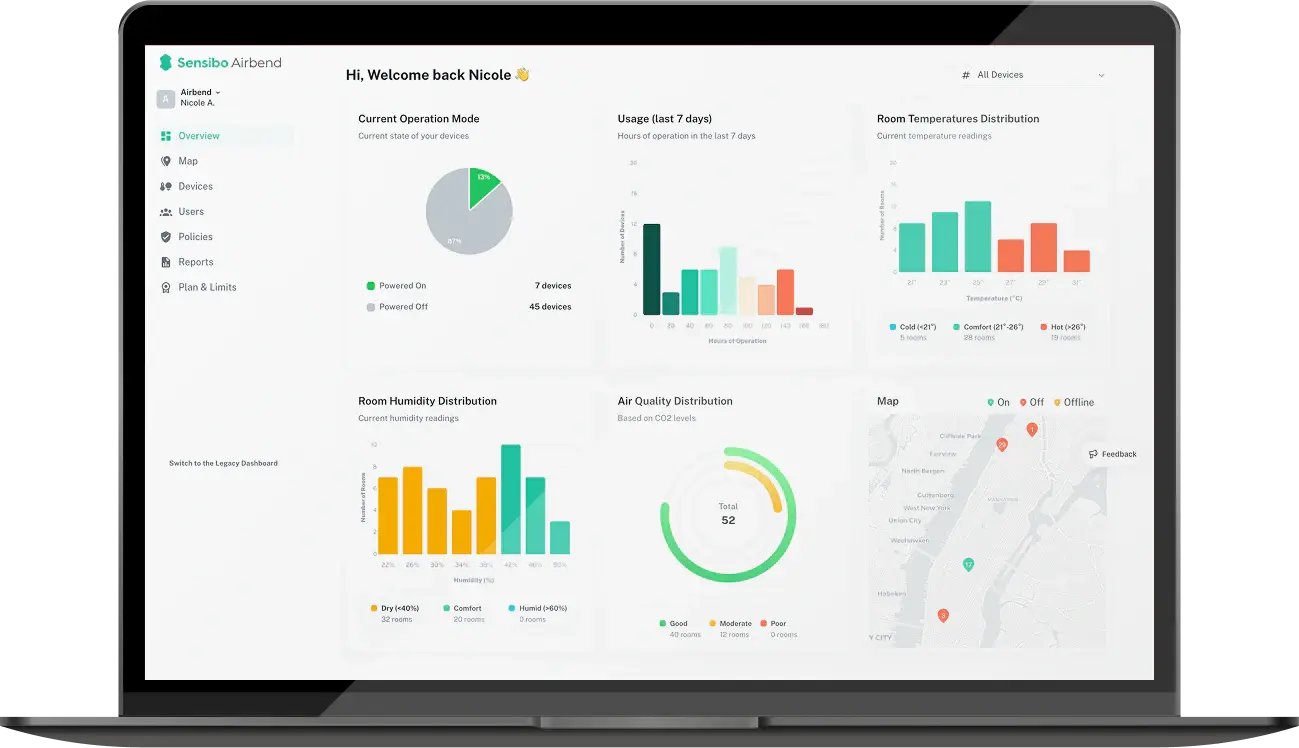
For hotels running mini-splits, split systems, or any AC with an infrared remote, Sensibo's Airbend hotel thermostat adds centralized dashboard control, zone-based scheduling, energy monitoring by device and time period, and automated reporting. It works with over 10,000 AC models and doesn't require replacing your existing hotel air conditioning system hardware. The platform also supports demand response integration with utility providers, which can generate bill credits during peak grid events.
Smart controls turn a good equipment decision into an operating cost advantage that compounds every month.
The Brand on the Box Matters Less Than You Think
The gap between a hotel that bleeds energy and one that doesn't rarely comes down to the equipment manufacturer. It's the decision chain. Pick a system type that matches your property's layout and market tier. Size it with real load calculations, not contractor guesswork. Then layer smart controls on top. Get those three right and almost any reputable hotel air conditioning system will perform.


-min%20(1).jpg?height=200&name=shutterstock_1616234788%20(1)-min%20(1).jpg)