



























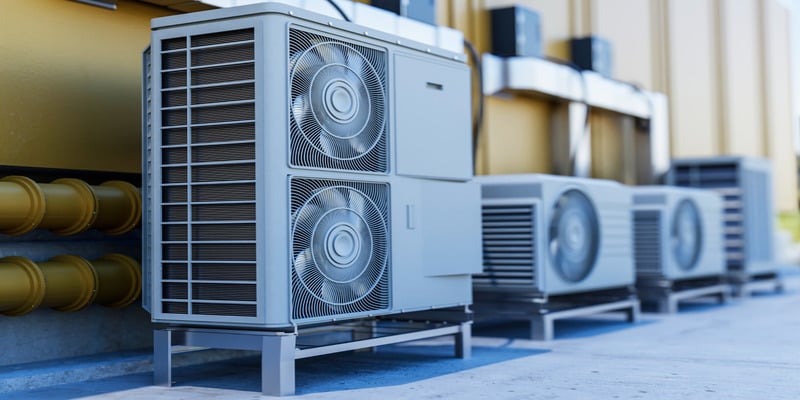
That old air conditioner struggling through another summer? If you've been waiting for the right time to replace aging HVAC equipment, 2025 is it. Rebates on new HVAC systems and federal tax credits can put thousands of dollars back in your pocket, but these programs vanish on December 31, 2025. From the heat pump tax credit to high-efficiency central AC upgrades, this guide shows you exactly what's available and how to grab these savings before they disappear.
What Are Federal and State HVAC Discounts?
Federal and state governments both want you to install energy-efficient heating and cooling equipment. They express this desire through two types of financial incentives that work very differently.
A federal HVAC tax credit reduces what you owe the IRS. Picture this scenario. You qualify for a $2,000 credit on a new heat pump, and your tax bill comes to $3,500. That credit drops your bill to $1,500. You don't receive a check in the mail. Instead, you claim the credit when filing your federal return, and it reduces your liability dollar for dollar.
Rebates work the opposite way. State and utility rebate programs often discount your purchase upfront or reimburse you after installation. A contractor participating in California's HEEHRA program, for example, might knock $8,000 off your heat pump installation at the point of sale.
The federal government runs two tax credit programs for HVAC improvements right now. Section 25C handles the Energy Efficient Home Improvement Credit for conventional premium-efficiency equipment. Section 25D covers the Residential Clean Energy Credit for geothermal and renewable systems. Both expire on December 31, 2025. Congress originally set these credits to run through 2032, but legislation in mid-2025 yanked that deadline forward by seven years.
Section 25C and the Energy Efficient Home Improvement Credit
Section 25C rewards homeowners who install qualifying energy-efficient improvements with a credit worth 30% of project costs. The annual maximum totals $3,200, though different equipment categories have their own caps within that total.
|
Improvement Type |
Maximum Credit |
|---|---|
|
Heat pumps, air-source |
$2,000 |
|
Central air conditioners |
$600 |
|
Furnaces and boilers |
$600 |
|
Electrical panel upgrades |
$600 |
|
Insulation and air sealing |
$1,200 combined |
|
Windows and skylights |
$600 |
|
Exterior doors |
$250 per door, $500 total |
The heat pump tax credit delivers the largest savings of any single improvement. Install a qualifying heat pump and you can claim up to $2,000. That amount sits in its own category, separate from the $1,200 cap covering other improvements. A homeowner who installs a heat pump, adds insulation, and replaces windows in the same year could potentially claim the full $3,200.
Not every shiny new HVAC system makes the cut. Equipment must meet or exceed the highest efficiency tier established by the Consortium for Energy Efficiency at the start of the installation year. For heat pump split systems in 2025, that means hitting CEE Tier 1 standards with SEER2 of 16 or higher, EER2 of 11 or higher, and HSPF2 of 8.0 or higher.
Central air conditioners face even stricter standards. To claim the air conditioner tax credit, your new unit needs SEER2 of 17.0 or higher and EER2 of 12.0 or higher. Gas furnaces must deliver an AFUE rating of 97% or better.
The IRS added a new wrinkle for 2025 installations. Manufacturers now must register as "qualified manufacturers" and assign each eligible product a unique identification number called a QMID or PIN. Your contractor should provide this four-character code, and you'll enter it on Form 5695 when filing your taxes.
Section 25D and the Residential Clean Energy Credit
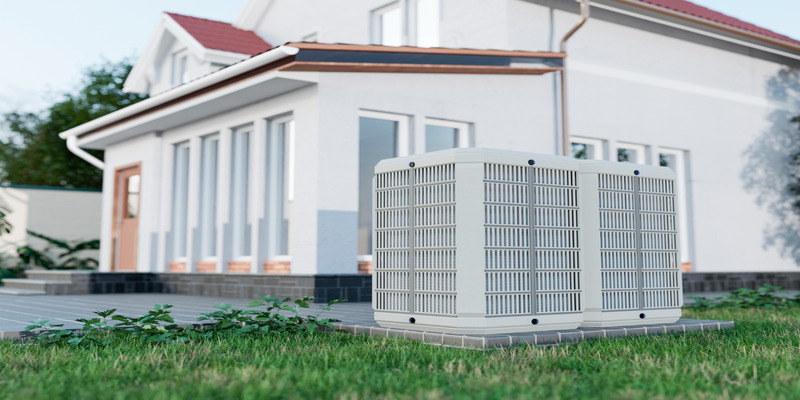 Section 25D plays in a different league. While 25C handles conventional high-efficiency equipment, 25D targets renewable and clean energy systems. The standout for HVAC purposes is the geothermal heat pump.
This credit covers 30% of your total project costs with no annual cap and no lifetime limit. A geothermal installation running $30,000 would generate a $9,000 tax credit. Compare that to the $2,000 maximum on air-source heat pumps under 25C, and you see why homeowners with suitable properties gravitate toward ground-source systems.
Beyond geothermal, Section 25D covers solar electric panels, solar water heating, small wind energy systems, and battery storage with at least 3 kilowatt-hours of capacity. All expire alongside 25C on December 31, 2025.
One mechanical advantage separates 25D from its sibling. The 25C credit is nonrefundable, meaning you can't claim more than you owe in taxes. Section 25D lets you carry excess credits forward to future tax years. Install a geothermal system generating a $9,000 credit but only owe $6,000 in taxes? You can apply that remaining $3,000 against next year's bill.
State Rebate Programs Through HEAR and HOMES
The Inflation Reduction Act also created two major rebate programs that individual states administer on their own timelines.
The Home Electrification and Appliance Rebates program, known as HEAR, targets heat pumps and electric appliances. Income limits apply. Low-income households earning 80% or less of their area median income can receive up to $8,000 toward a heat pump HVAC system. Moderate-income households between 80% and 150% of AMI qualify for 50% of costs, capped at $8,000. Households above 150% of AMI typically don't qualify.
The Home Efficiency Rebates program, called HOMES, rewards overall energy savings instead of specific equipment. Achieve a 20% reduction in your home's energy use and you might receive up to $2,000. Hit 35% reduction and that jumps to $4,000. Low-income households reaching 35% reduction can claim up to $8,000.
As of late 2025, HEAR and HOMES operate in Arizona, California, Colorado, Georgia, Maine, Michigan, New Mexico, New York, North Carolina, Rhode Island, Washington, and Wisconsin. Your state energy office's website will show current availability and list approved contractors. These programs operate on a first-come, first-served basis until funds run out.
How to Claim Your HVAC Tax Credits
Follow these four steps to capture your savings.
- Verify equipment eligibility before you buy anything. Your contractor should provide a manufacturer's certification statement documenting that the specific model qualifies for 25C or 25D credits.
- Complete installation by December 31, 2025. Your equipment must be "placed in service," meaning fully installed and operational. Ordering a heat pump in November 2025 and scheduling installation for January 2026 gets you nothing. The IRS cares when the system started running, not when you paid.
- Gather your documentation as you go. Save the certification statement from the manufacturer, an invoice showing the installation date, the QMID or PIN code, and receipts for all project costs.
- File IRS Form 5695 with your 2025 federal tax return in early 2026.
Smart homeowners layer multiple programs to squeeze every dollar from their HVAC upgrade. A Tennessee homeowner might combine a $2,000 federal heat pump credit with an $800 TVA EnergyRight rebate and a manufacturer's promotional discount. You must subtract utility rebates from your qualified expenses before calculating the federal credit, but most IRA-funded state rebates won't reduce your federal credit eligibility.
Looking Ahead
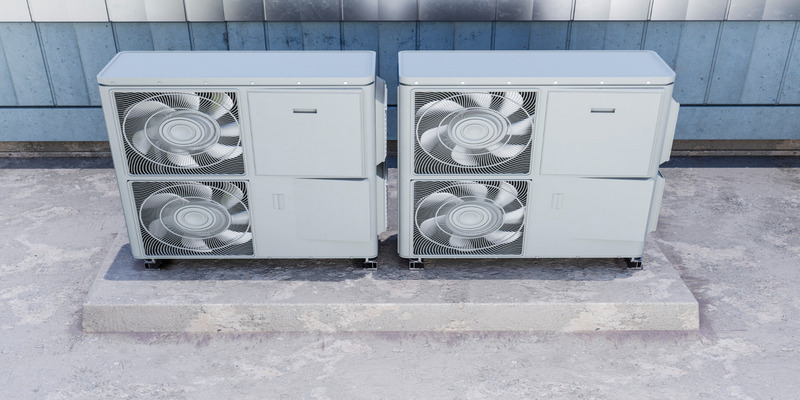 The efficiency standards behind these federal tax credits won't disappear when the credits do. CEE tiers and ENERGY STAR certifications will continue shaping state programs, utility rebates, and building codes for years. Homeowners who invest in high-performance equipment now position themselves ahead of tightening efficiency requirements, regardless of what Washington does next.
Tax credit information is provided for educational purposes. Consult your tax advisor for eligibility verification and filing guidance specific to your situation. Equipment must be installed by December 31, 2025, to qualify under current federal law.

.jpg?height=200&name=close-up-heat-pump-outside-home%20(2).jpg)