





















Hotel operators rarely see "the AC was unstable" as a review complaint. The complaint comes through as "couldn't sleep", "room was stuffy" or "wouldn't stay again", which makes it easy to misdiagnose and expensive to ignore.
And it's one of the cheapest operational categories to fix. Guest room condition tops J.D. Power's 2025 ranked list of satisfaction drivers, and temperature control is a core piece of it.
How Unstable Room Temperature Harms the Hotel Guest Experience
 Overnight temperature variability disrupts sleep cycles even when the guest never fully wakes. Core body temperature drops roughly 2°F from evening peak to early-morning low, and that drop is how the brain signals it's time for deep sleep. When the room fights that natural cycle, sleep quality breaks down before anyone consciously notices.
The National Sleep Foundation recommends 65–68°F (18.3–20°C) for adult sleep. Above that range, the damage is measurable. Research in Nature Communications analyzing 23 million sleep records found each 10°C rise in ambient temperature cut deep sleep by 2.82% and raised the odds of sleep insufficiency by 20.1%. For older travelers, a Harvard study found sleep efficiency falls 5–10% once bedrooms climb from 25°C (77°F) to 30°C (86°F).
Most bedrooms run warmer than the NSF range. Across 3.75 million tracked sleep-nights from 34,096 US individuals, bedrooms sat above 70°F on 69% of nights. Hotels, running at commercial occupancy with aging HVAC, sit in this warmer range by default. The bad sleep shows up in reviews as vague complaints about comfort rather than direct mentions of temperature.
Hotel Room Temperature Impact on Guest Satisfaction Scores
Temperature problems hit the most heavily weighted category in hotel satisfaction measurement, and the damage shows up fast.
Most guests never complain. Only 12% of them flag any problem at all during a stay, according to J.D. Power's 2025 satisfaction index (39,219 guests surveyed across 102 brands). The catch is what happens when they do. Satisfaction doesn't dip; it collapses, from 677 to 460 on a 1,000-point scale. That's a 217-point drop. And because guest room is the #1 weighted dimension in J.D. Power's 2025 methodology, above staff service, value, check-in, facility, F&B, and connectivity, a temperature complaint hits the category that moves scores the hardest.
J.D. Power's hospitality lead, Andrea Stokes, named room temperature controls specifically as a lever hotels can pull to shift satisfaction without committing to a renovation budget. You don't need a capital project to fix the thermostat. You need someone to look at it.
How review scores translate to revenue
Review scores translate to revenue through a measurable, two-way relationship. A single point on a hotel's 100-point reputation score is worth 1.42% in RevPAR, plus 0.89% on ADR and 0.54% on occupancy, per Cornell hospitality research. The effect runs stronger at lower-end chain scales, where travelers lean harder on reviews because brand signals are weaker. It also works in reverse. A score falling is revenue falling, through the same mechanism.
And what hits recently hits hardest. Booking.com's own documentation confirms that more recent reviews carry bigger weight on the total score. A 2025 peer-reviewed analysis of 74,882 Booking.com reviews reverse-engineered exactly how much: 85% of a review's influence comes from the last 12 months, 10% from the year before that, 5% from the year before that. Temperature complaints landing this quarter aren't just hurting. They're doing 85% of their total damage right now.
Why Hotel Room Temperature Becomes Unstable
 Temperature instability rarely comes from broken HVAC hardware. It traces to specific failures that fall into two categories, each requiring a different kind of fix.
Design-level causes
Sensor placed in the wrong spot. A thermostat mounted near the bathroom door reads whatever's coming off the tiled floor, not what the sleeping guest feels. Mount one too close to the PTAC return and it reads the supply air instead of the room.
Unmodeled solar load. A west-facing room with single-pane glass gains heat fast between 4 and 7 PM. By check-in, the PTAC is running at max capacity just to catch up. It doesn't always get there.
Adjacent-room leakage. Walls between rooms aren't sealed as well as people assume. If your neighbor runs their unit at 62°F, you feel it through the connecting wall.
Configuration and maintenance causes
Thermostat deadband set too wide. The unit waits for a 2–3°F swing before kicking on, so the room drifts noticeably before anything happens. Feels like the AC is ignoring you.
Skipped maintenance. Older PTACs with original EER ratings near 5.0 degrade to roughly 3.0 after 15+ years of service. Dirty filters and coils accelerate that decline. Most hotels don't put HVAC on the housekeeping checklist, so the drift happens slowly across six months and then one morning a guest flags it.
Design-level causes typically need capital investment to fully resolve. Configuration and maintenance causes are operational and can be fixed this quarter.
How to Diagnose Temperature Issues at Your Property
Most operators find out about a temperature problem only after a review goes up. There are earlier signals.
Review keyword audit. Search your own property pages on Booking.com, TripAdvisor, and Google for terms like "too hot", "too cold", "AC", "freezing", "stuffy" and "couldn't sleep." A rising count over rolling 90-day windows usually precedes a ranking drop by one to two quarters.
Front-desk complaint log. Temperature complaints often get handled verbally and never recorded. Ask the front desk to log every temperature-related mention for 30 days. The pattern shows up fast, and the specific rooms typically cluster on one floor or building orientation.
HVAC runtime data. Properties with energy management systems already have this. Rooms where the compressor runs more than 70% of occupied hours are undersized, leaking, or failing. Rooms running under 20% in shoulder seasons often have sensor or deadband problems.
Directional room analysis. Map review scores by room number to building orientation. West-facing rooms in warm climates, and any room with single-pane glass and poor shading, will score lower than their otherwise-identical counterparts.
What Temperature Complaints Cost Hotels in Revenue and Ratings
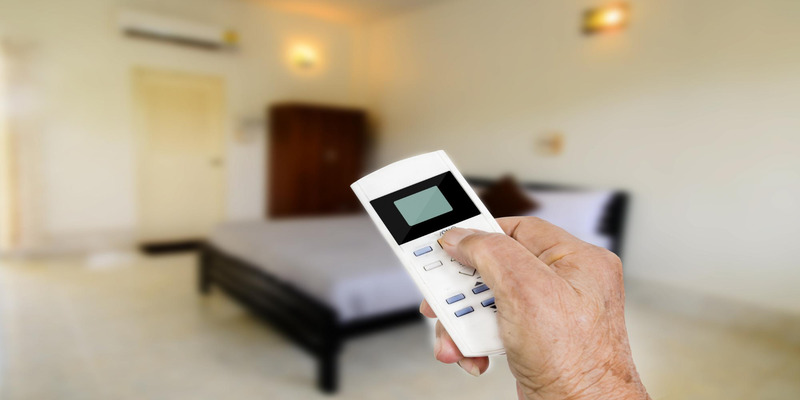 Three costs, in the order operators feel them.
Start with review damage. A property losing 2–3 points of online reputation over one bad summer, entirely plausible from a cluster of temperature complaints, gives up RevPAR in the low single digits. The measured rate is 1.42% per reputation point.
Second, energy. HVAC is 40–50% of a hotel's total energy bill, so every hour the system runs hotter, cooler, or longer than it needs to is cash out the door. Occupancy-based controls alone cut PTAC thermostat runtime by 44–48%, based on US utility field data.
Third, recovery. Once a complaint is posted, operations shift from preventing the next one to managing the public response. And under Booking.com's weighting, that review is doing 85% of its damage during those same 12 months.
How to improve guest experience in a hotel starts with the basics guests shouldn't have to mention: stable temperature, quiet HVAC, water pressure that holds.
How to Improve Guest Experience in a Hotel Through Temperature Control
Temperature fixes fall into three tiers with distinct cost and payback profiles. Published industry ranges:
|
Retrofit type |
Cost per room |
Energy savings |
Typical payback |
|
Controls-only (smart thermostat + occupancy sensor) |
$50–$250 |
15–30% |
12–18 months |
|
Component swaps (ECM motors, variable speed drives) |
$200–$2,000 |
Varies by component |
6–12 months |
|
Full PTAC or mini-split replacement with smart controls |
$1,000–$3,000 |
Up to 50%+ vs. aged equipment |
2.5–3 years |
For most properties, controls-only is the right entry point. It addresses the configuration and maintenance causes driving most complaints, without capital renovation.
- Install smart thermostats with occupancy detection. Vendor case data (Verdant, Telkonet) shows 15–20% energy savings and 12–18 month ROI. The room holds a setback when empty and recovers before arrival.
- Audit thermostat placement once per renovation cycle. Sensors installed decades ago rarely sit in the right spot for current layouts. Diagnostic work first, relocation second.
- Put HVAC on the housekeeping checklist. Filter check every 30 days. Coil inspection quarterly. This is the single cheapest intervention and it gets skipped more than any other.
- Pre-condition rooms before peak arrival windows. PMS integration lets the system drop to energy-saving setpoints after departure and pre-cool before check-in.
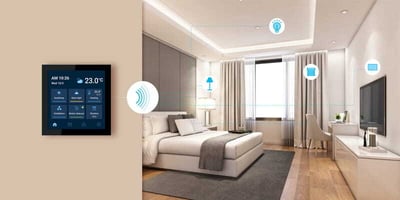
- Give guests controls that work. A thermostat with a visible setpoint, clear up/down buttons, and a response time under 15 minutes solves most of what people complain about. A cryptic PTAC panel with seven unlabeled buttons does not.
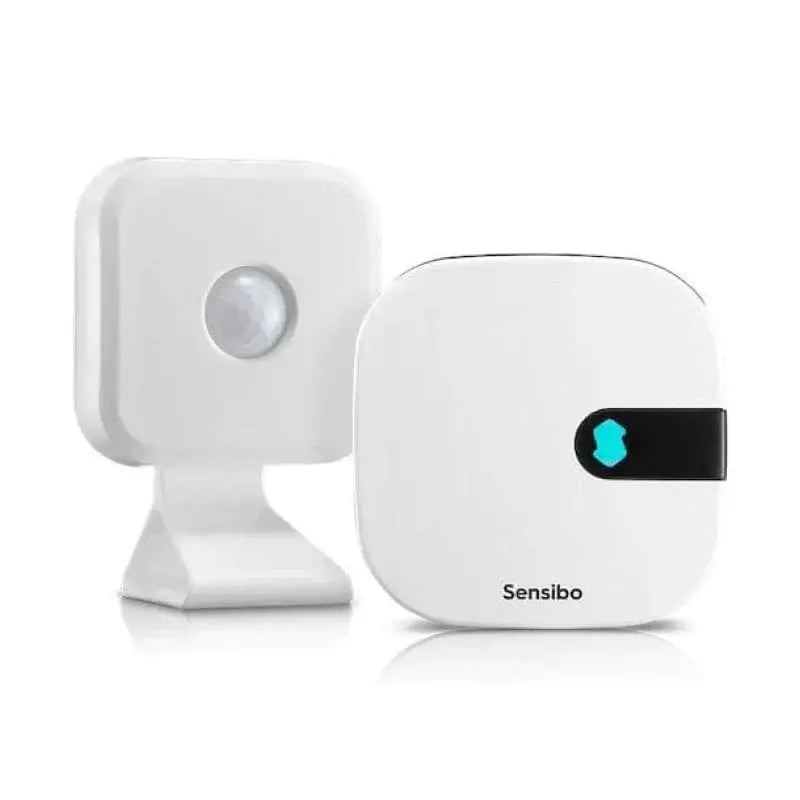
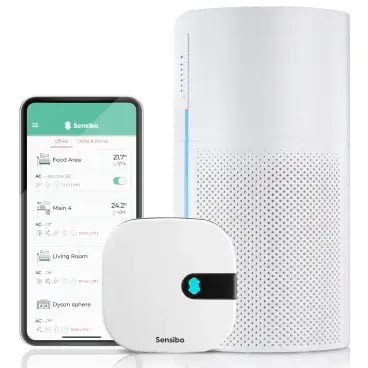
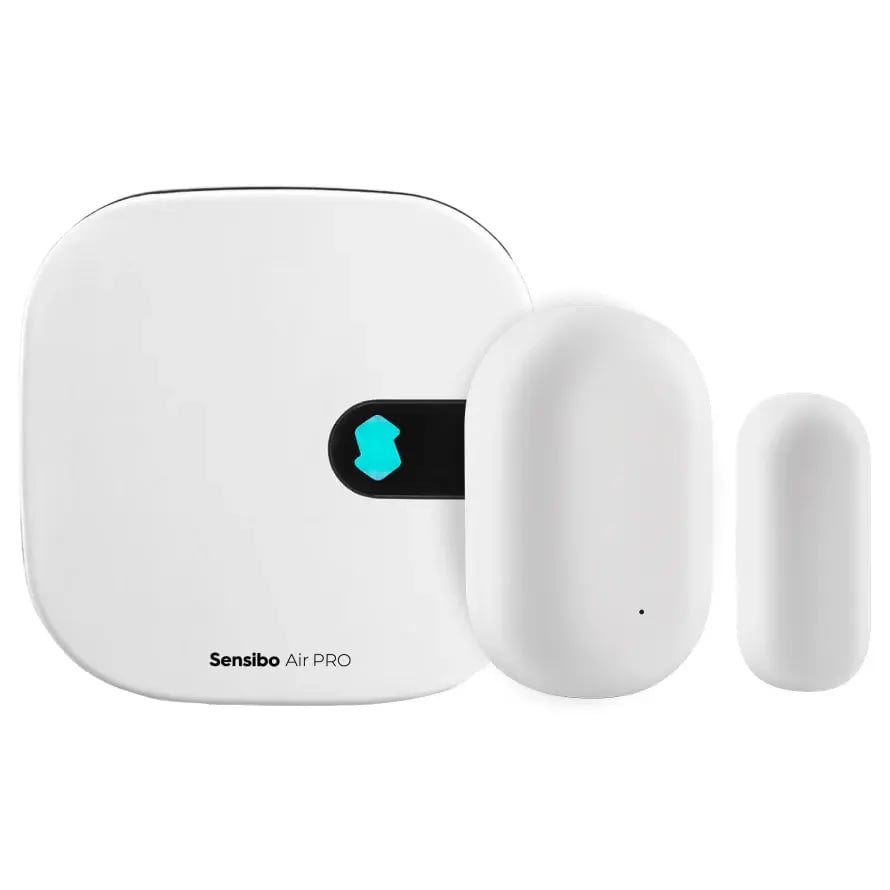
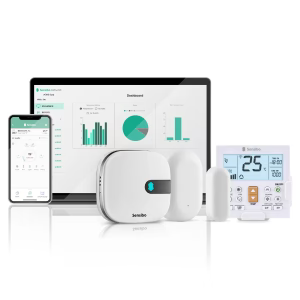
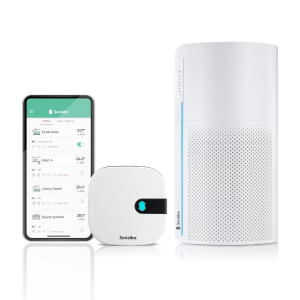
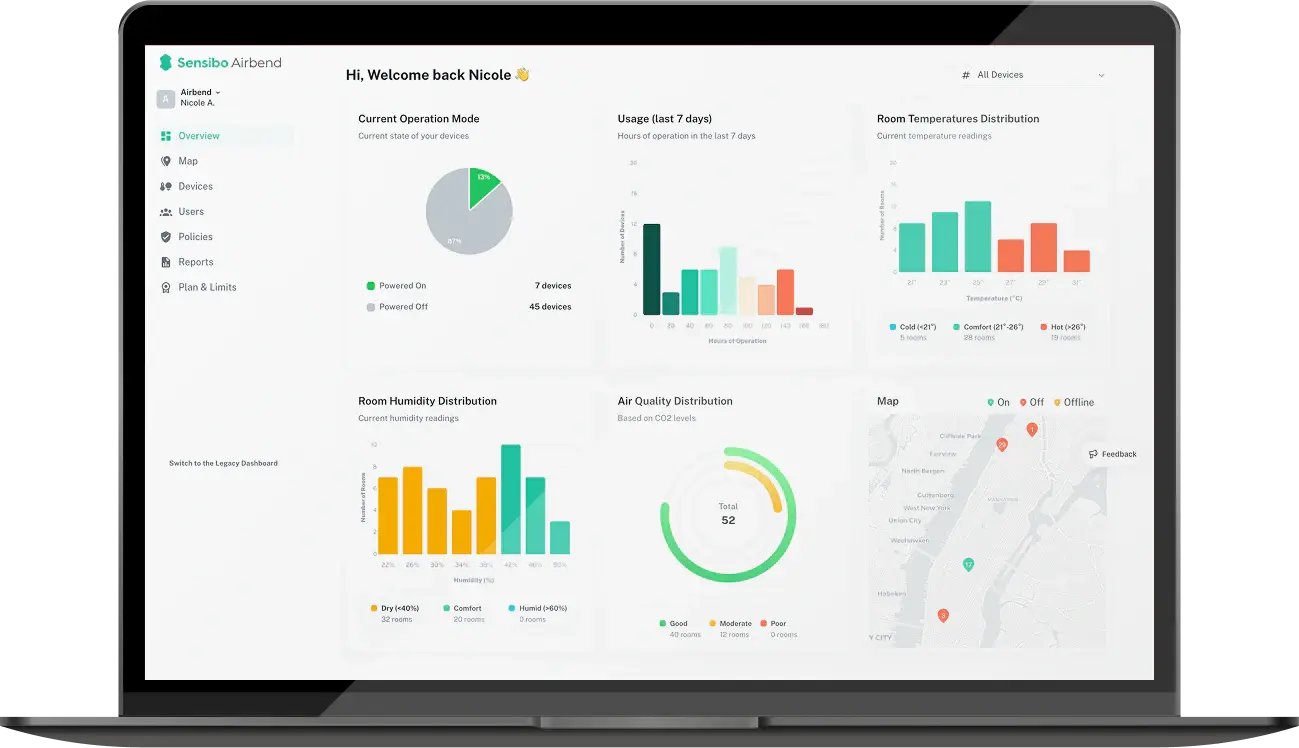
These aren't exotic ideas to enhance hotel guest experience. They're the maintenance and spec decisions operators postpone until review scores force the issue. Sensibo Airbend was built for exactly that problem: Smart Climate Control Built for Hospitality, already deployed across 400,000+ devices worldwide and trusted by brands including Ritz, Honeywell, and NEOM.
For properties rethinking their hotel guest room amenities refresh, Airbend handles the climate side with plug-and-play installation, centralized control of every room from one dashboard, occupancy-driven scheduling that has cut hotel energy bills by up to 40%, and open API integration with your existing HMS. No renovation, no capital project. Just fix the temperature problem once and stop seeing reviews about it.