






















HVAC systems consume between 40% and 60% of a hotel's total energy bill, according to the American Hotel Lodging Association (AHLA).
The core issue is straightforward: hotels run HVAC around the clock across hundreds of rooms, most of which sit empty for significant stretches of the day. A guest checks out at 11 AM, and the system keeps cooling that room to 68°F until someone from housekeeping or the front desk manually intervenes. Multiply that by 150 vacant rooms on a Tuesday afternoon, and the waste adds up fast.
Hotel energy management addresses this gap by giving operators real-time visibility and control over where energy goes, when it runs, and how much gets used. The savings potential is well documented: the U.S. Department of Energy (DOE) estimates that commercial buildings, hotels included, can cut energy consumption by 20% to 30% through better controls and monitoring alone. No equipment replacement required.
Why HVAC Dominates Hotel Operating Costs
Hotels are unusual buildings. Unlike offices that empty out at 6 PM or retail stores that close overnight, hotels must maintain climate conditions across hundreds of individually controlled zones, 24 hours a day, 365 days a year. A 300-room hotel might have 300+ separate HVAC units (PTACs, fan coils, or mini-splits) each operating on its own cycle.
The Energy Information Administration (EIA) reports that lodging facilities in the U.S. spend an average of $2,196 per room per year on energy. HVAC takes the largest share, which is why hotel operating costs remain stubbornly high even at properties with newer equipment.
Several characteristics make hotels particularly vulnerable to HVAC waste:
|
Factor |
Why It Drives Costs Up |
|
24/7 operation |
Lobbies, hallways, restaurants, and occupied rooms need continuous conditioning |
|
Guest autonomy |
Guests set their own thermostats, often to extremes (65°F in Phoenix summer) |
|
Variable occupancy |
A hotel at 55% occupancy still cools 100% of its common areas |
|
Frequent door openings |
Room doors, lobby entrances, and loading docks break the thermal envelope constantly |
|
Legacy equipment |
Many properties run PTACs or fan coil units installed during original construction with no smart controls |
The Unoccupied Room Problem
A study published in the International Journal of Hospitality Management found that hotel rooms sit unoccupied for an average of 70% of total hours across a year when combining unsold nights, daytime absences, and checkout-to-checkin gaps. During those empty hours, the room's HVAC system often runs at full guest-comfort settings because nothing told it to stop.
❗ Occupancy-based setback is the practice of automatically adjusting a room's temperature setpoint when no guest is present. Raising the cooling setpoint from 72°F to 78°F in an empty room during summer, or lowering heating from 72°F to 62°F in winter, reduces the unit's runtime and energy draw with zero impact on guest comfort.
The DOE's Advanced Energy Retrofit Guide for Lodging Facilities documents that occupancy-based HVAC control alone can reduce room-level cooling energy by 20% to 35%, depending on climate zone, building age, and baseline equipment.
How properties detect occupancy varies:
- Door lock integration flags check-in and checkout events from the property management system (PMS), triggering setback automatically when no reservation is active.
- Motion sensors mounted inside rooms detect absence after a configurable timeout (typically 20–30 minutes) and initiate setback.
- Smart AC controllers with presence detection combine IR-based climate control with occupancy sensing, adjusting temperature in real time without hardwired retrofits.
Maintenance Failures That Quietly Inflate Energy Bills
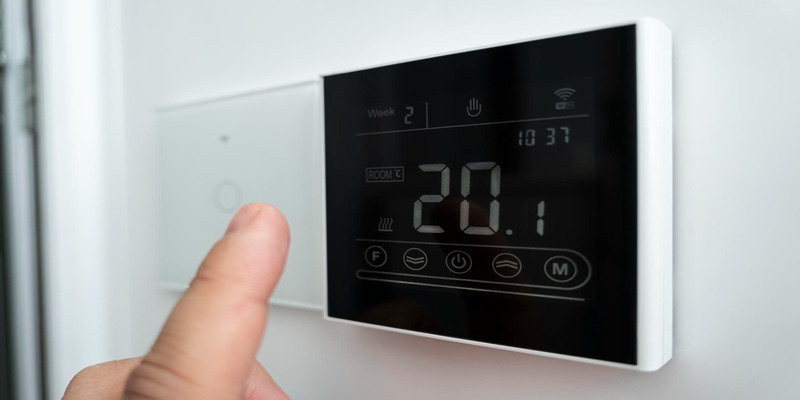
A poorly maintained HVAC unit doesn't announce itself. It still runs. It still cools the room, mostly. But it draws 15% to 30% more electricity doing so, and the degradation compounds year over year.
The most common culprits in hotel HVAC maintenance neglect
Dirty or clogged air filters restrict airflow across the evaporator coil. Ice builds up, the blower motor overheats, the unit short-cycles, and efficiency drops. HVAC technicians report that a clogged filter is present on the majority of summer service calls. Replacement cost: under $15 per unit.
Incorrect refrigerant charge affects more than half of all installed systems, according to ACCA field data. Units typically run undercharged because long line sets were never compensated during installation. A tech who measures superheat and subcooling (rather than eyeballing gauge pressures) can correct this for $150 to $400.
Dirty condenser and evaporator coils choke heat transfer. In hotels near highways, coastlines, or construction zones, coil fouling accelerates. A professional coil cleaning runs $100 to $400 per unit and can restore significant lost capacity.
Duct leakage in properties with ducted systems means roughly one-third of conditioned air never reaches the room. It leaks into ceiling plenums, wall cavities, and unconditioned spaces. Aeroseal or mastic sealing costs $500 to $2,000 per system and consistently outperforms equipment upgrades in energy savings.
How Hotel Energy Management Systems Deliver ROI
A hotel energy management system centralizes monitoring and control of HVAC (and often lighting) across every room, corridor, and common area from a single dashboard. The technology has matured considerably over the past decade, moving from hardwired thermostats with basic scheduling to cloud-connected platforms that integrate with PMS, occupancy sensors, weather data, and AI-driven optimization.
Real-time monitoring and alerts
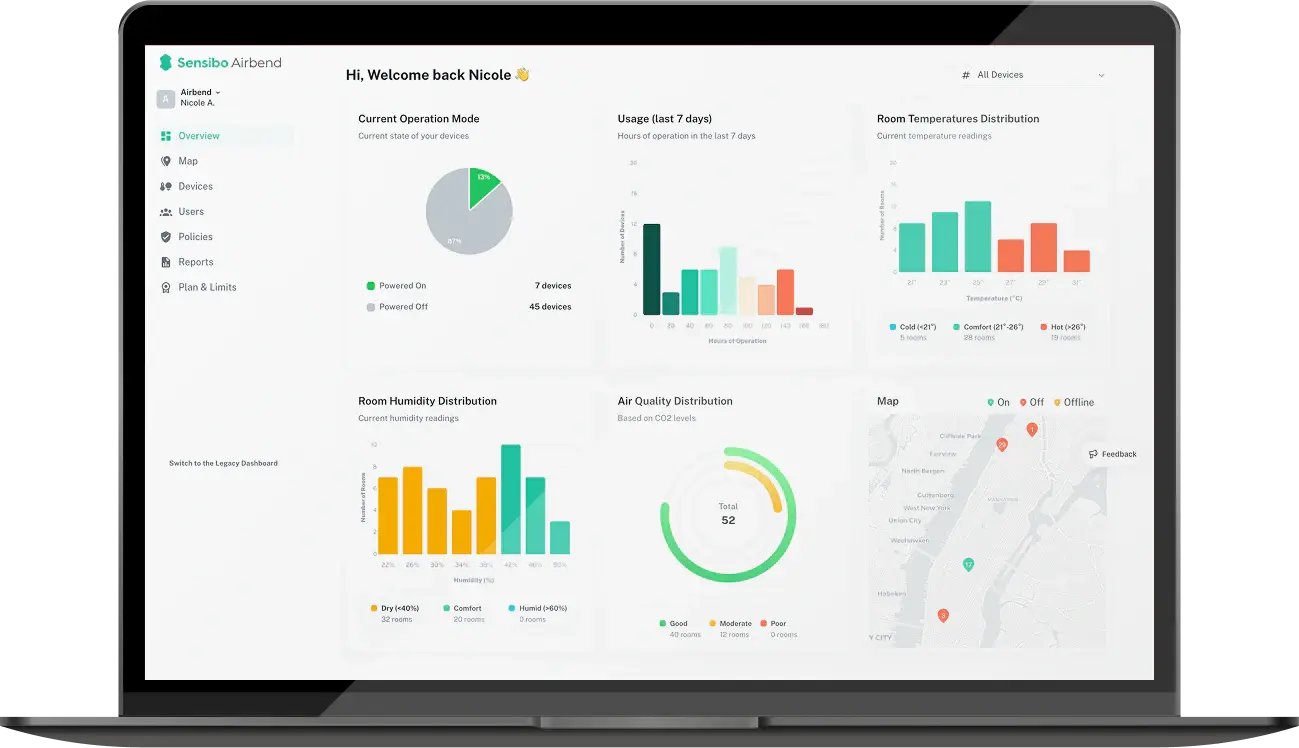
Every HVAC unit reports its status: current temperature, setpoint, operating mode, runtime hours, and fault codes. When a PTAC in room 412 starts running 22 hours a day instead of its normal 14, the system flags it. Without monitoring, that unit would waste energy for weeks or months before anyone noticed, usually when the compressor failed.
Centralized setpoint policies
Management defines temperature boundaries (for example: cooling setpoints cannot go below 68°F) and the system enforces them across all rooms. Guests still have control within the allowed range, but the days of a single guest setting their room to 60°F and leaving for a conference are over.
Automated occupancy response
When the PMS reports a checkout or when room sensors detect absence, the system shifts that room to an energy-saving setpoint automatically. No staff intervention needed. Before the next guest arrives, a pre-cooling or pre-heating cycle brings the room back to comfort range.
Energy reporting and benchmarking
Monthly and annual energy data by room, floor, wing, or building type lets operators benchmark performance and spot trends. A property that tracks energy per occupied room-night can measure the true impact of any efficiency initiative rather than relying on utility bill comparisons muddied by weather and occupancy swings.
💡 According to the AHLA, properties that deploy hotel energy management systems with occupancy-based controls typically see payback periods between 12 and 24 months, with annual energy savings of 15% to 30% on HVAC costs. For a mid-size hotel spending $250,000 per year on heating and cooling, that represents $37,500 to $75,000 in annual savings.
Beyond HVAC: Broader Hotel Energy Efficiency Strategies

LED lighting retrofits cut lighting energy by 50% to 75% compared to incandescent or CFL. Hallway and parking structure lighting, which runs 24/7, delivers the fastest returns, and many utility companies offer rebates that shorten payback further.
Building envelope improvements reduce the load HVAC systems fight against. Window film, weatherstripping, and roof insulation lower thermal transfer. These changes are less visible than equipment swaps but they compound every hour of every day.
Demand response participation allows hotels to earn revenue or bill credits by reducing electricity usage during peak grid periods. A hotel energy management system with demand response capability can raise setpoints by 2°F across unoccupied rooms during a utility curtailment event, cutting peak demand without any guest ever noticing.
Kitchen hood controls in hotel restaurants can reduce exhaust fan energy by 30% to 50% through variable-speed drives that match fan output to cooking activity rather than running at full blast during prep and cleanup.
Common Mistakes Hotels Make with HVAC Efficiency
- Upgrading equipment without fixing controls. A hotel that installs high-SEER PTAC units but keeps them running in empty rooms 70% of the time will still waste energy. The control layer matters more than the nameplate efficiency of the hardware.
- Ignoring the building envelope. Replacing every HVAC unit in a hotel with single-pane windows and uninsulated exterior walls is like buying a faster pump for a leaking pipe. The load reduction has to come first, or at least alongside the equipment work.
- Setting it and forgetting it. Energy management systems need periodic review. Guest complaints about comfort might lead front desk staff to override setpoint policies. If nobody audits those overrides monthly, the system's savings erode quietly.
- Treating all rooms identically. A south-facing room on the top floor in July has a wildly different cooling load than a north-facing room on the second floor. Flat policies that treat them the same either waste energy on the easy rooms or underserve the hard ones.
Where Sensibo Airbend Fits In
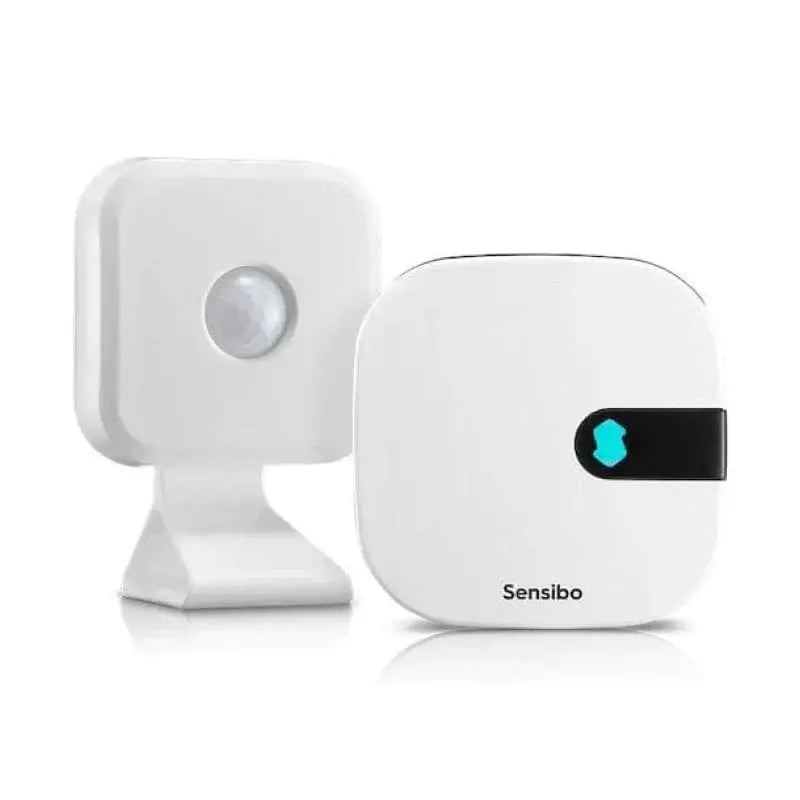
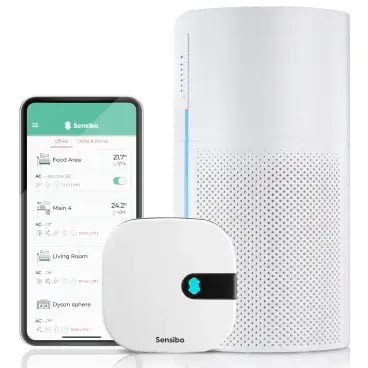
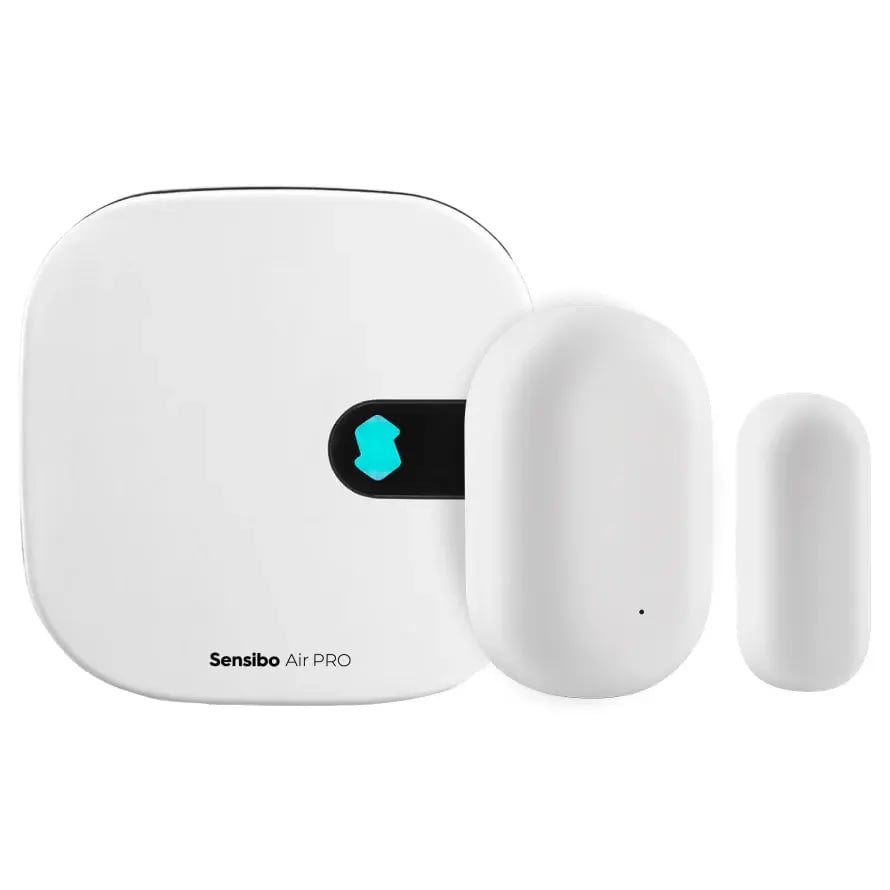
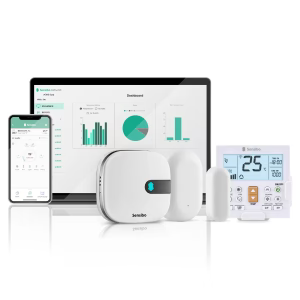
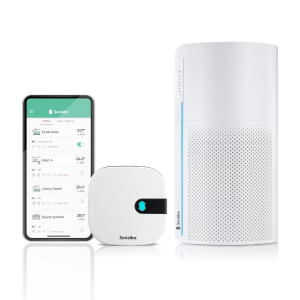
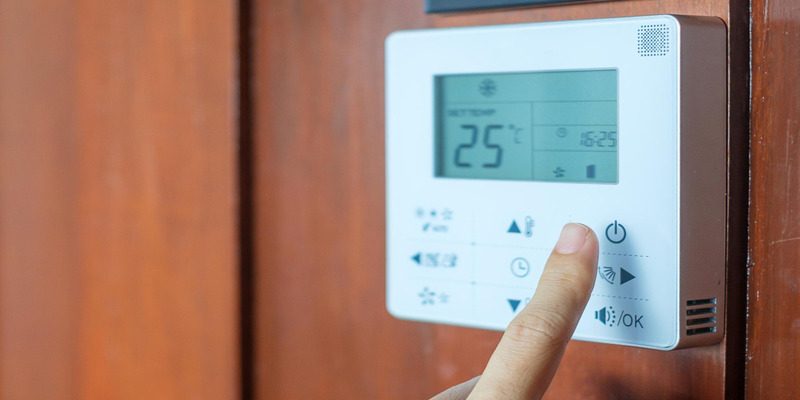 Sensibo Airbend is a hotel climate control platform built to cut energy costs by bringing smart control to exactly these types of systems. The platform uses compact IR controllers (installed in about a minute per room, no wiring) that connect to a centralized cloud dashboard. From there, hotel operators can enforce temperature policies, respond to occupancy signals from PMS integration, monitor every unit's status in real time, and generate energy consumption reports by room, floor, or property.
The system supports over 10,000 AC and heat pump models across all major manufacturers, which matters for hotels that have mixed equipment from different renovation cycles. Occupancy-based setback, pre-arrival comfort preparation, and centralized override capabilities come standard.
Sensibo reports that its devices are deployed across more than 300,000 installations in over 120 countries, with enterprise clients including hotel chains and the NEOM smart city project in Saudi Arabia. The platform also supports demand response API integration, allowing utilities to coordinate load reduction across participating properties during peak grid events.
-min%20(1).jpg?height=200&name=shutterstock_1616234788%20(1)-min%20(1).jpg)