























Ever stood in the filter aisle at Home Depot, completely overwhelmed by all those numbers? You're not alone. That MERV rating printed on every box tells you exactly how well a filter catches airborne junk. Higher numbers trap smaller particles. Simple enough, right? Once you get the basics down, choosing becomes way less stressful.
What Does MERV Mean?
MERV stands for Minimum Efficiency Reporting Value. Sounds fancy. Really, it's just a standardized test the American Society of Heating, Refrigerating, and Air Conditioning Engineers (ASHRAE) created to measure filter performance.
Think report card for your filter. The MERV meaning breaks down simply. Higher number equals smaller particles trapped. Ratings start at 1 for barely-there filtration and climb to 16 for hospital-grade performance. Anything above 16? That's HEPA territory, which plays by different rules entirely.
During testing, filters face particles in three size buckets. The tiniest range spans 0.3 to 1.0 microns and includes bacteria plus smoke. Middle-ground particles fall between 1.0 and 3.0 microns, where mold spores and pet dander hang out. Larger stuff runs from 3.0 to 10.0 microns, covering pollen and dust mites. Your filter's final score depends on how well it handles all three categories.
Why MERV Matters for Your Health
 Your HVAC system pushes air through your entire house multiple times daily. Every pass through that filter either catches particles or lets them float back into your living space. What you breathe depends directly on what you choose.
Here's the thing. Poor indoor air quality causes problems that most people never connect to their HVAC system. That nagging cough that won't quit. Headaches that seem to hit every afternoon. Brain fog during work-from-home days. Allergy symptoms that flare up indoors but vanish outside. Sound familiar? Inadequate filtration often drives these issues. If you've noticed symptoms of bad air quality disappearing when you leave the house, your filter deserves a hard look.
For anyone dealing with allergies, asthma, or respiratory sensitivities, filter selection matters even more. The gap between a MERV 8 and MERV 13 can mean breathing easy versus constant irritation.
MERV Comparison Chart
Different MERV ratings for air filters target different particle types based on size. MERV 8 filters catch most particles in the 3-10 micron range and some smaller ones. MERV 11 handles particles down to 1 micron effectively. MERV 13 filters trap particles as small as 0.3 microns.
Here's what that means for specific pollutants in your home.
|
Particle Type |
MERV 8 |
MERV 11 |
MERV 13 |
|
Pollen |
✓ |
✓ |
✓ |
|
Dust |
✓ |
✓ |
✓ |
|
Dust Mites |
✓ |
✓ |
✓ |
|
Mold Spores |
✓ |
✓ |
✓ |
|
Lint |
✓ |
✓ |
✓ |
|
Pet Dander |
✗ |
✓ |
✓ |
|
Bacteria/Fungi |
✗ |
✓ |
✓ |
|
Smoke Particles |
✗ |
✗ |
✓ |
|
Viruses (on carriers) |
✗ |
✗ |
✓ |
How to Choose the Right MERV Filter
Three factors drive this decision. Your health needs come first, then your HVAC system's capabilities, and finally your budget. Every household situation calls for something different.
MERV 6-8 filters handle basic protection perfectly. No pets? Nobody with allergies? These catch dust and pollen while keeping airflow strong. Most standard residential systems run these without breaking a sweat, and replacement costs stay low.
MERV 9-12 filters step things up for sensitive households. Got a kid with asthma? A partner who sneezes through spring? This range traps pet dander, finer dust, and mold spores that cheaper options miss completely.
MERV 13-16 filters deliver serious protection. We're talking homes with immunocompromised family members, severe allergy sufferers, or anyone living where air quality tanks regularly. Wildfire season in California? Heavy traffic pollution in Houston? These filters catch bacteria, smoke particles, and even some viruses hitching rides on larger particles.
But wait. Higher doesn't automatically mean better. Dense filter media creates resistance. Your HVAC system works harder. Energy bills climb. Sometimes damage happens. Not every system handles MERV 13+ filters gracefully.
Before grabbing the highest-rated option, check your system's specs or call an HVAC tech. Running the wrong filter can cost more in repairs and energy than you'd ever save in air quality improvements. Seriously.
MERV vs. Other Rating Systems
Shopping around, you'll bump into other rating systems. They measure similar things differently.
MPR (Microparticle Performance Rating) comes from 3M. It focuses specifically on particles between 0.3 and 1 micron. An MPR of 1000-1200 lands roughly at MERV 11. MPR 1900 and above reaches MERV 13 territory.
FPR (Filter Performance Rating) belongs to Home Depot. Their 1-10 scale keeps things simple for shoppers. FPR 7 matches up with MERV 11. FPR 10 equals MERV 13.
HEPA (High-Efficiency Particulate Air) operates in a different league altogether. These filters must capture 99.97% of particles at 0.3 microns, the absolute hardest size to trap. Nothing on the standard MERV scale comes close.
Going Beyond MERV with HEPA Air Purifiers
 Standard HVAC filters work as your first defense. Good ones make a real difference. But limitations exist. Even MERV 16 filters can't match what standalone HEPA purifiers accomplish in specific rooms.
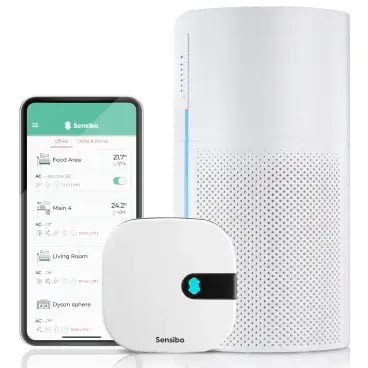
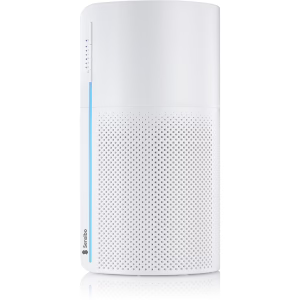
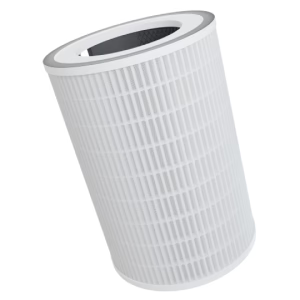
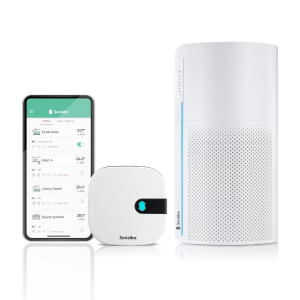
The Sensibo Pure smart air purifier runs True HEPA filtration catching 99.97% of particles down to 0.1 microns. Way smaller than standard filters handle. Bacteria, viruses, ultrafine smoke, allergens that sail right through conventional HVAC filters? Caught.
What makes smart purifiers different from just upgrading your MERV filter? Real-time monitoring and automatic responses. The Sensibo Pure detects pollution spikes and cranks up fan speed without you lifting a finger. Pair it with Sensibo's Pure Boost technology, and your purifier kicks into gear exactly when air quality drops.
Bedrooms, nurseries, home offices, anywhere you spend serious time deserves dedicated HEPA protection. Your HVAC filter alone can't deliver that level of clean.
Filter Maintenance and Replacement
Even premium filters lose effectiveness once particles clog them up. Dirty filters restrict airflow, tank efficiency, and can actually make air quality worse by becoming contamination sources themselves. Gross, right?
|
MERV Level |
Replace Every |
|
MERV 1-4 |
30 days |
|
MERV 5-8 |
60-90 days |
|
MERV 9-12 |
90 days |
|
MERV 13-16 |
90-120 days |
These timelines assume normal conditions. Got three dogs? A smoker in the house? Live near a dusty construction site? Change more frequently. During allergy season or when wildfires choke your region's air, check filters way more often than usual.
The Bottom Line
Stop chasing the highest number on the shelf. The real question isn't which MERV number ranks "best" overall. It's which one fits your specific situation. A family battling severe allergies near wildfire country needs completely different filtration than a young couple in a brand-new condo with no pets. Match your filter to your actual life.
.jpg?height=200&name=photo_2023-12-15_20-30-32%20(1).jpg)
.jpg?height=200&name=photo_2024-03-18_16-41-15%20(1).jpg)