


















You've noticed mold somewhere in your home — maybe it's visible, maybe you just can't shake that damp, musty smell. Either way, you're probably looking for a fix, and an air purifier seems like a reasonable option. So, do air purifiers help with mold?
💡 They do, but not in the way most people expect. An air purifier can pull mold spores out of the air you're breathing, and that matters — especially if you're sensitive to allergens or have respiratory issues. But it won't touch the mold growing behind your bathroom tiles or under the kitchen sink. That part is on you.
This article breaks down how air purifiers actually deal with mold, where they fall short, and what you should be doing alongside them if you want real results.
What Causes Mold Growth Indoors?
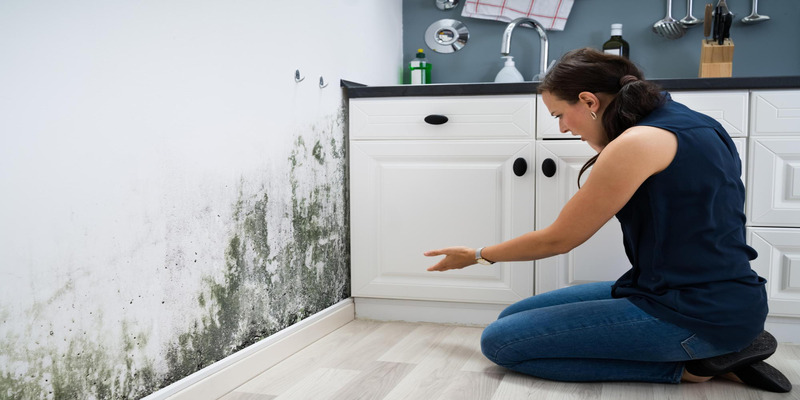 Mold needs moisture and something organic to feed on. Your home gives it plenty of both: drywall, wood, carpet, even dust. The only variable you can actually control is moisture.
Here's where most indoor mold problems start:
High indoor humidity: Anything above 60% relative humidity gives mold a comfortable environment to grow. Bathrooms, kitchens, and basements are the usual problem spots because they generate or trap moisture daily. If you don't have proper ventilation in these rooms, humidity builds up fast.
Water leaks: A slow leak under the sink or behind a wall can feed mold growth for weeks before you even notice it. Roof damage, burst pipes, and faulty appliance connections are all common culprits. By the time mold becomes visible, the moisture problem has usually been going on for a while.
Poor ventilation: Rooms without adequate airflow trap humid air inside. This is especially common in bathrooms without exhaust fans, closets against exterior walls, and finished basements where air circulation is limited. Stagnant air doesn't dry out. It just sits there and lets mold do its thing.
Condensation: When warm, humid air hits a cold surface (a window in winter, an uninsulated exterior wall, cold water pipes), moisture collects. That thin layer of water is enough for mold to start colonizing. You'll often see this around window frames and on walls behind furniture pushed tight against exterior walls.
Damp building materials: Carpet that got wet and wasn't dried within 24-48 hours. Drywall that absorbed water during a flood. Wood framing in a crawl space with no vapor barrier. Once these materials take on moisture, mold can establish itself deep inside them, sometimes where you can't see it at all.
The pattern is always the same: water gets somewhere it shouldn't, stays there too long, and mold follows. An air purifier doesn't change any of that equation, but understanding what does will make the rest of this article a lot more useful.
How Does Mold Affect Indoor Air Quality and Health?
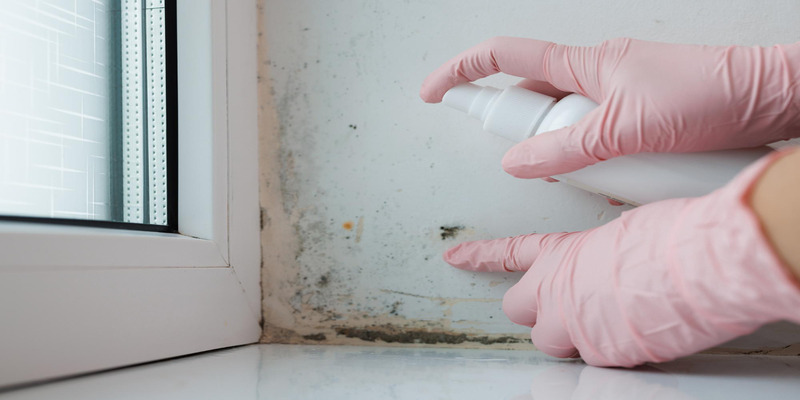 Mold actively releases spores into the air, and some species also produce mycotoxins, toxic compounds that travel with those spores. A colony growing behind drywall or under flooring can push spore counts up without any visible sign. Disturbing mold during cleaning or renovation makes it worse, since spore concentrations spike when colonies are broken apart.
What does that mean for your health?
The reactions depend on your sensitivity and how long you've been exposed. According to the EPA and CDC, common health effects of mold exposure include:
- Respiratory irritation like coughing, wheezing, and nasal congestion, particularly in people who already have lung conditions
- Allergic reactions including sneezing, runny nose, itchy or watery eyes, and skin rashes. Some people develop mold allergies over time even if they weren't initially sensitive
- Asthma flare-ups. The EPA identifies mold as a known asthma trigger. For people with asthma, elevated spore counts indoors can lead to more frequent and more severe episodes
- Prolonged exposure risks. People with weakened immune systems, chronic lung disease, or very young children face higher risks from long-term mold exposure. The CDC notes that certain molds (like Aspergillus) can cause serious infections in immunocompromised individuals
This is where an air purifier starts to make practical sense. You may not be able to remove the mold colony overnight, but reducing the spore count in the air you breathe gives your body less to react to while you work on the actual problem.
How Do Air Purifiers Work Against Mold?
Not all air purifiers handle mold the same way. The technology inside the unit determines what it actually does to mold spores, and some are better suited for the job than others.
|
Technology |
What It Does |
Mold Effectiveness |
|
True HEPA Filter |
Traps particles down to 0.3 microns |
Captures 99.97% of airborne mold spores (most spores are 1-20 microns) |
|
UV-C Light |
Disrupts spore DNA using ultraviolet radiation |
Kills spores that pass through the unit, but only with enough exposure time |
|
Activated Carbon Filter |
Absorbs gases, VOCs, and odors |
Removes that musty mold smell but does nothing to the spores themselves |
The most effective setup combines HEPA filtration with UV-C light. The HEPA filter physically traps spores, and the UV-C light neutralizes any that slip past. Activated carbon is a useful add-on for odor, but on its own it won't reduce your spore count.
One thing to be clear about: air purifiers that remove mold spores only work on what's floating in the air at that moment. Spores settled on surfaces, mold growing inside walls, colonies in your HVAC ductwork... none of that gets touched. The purifier cleans the air passing through it. Everything else stays where it is.
What Air Purifiers Can and Can't Do for Mold
There's a lot of marketing around air purifiers and mold removal, so it's worth being direct about what you're getting.
✅ What an air purifier CAN do:
- Reduce the number of airborne mold spores in a room, which directly helps people with mold allergies or asthma
- Remove musty odors associated with mold (if the unit has an activated carbon filter)
- Lower spore exposure during and after mold cleanup, when concentrations in the air are at their highest
❌ What an air purifier CAN'T do:
- Kill or remove mold that's growing on surfaces
- Fix the moisture problem that caused the mold
- Replace professional mold remediation when you have an active infestation
- Reach spores trapped inside walls, HVAC ducts, or crawl spaces
- Prevent new mold from growing if conditions stay the same
Think of it this way: an air purifier manages what you're inhaling right now. The mold itself, and the conditions feeding it, need a completely different set of solutions.
Air Purifier vs. Dehumidifier for Mold: Which Do You Need?
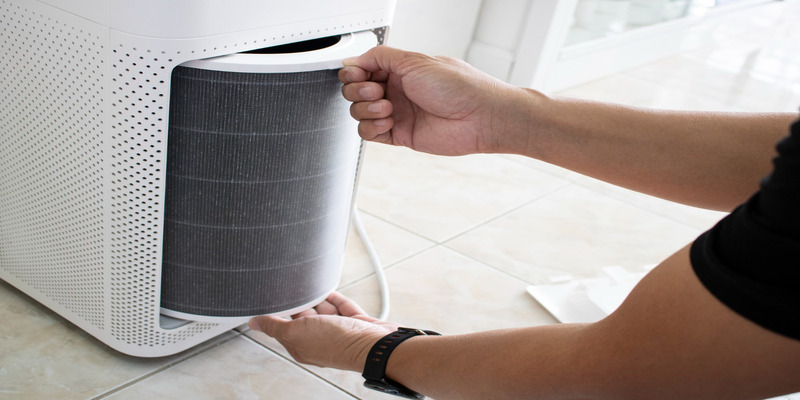 This is one of the most common questions people ask once they realize air purifiers help with mold only partially. And the honest answer is that a dehumidifier usually matters more.
A dehumidifier attacks the cause. Mold needs moisture to grow, and most species thrive when indoor humidity stays above 60%. Bring that number down to 30-50%, and you're cutting off the water supply mold depends on. No moisture, no new growth. That's the single most effective thing you can do if you're dealing with a recurring mold problem.
An air purifier attacks the symptom. It pulls spores out of the air you're breathing, which helps your lungs but does nothing to stop the colony from producing more spores tomorrow.
So if you have to choose one, go with the dehumidifier first. Get the moisture under control, then add a purifier to clean up what's already circulating. If you can run both at the same time, even better. The dehumidifier starves the mold while the purifier reduces what you're inhaling. They solve different parts of the same problem.
How to Choose the Right Air Purifier for Mold
If you've decided an air purifier makes sense for your situation, here's what to pay attention to when shopping.
1. True HEPA certification: This is non-negotiable. A True HEPA filter captures 99.97% of particles at 0.3 microns, which covers mold spores comfortably. Watch out for labels like "HEPA-type" or "HEPA-like," because those aren't held to the same standard and will let more spores through.
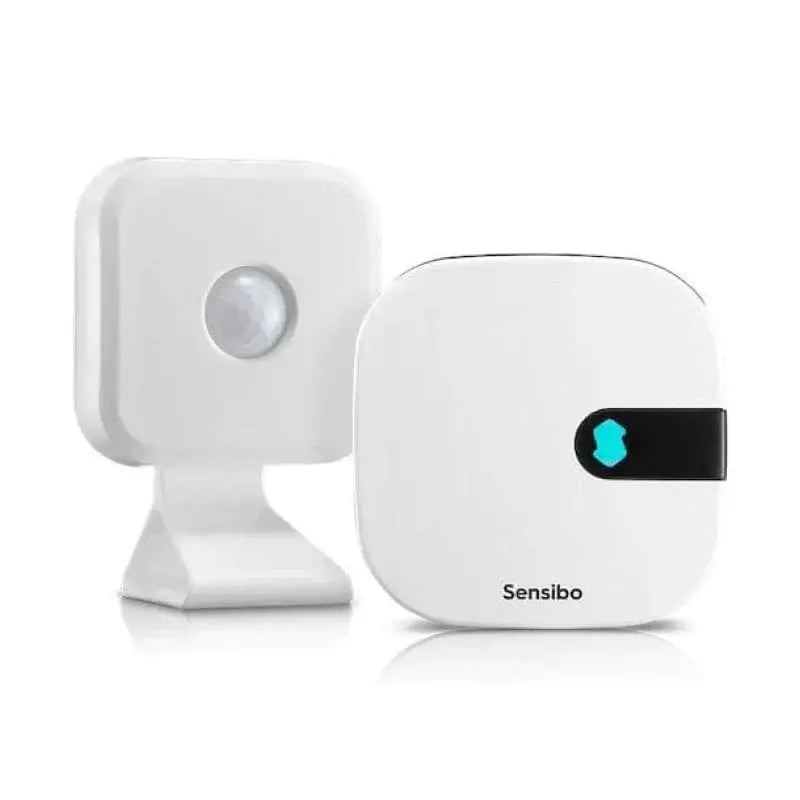
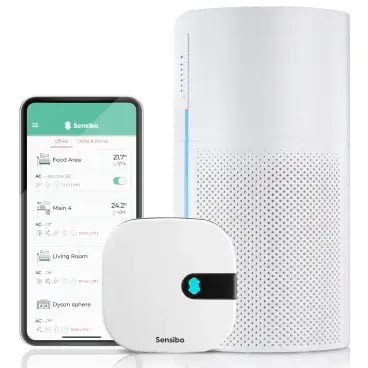
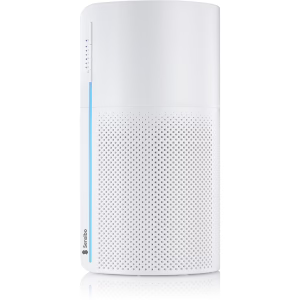
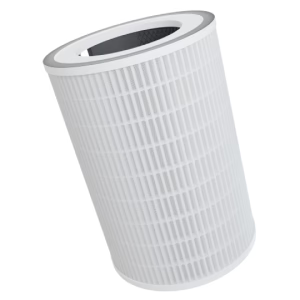
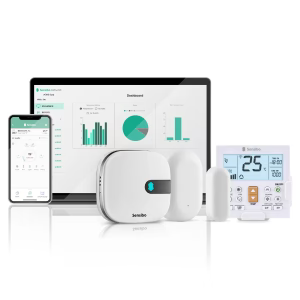
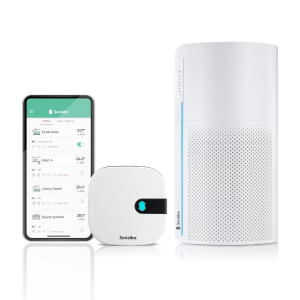
Sensibo Pure, for example, combines HEPA filtration with smart air quality sensing, so it adjusts automatically when spore levels change.
2. CADR rating: CADR (Clean Air Delivery Rate) tells you how fast the purifier can clean the air in a given space. Higher numbers mean faster filtration. Match this to your room size. A purifier with a great CADR in a small bedroom won't keep up in an open-plan living room.
3. UV-C + HEPA combo: Units that pair HEPA filtration with UV-C light give you the best of both: the filter traps spores, and the UV-C kills them. If you're specifically buying an air purifier to remove mold spores, this combination is the most effective consumer option available.
4. Room coverage and ACH: Every purifier is rated for a specific room size. Undersized units can't cycle enough air to make a real difference. Also check the ACH (Air Changes per Hour) rating. For rooms where mold is a concern, you want 4-6 air changes per hour.
5. Filter replacement costs: HEPA filters need regular replacement, and this is where ongoing costs add up. A clogged filter loses efficiency. Worse, a damp filter that hasn't been changed can actually become a breeding ground for the mold you're trying to remove. Check how often the manufacturer recommends replacement and what the filters cost before you buy.
6. Noise: These units run for hours. Some run all day. If you're putting one in a bedroom or home office, check the decibel rating at the speed you'll actually use. A purifier that's too loud to keep running defeats the purpose.
Extra Steps to Control Mold Beyond Air Purification
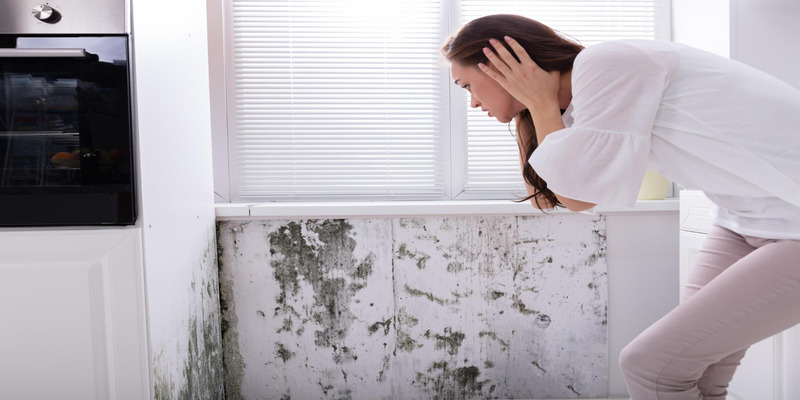 An air purifier handles the air. Everything else is on you, and most of it comes down to controlling water.
Fix leaks the moment you find them. A dripping pipe under the bathroom sink or a slow roof leak will feed mold faster than any purifier can keep up with. If carpet, drywall, or furniture gets wet, dry it within 24-48 hours or you're looking at mold growth that's already taken hold.
Run exhaust fans in bathrooms and kitchens every time you shower or cook. If a room doesn't have one, open a window. Pick up a cheap hygrometer so you can actually monitor your indoor humidity instead of guessing. You want to stay between 30-50%. Basements, attics, and closets against exterior walls tend to have the worst airflow, so pay extra attention to those spots.
And if you can smell mold but can't find it, don't ignore that. Hidden mold behind walls or under flooring is common and it won't resolve on its own. You can test your indoor air quality for mold, but that's when a professional inspection is worth the money.
So, Is an Air Purifier Worth It for Mold?
It's a good tool, not a solution. A HEPA air purifier will cut down the spores you're breathing, and that alone can make a noticeable difference if you're sensitive to mold. But the mold itself won't care that you bought one. Cut off its moisture, fix what's leaking, and then let the purifier do the cleanup work it's actually designed for.
.jpg?height=200&name=strategic-meeting-room-setting-staged-for-crucial-business-decisions%20(1).jpg)