
























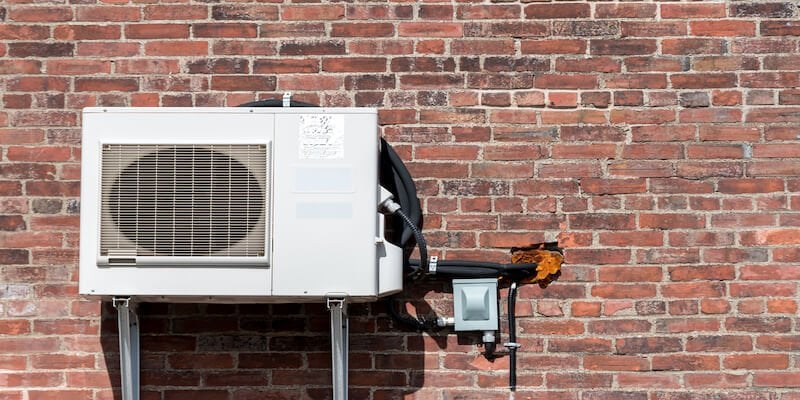
Ever noticed those neat AC units built into apartment walls? A through the wall air conditioner mounts permanently in an exterior wall, pushing cool air inside while exhausting heat outside. No blocked windows. No security worries. Just clean, built-in cooling.
How Through the Wall Air Conditioners Actually Work
Pretty simple, really. The mechanics mirror standard refrigeration cycles that power your fridge and your car's AC.
Warm indoor air gets pulled across an evaporator coil containing cold refrigerant. That refrigerant absorbs heat, cooling the air down. A blower fan pushes the now-cool air back into your room. Meanwhile, the warm refrigerant travels to the condenser coil on the unit's exterior side where a second fan expels all that absorbed heat outdoors. The refrigerant cools down. Cycles back. Repeats.
What makes these different from window units? The wall sleeve.
This metal sleeve gets fixed in a rectangular hole cut through your exterior wall. The actual AC unit slides into it like a drawer. Some models pack in electric resistance heaters too, giving you heating and cooling from one appliance.
Most through the wall air conditioners need a dedicated 120V or 240V electrical outlet depending on cooling capacity. The wall sleeve tilts slightly outward, about 1/4 inch, so condensation drains outside rather than pooling in your wall cavity.
Why Pick Through the Wall Over Other Options?
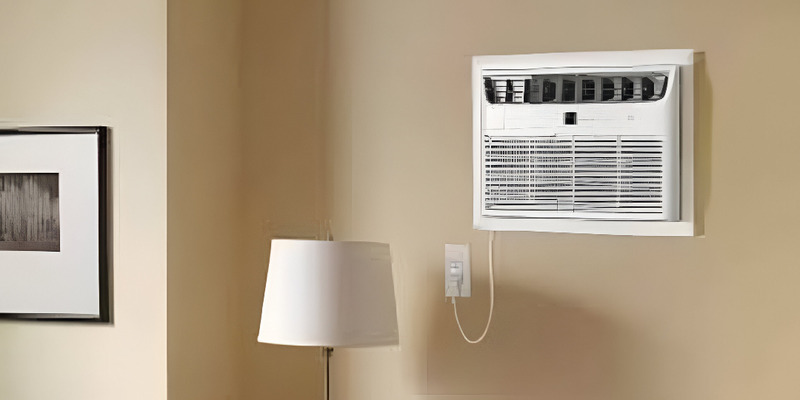 Several scenarios make wall-mounted AC units the smarter choice. And honestly, the benefits stack up more than most people realize.
Start with sealing. Window units? They create gaps everywhere. Bugs crawl in. Hot air sneaks around edges. Your cool air escapes outside. A properly installed wall unit sits flush against weatherstripping and insulation. Tight. Sealed.
Then there's your windows. Got a killer view? Keep it. Need emergency egress for fire codes? No obstruction. Want fresh air on mild spring days? Open whatever window you want.
Security gets overlooked too often. Window AC units create entry points because burglars can push them in from outside. Takes maybe 30 seconds. Through the wall air conditioners eliminate this vulnerability entirely. The unit locks into a structural opening, not a flimsy window sash.
Aesthetics improve on both sides. Outside, you see a neat grille instead of a box hanging awkwardly below your window. Inside, the unit blends in like a built-in feature.
Many models include electric heat strips for year-round capability too. One unit handles heating and cooling. No seasonal installation circus.
Through the Wall vs Window Air Conditioners
Both types use identical cooling technology. Same compressors. Same refrigerant cycles. The differences come down to installation and how you'll live with the thing for years.
|
Feature |
Window AC |
Through the Wall AC |
|
Unit Cost |
$200 to $800 |
$400 to $1,500 |
|
Installation |
DIY in 30 minutes |
Professional recommended |
|
Permanence |
Removable, portable |
Permanent wall modification |
|
Window Blocking |
Yes |
No |
|
Air Sealing |
Gaps around panels |
Tight weatherstripped sleeve |
|
Noise Level |
50 to 65 dB |
50 to 60 dB |
|
Security Risk |
Higher on ground floors |
Minimal |
|
Best For |
Renters, temporary cooling |
Homeowners, long-term use |
Window units work great for renters and temporary situations. Through wall AC units demand a permanent wall modification but deliver better sealing, no window obstruction, and quieter operation.
Choosing the Right Size for Your Room
Getting the right cooling capacity matters more than any other specification. Get this wrong and you'll regret it every summer.
Undersized units run constantly without ever reaching your target temperature. Your electricity bill climbs while you stay hot. Oversized units cycle on and off too frequently, wasting energy and failing to remove humidity. Cool but clammy.
BTU ratings indicate cooling power per hour. The general rule? About 20 BTUs per square foot of living space. A 300 square foot bedroom needs around 8,000 BTUs. A 500 square foot living room calls for 10,000-12,000 BTUs.
Those baseline numbers assume standard conditions. Sunny south-facing windows? Add 10% more BTUs. Heavy shade? Subtract 10%. Kitchens need an extra 4,000 BTUs because appliances throw off serious heat. More than two people in the space regularly? Add 600 BTUs per extra person.
That same 300 square foot space as a south-facing kitchen with three people cooking? Bump it to 12,000-14,000 BTUs.
Energy Efficiency Ratings Explained
Two efficiency metrics matter when you're shopping for through the wall air conditioners. These numbers tell you exactly what to expect on your monthly electricity bill.
EER stands for Energy Efficiency Ratio. It divides cooling capacity in BTUs by power consumption in watts at 95°F outside temperature. An 8,000 BTU unit drawing 800 watts scores an EER of 10.0. Higher numbers mean lower operating costs. Simple math. Look for 10.0 or above.
CEER goes further. Combined Energy Efficiency Ratio accounts for standby power too. That's the electricity your unit draws even when not actively cooling. Just sitting there. Modern AC electronics consume 3-50 watts continuously doing nothing. CEER captures this reality better. ENERGY STAR certification requires minimum CEER ratings of 10.7-12.1 depending on BTU output.
What does this mean for your wallet? A 10,000 BTU unit with 10.0 CEER running 8 hours daily for 4 months costs roughly $130-180 annually at average U.S. electricity rates. Over a 10-15 year lifespan, efficiency differences compound into hundreds of dollars. Not pocket change.
Make Any Through Wall AC Unit Smarter
Here's where most buyers miss a huge opportunity.
Stock units come with basic remotes. Limited controls. You manually adjust temperatures, forget to turn them off when leaving for work, and come home to either a sweltering room or one that's been cooling empty space for eight hours.
Smart controllers change everything.
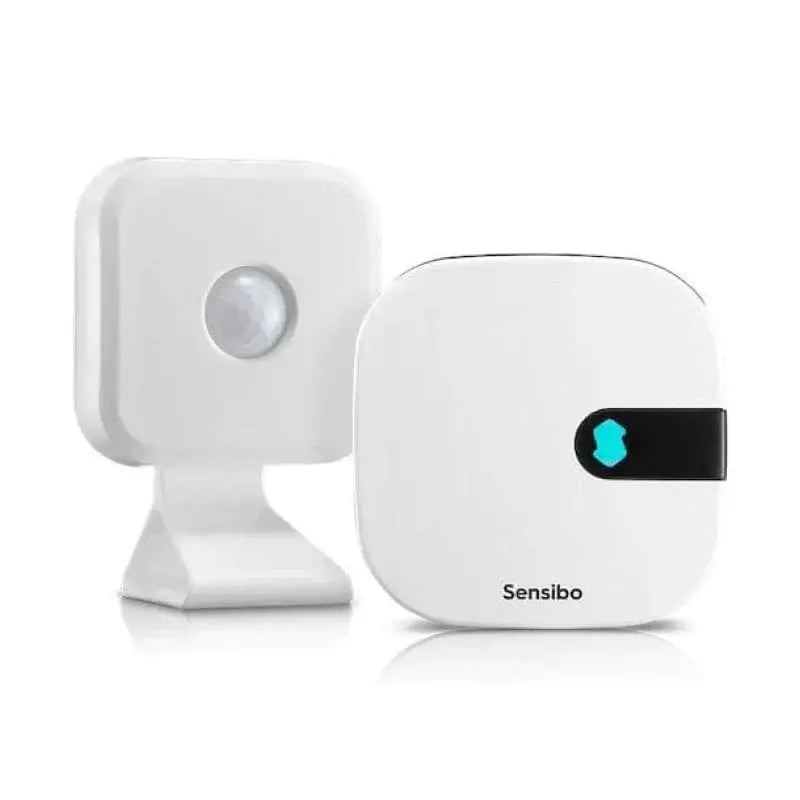
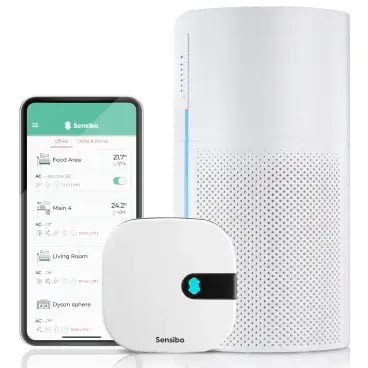
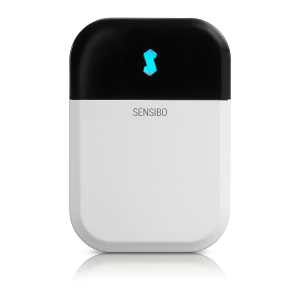
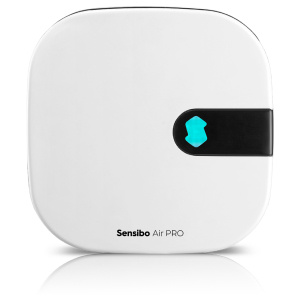
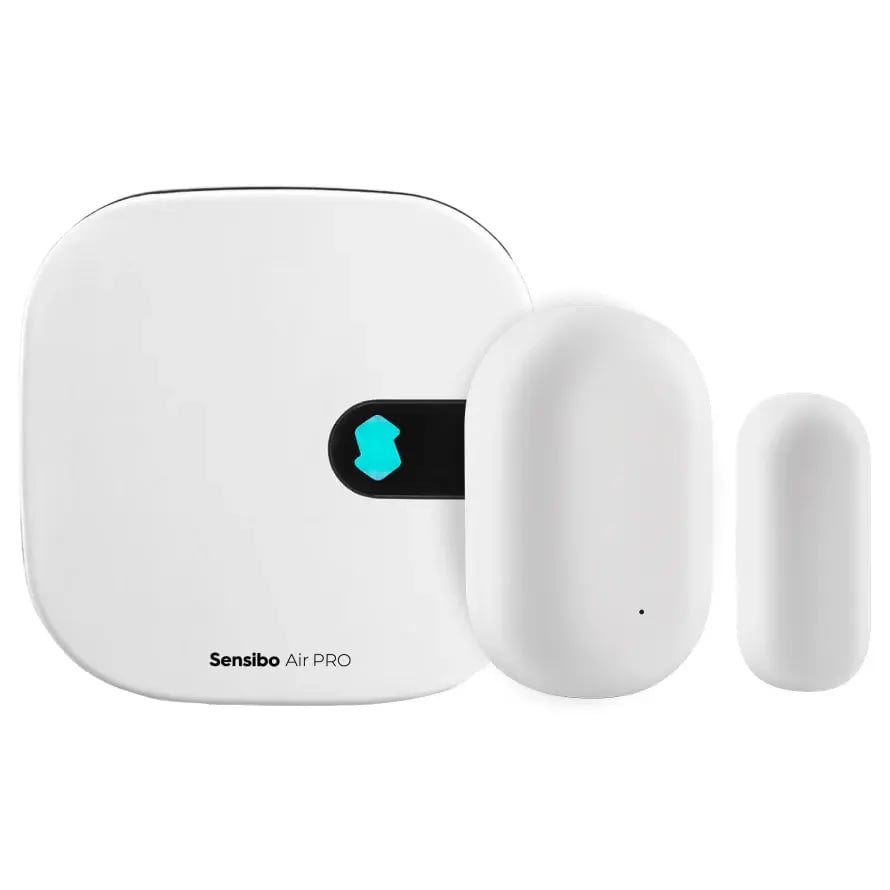
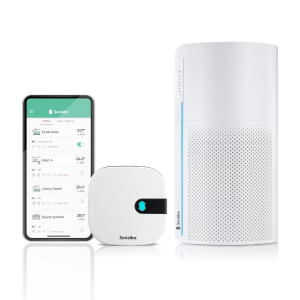
The Sensibo Sky plugs into any wall outlet and communicates with your through wall AC unit via infrared. Same signal technology your existing remote uses. Installation takes 60 seconds. No wiring. No modifications.
What do you actually gain? Smartphone control from anywhere tops the list. Cool down your place before arriving home. Geofencing automates temperature adjustments based on your location. Leave home and your AC shifts to energy-saving mode. Approach within range and cooling kicks back on before you walk through the door.
Climate React monitors temperature and humidity in real-time, triggering AC automatically when conditions exceed your thresholds. Combined with 7-day scheduling and voice control through Alexa, Google Assistant, and Siri, you create cooling patterns matching your actual lifestyle.
Sensibo estimates 25-40% reductions in cooling costs. At $119-139 for the Sky, payback typically happens within the first cooling season.
Installation Considerations
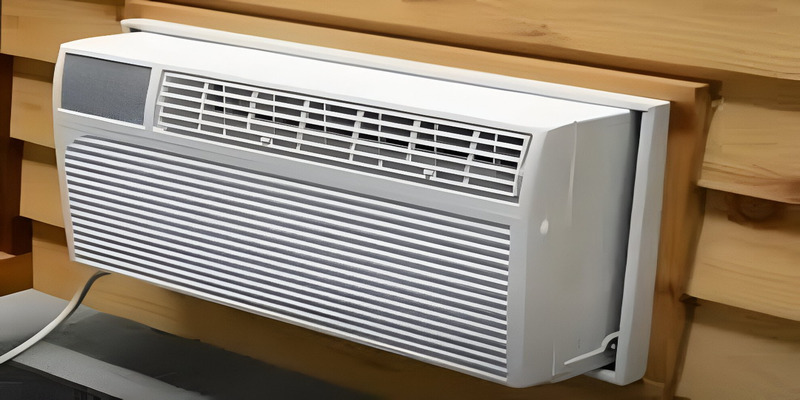 Installing a through the wall air conditioner differs substantially from window units. Most homeowners hire HVAC contractors. Smart move.
The process breaks down into clear steps:
- Select a wall location on an exterior wall while avoiding hidden electrical wiring and plumbing
- Cut a rectangular opening matching the wall sleeve dimensions exactly
- Install the sleeve with proper outward drainage tilt
- Weatherproof and insulate around the sleeve edges
- Run electrical to the location, which often requires a dedicated circuit
- Slide the AC unit into the sleeve and secure it
- Finish interior and exterior trim work
Professional installation runs $200-500 depending on wall construction and electrical requirements. DIY remains possible for experienced homeowners, but check local building codes first. Some jurisdictions require permits.
Sleeve sizing deserves more attention than you'd expect. When replacing existing units, measure the current sleeve carefully. Buying a unit matching your current sleeve eliminates wall modification work entirely.
Maintenance Keeps Efficiency High
Through wall AC units need the same basic maintenance as any air conditioner. Neglect it and efficiency drops 5-15% annually. Components wear faster.
Monthly tasks during cooling season? Clean or replace the air filter. Clogged filters restrict airflow and force the compressor to work harder. Clear debris from the exterior grille too.
Annual maintenance involves cleaning evaporator and condenser coils with coil cleaner spray. Verify the condensate drain flows freely. Check weatherstripping around the sleeve and replace deteriorated seals.
Well-maintained units last 10-15 years. Neglected ones die at 5-8. Your choice.
Final Thoughts
The real opportunity with through-wall cooling isn't the hardware itself. It's what you do after installation. Pair a properly sized unit with smart controls and basic air conditioning becomes a responsive system that adapts to your schedule, location, and comfort preferences without you thinking about it. That combination of permanent installation and intelligent management delivers efficiency gains that neither cheap window units nor expensive central systems can match at similar price points.

.jpg?height=200&name=photo_2025-02-07_20-01-26%20(1).jpg)
.jpg?height=200&name=13130%20(1).jpg)