






















That moment when you open your electricity bill and wonder if someone's been secretly running a bitcoin mining operation in your basement? For most households, the culprit is simpler: your air conditioner.
AC units do consume significant electricity—often 50-70% of summer energy costs. But here's what the bills don't show you: identical air conditioners in identical homes can cost wildly different amounts to operate. The variable isn't the equipment. It's the person controlling it.
I'm going to walk through five specific mistakes that inflate cooling costs, why each one drains your wallet, and exactly how to stop the bleeding. Some fixes take thirty seconds. One might change how you think about home cooling entirely.
How Much Electricity Does Your AC Actually Use?
People ask this question expecting a simple answer. They don't get one—because AC energy consumption depends entirely on how you operate the unit.
A mini-split rated at 1,000 watts doesn't use 1,000 watts continuously. The compressor cycles. It runs until hitting target temperature, shuts off, waits for the room to warm a few degrees, then kicks back on. Efficient operation might mean 15-20 minutes of runtime per hour. Poor operation? The compressor never stops.
Here's what different AC types draw at full load:
|
AC Type |
Wattage Range |
Cost per Hour (at $0.16/kWh) |
Summer Monthly Range* |
|
Window Unit (5,000 BTU) |
450-550W |
$0.07-$0.09 |
$18-$45 |
|
Window Unit (12,000 BTU) |
1,000-1,400W |
$0.16-$0.22 |
$40-$110 |
|
Mini-Split (9,000 BTU) |
600-900W |
$0.10-$0.14 |
$25-$70 |
|
Mini-Split (18,000 BTU) |
1,400-1,800W |
$0.22-$0.29 |
$55-$145 |
|
Central AC (3-ton) |
3,000-3,500W |
$0.48-$0.56 |
$120-$280 |
*Range reflects efficient vs. inefficient operation patterns over 30 days
Notice those ranges. The gap between low and high isn't random—it's behavioral. A Phoenix household running a mini-split efficiently might pay $35/month. Their neighbor with identical equipment, making the mistakes below, pays $90.
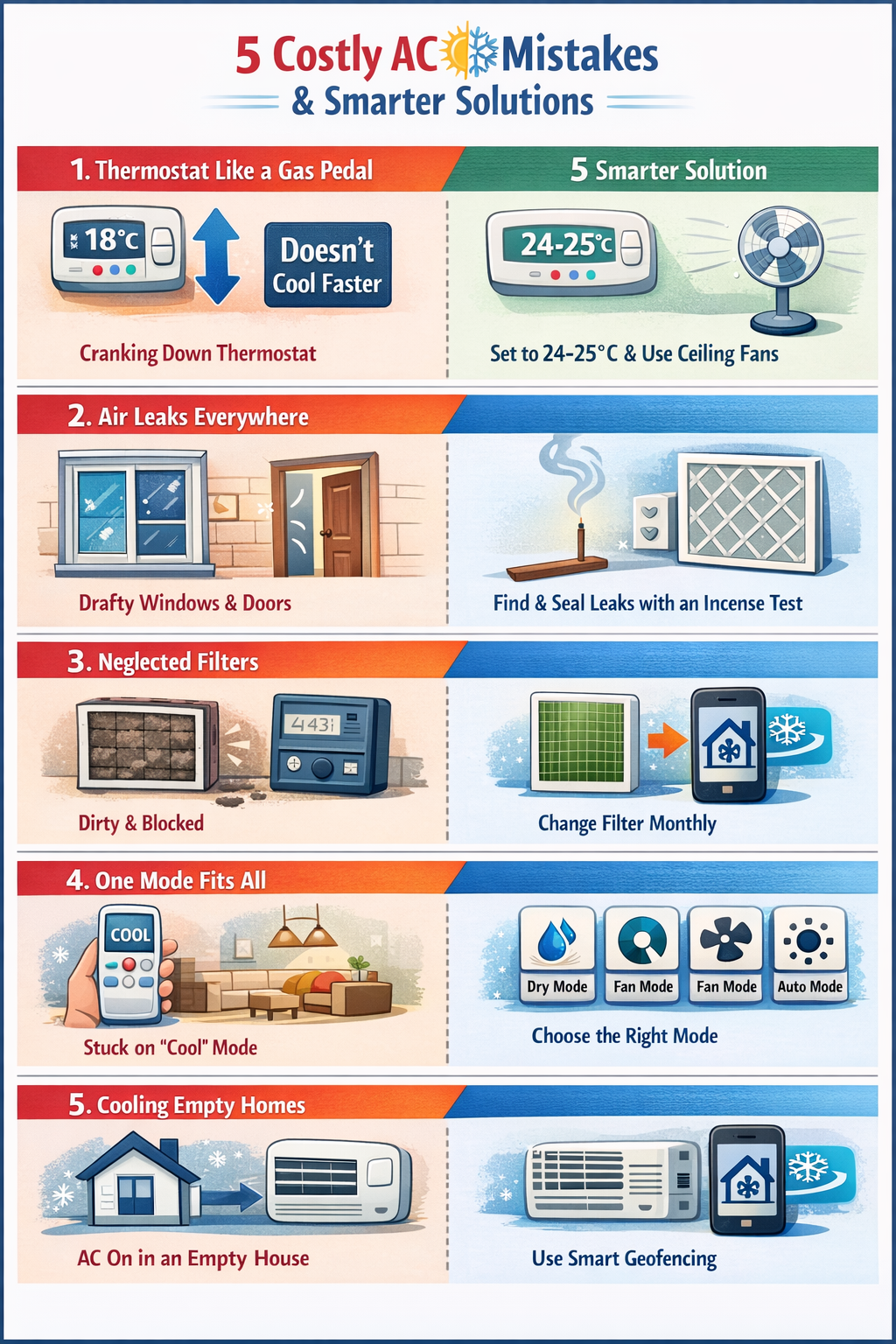 Mistake #1: Treating the Thermostat Like a Gas Pedal
You walk into a hot house. You crank the thermostat down to 18°C (64°F), thinking it'll cool faster.
It won't.
Your AC has one speed. Setting a lower temperature doesn't increase cooling output—it just extends runtime. The compressor keeps grinding until hitting that absurdly low target or until you give up and adjust it. Meanwhile, you've been paying peak electricity rates for an hour of unnecessary operation.
The real cost: every degree Celsius below 24°C (75°F) increases energy consumption by approximately 3-5%. The Department of Energy has confirmed this repeatedly. Drop from 24°C to 20°C and you've added 12-20% to your cooling costs without meaningfully improving comfort.
Quick test: Set your AC to 24°C for one full week. Track the runtime (many units display this, or you can use a smart plug with energy monitoring). The following week, drop to 22°C and compare. Most people find the comfort difference negligible; the energy difference isn't.
What actually works: Set 24-25°C (75-77°F) as your baseline. If you feel warm, a ceiling fan or standing fan creates perceived cooling of 3-4°C through air movement—at roughly 1/50th the energy cost of actually lowering AC temperature.
Mistake #2: Fighting Physics with Air Leaks
Your air conditioner removes heat from indoor air and dumps it outside. Simple enough. But it can only work with the air inside your space—not the hot air constantly sneaking in through gaps you've never noticed.
The Department of Energy puts the number at 25-30% of heating and cooling energy lost to air leakage in typical homes. That's not a rounding error. A quarter of your AC's output, gone before it reaches you.
Common leak points most people miss:
- Window AC units: The accordion panels on the sides rarely seal completely. Foam weatherstrip tape costs $8 and takes five minutes to install.
- Door sweeps: Slide a piece of paper under your exterior doors. If it passes through easily, so does air.
- Electrical outlets on exterior walls: Remove the cover plate and feel for drafts. Foam gaskets (sold in packs of 12 for $5) solve this.
- Recessed lighting: Can lights in ceilings below attic spaces leak conditioned air constantly.
- Dryer vents: The flap should close completely when not in use. Many don't.
What actually works: On a windy day, turn your AC off and walk through with a lit incense stick. Watch the smoke near windows, doors, and outlets. Horizontal smoke means no leak. Smoke pulling toward the wall means air exchange—and wasted electricity.
Mistake #3: The Forgotten Filter
When did you last change or clean your AC filter? If you have to think about it, the answer is "too long ago."
A dirty filter doesn't just hurt air quality—it strangles airflow. Your system's fan motor strains to pull air through the obstruction. The evaporator coil can't absorb heat efficiently with reduced airflow. The compressor runs longer cycles to achieve the same cooling. Everything works harder because you forgot a $12 maintenance task.
ASHRAE (American Society of Heating, Refrigerating and Air-Conditioning Engineers) research shows dirty filters increase energy consumption by 5-15%. Severely neglected filters—the kind that look like felt after six months—push efficiency losses even higher.
What actually works: Set a monthly phone reminder. First of each month, check your filter. Hold it up to light. Can't see through it? Replace it. Reusable filters get vacuumed and reinstalled.
For mini-splits and window units, the filter slides out from the front panel. Rinse under running water, let dry completely, reinstall. Two minutes, once monthly, potentially 15% energy savings.
Mistake #4: Paying to Keep Furniture Comfortable
Here's an uncomfortable question: how many hours per day does your AC cool an empty house?
Most people leave for work around 8 AM. Return around 6 PM. That's ten hours. Even accounting for the time needed to pre-cool before arrival, you're looking at eight or nine hours of cooling rooms where nobody exists to feel it.
"But I hate coming home to a hot house" isn't an argument against solving this problem. It's an argument for solving it intelligently.
Manual approaches fail because they require you to remember, predict, and execute perfectly every single day. You won't. Nobody does. The answer is automation that responds to actual occupancy patterns, not schedules you set once and forget to update.
What actually works: Geofencing technology uses your phone's location to trigger AC operation. Leave your home's radius—system enters efficiency mode (higher setpoint or off). Cross back into the radius heading home—cooling starts automatically. No manual input required, no coming home to a sauna, no cooling empty rooms.
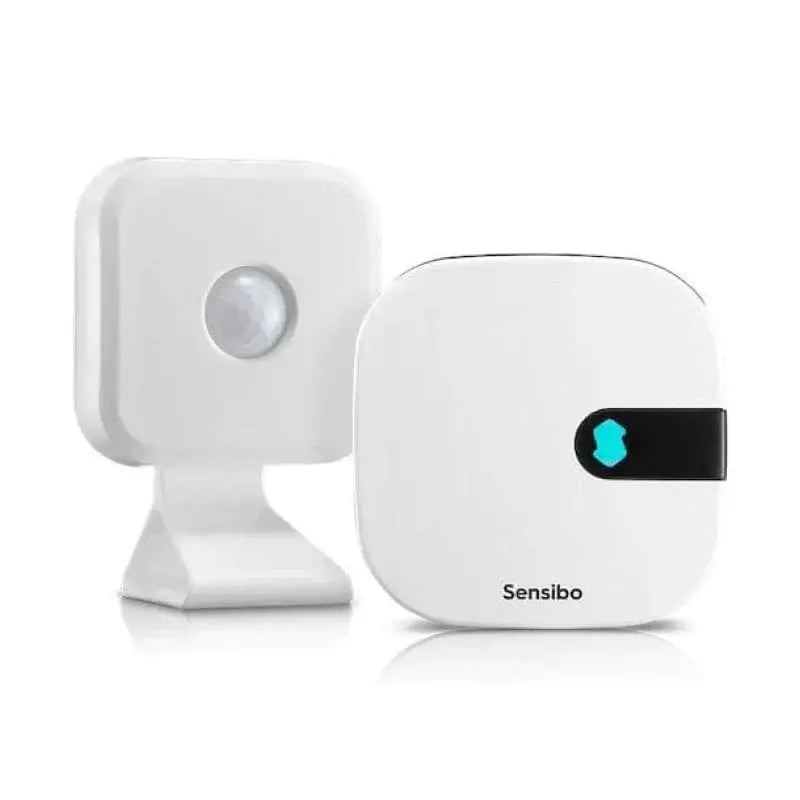
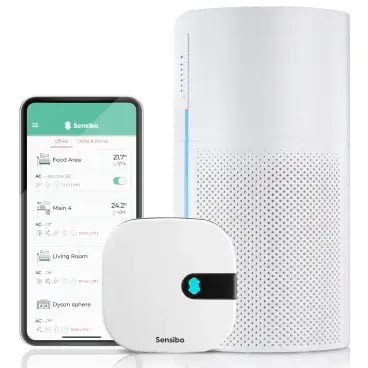
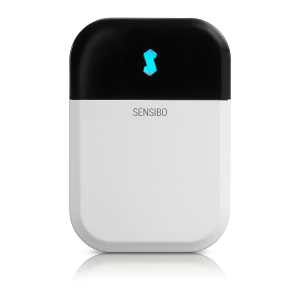
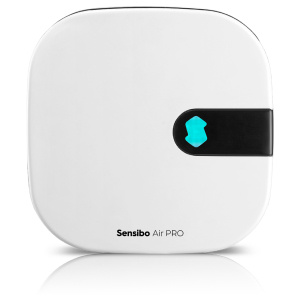
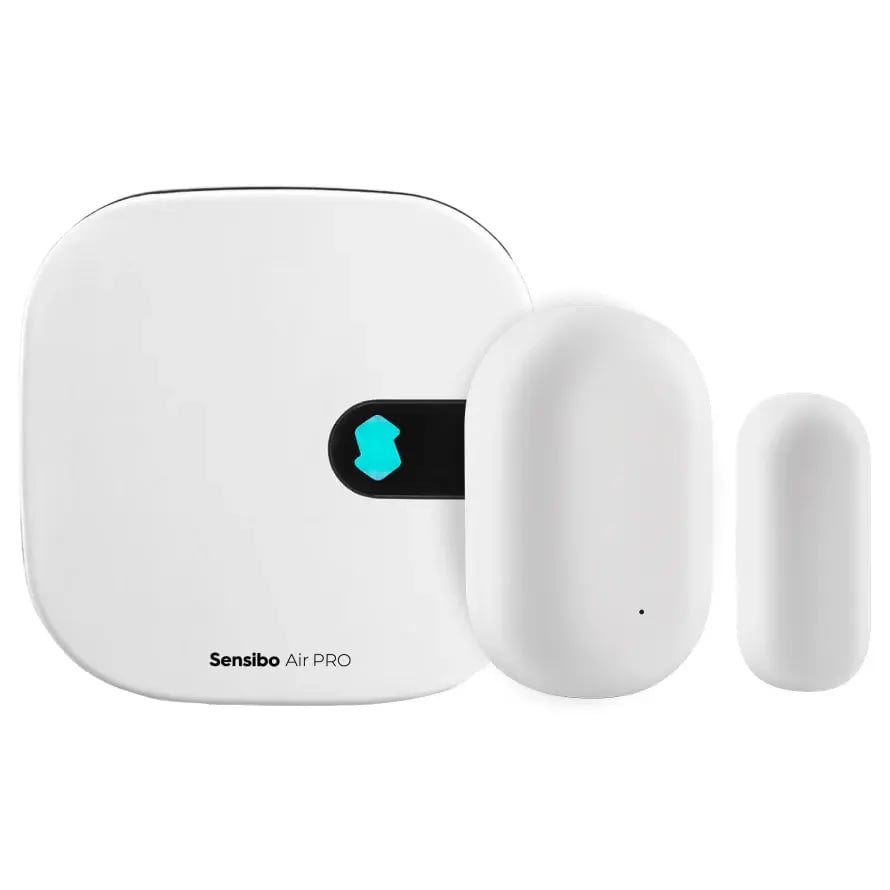
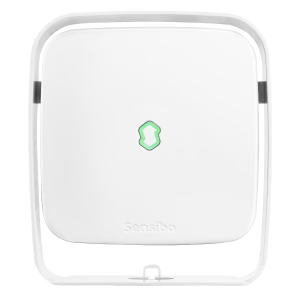
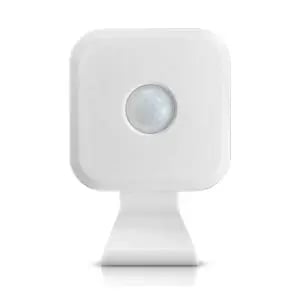
Sensibo controllers include a geofencing standard. The Climate React feature goes further: it monitors actual room conditions and responds to temperature and humidity changes in real time, maintaining comfort with minimal energy waste. You set the parameters once; the system handles execution forever.
 Mistake #5: One Mode Fits All (It Doesn't)
That "mode" button on your remote exists for a reason. Most people press it once accidentally, get confused, and never touch it again—defaulting to "cool" mode year-round.
This costs money on days when aggressive cooling isn't necessary.
Cool mode runs the compressor continuously until reaching target temperature. Maximum cooling power, maximum energy consumption. Appropriate when outdoor temperatures exceed 32°C (90°F) or when you need rapid cooldown.
Dry mode cycles the compressor on and off while running the fan, removing humidity without dramatic temperature reduction. On a 27°C (80°F) day with 75% humidity, dry mode often feels just as comfortable as cool mode—at 30-50% lower energy consumption.
Fan mode circulates air without any active cooling. Useful in the evening when outdoor temperatures drop but indoor air feels stagnant. Energy cost: negligible.
Auto mode switches between heating and cooling based on conditions. Fine for shoulder seasons, but often less efficient than manual mode selection when you know what you need.
The humidity factor: Human comfort depends more on humidity than most people realize. 24°C at 70% humidity feels muggy and warm. 26°C at 45% humidity feels pleasant. Dry mode addresses the actual discomfort while cool mode brute-forces temperature reduction you may not need.
What actually works: Check outdoor conditions before defaulting to cool mode. Moderately warm but humid? Try dry mode for an hour. Evening cooldown beginning? Switch to fan mode. Reserve aggressive cooling for genuinely hot days.
The Compounding Problem (And Its Solution)
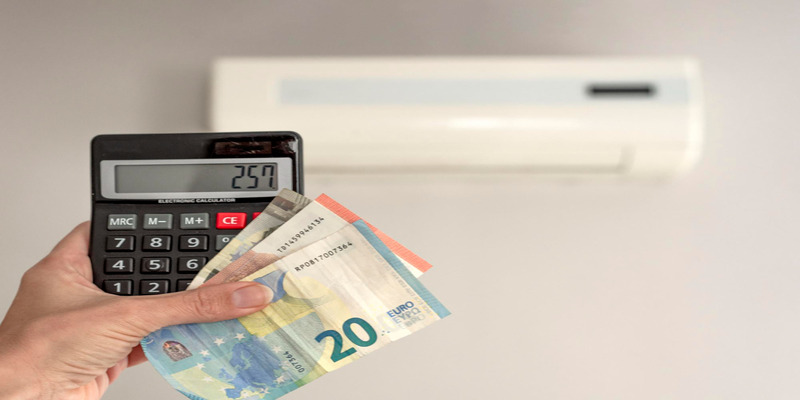 Each mistake above might add 10-15% to your cooling costs individually. But they stack. Run the thermostat too low, with a dirty filter, cooling empty rooms, in the wrong mode—and you've potentially doubled what efficient operation would cost.
The common thread? Each mistake requires you to actively do something correctly, consistently, every single day. Human attention doesn't scale that way.
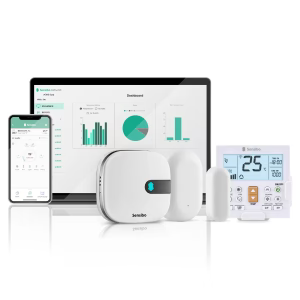
This is why smart AC controllers exist. Not as luxury gadgets—as automation that removes human inconsistency from the equation. Sensibo devices address each failure mode directly:
- Climate React maintains your preferred temperature band automatically, eliminating the "thermostat as gas pedal" problem
- Geofencing ensures you never cool an empty home again—or return to an uncomfortable one
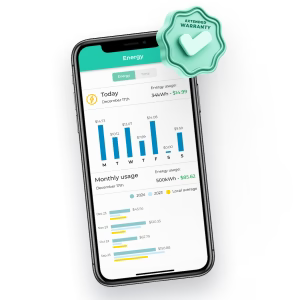
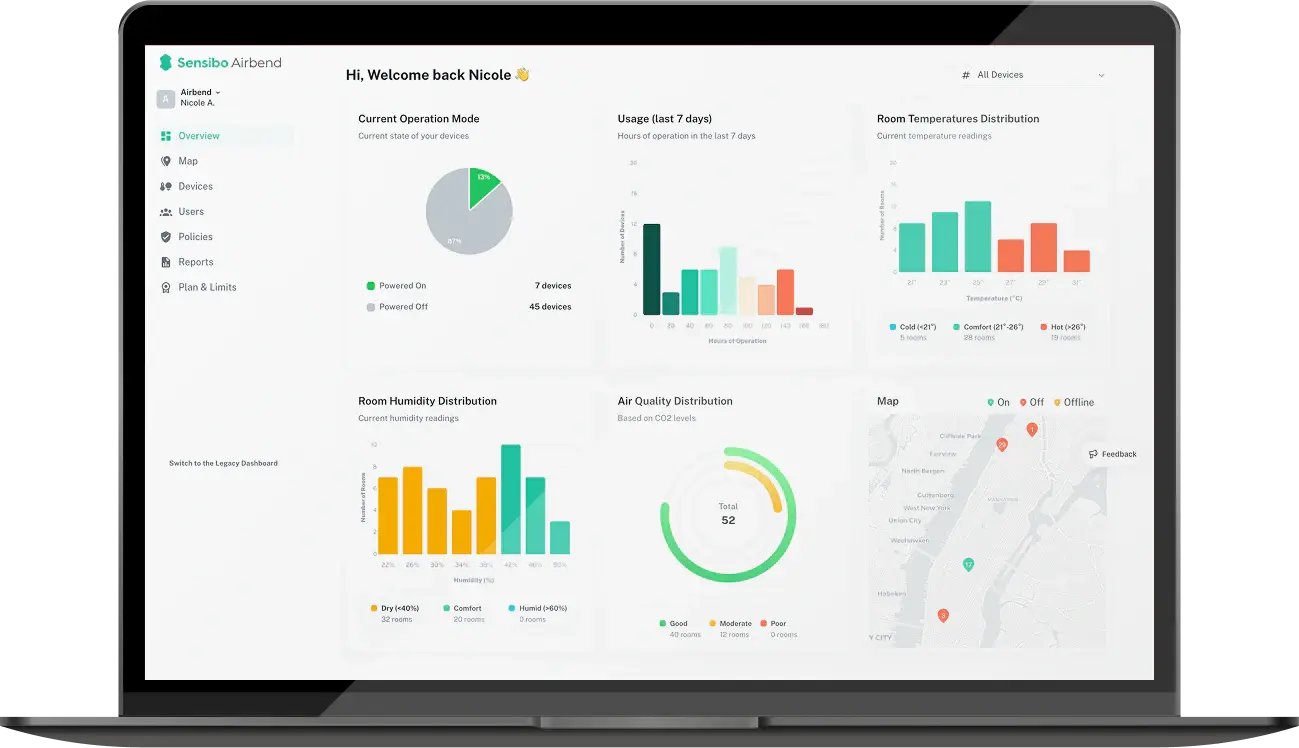
- Usage analytics show exactly when your AC consumed electricity and why, making invisible waste visible
- Filter cleaning reminders based on actual runtime, not arbitrary calendar dates
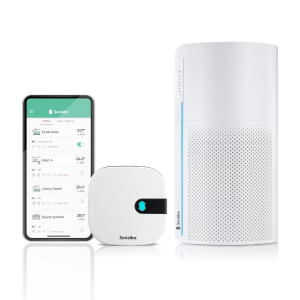
The Air Pro model adds indoor air quality sensors (PM2.5, VOCs, CO2 equivalent), so you know when opening windows makes more sense than recirculating stale air—another energy decision most people get wrong.
Typical results? Users report 25-40% reductions in AC electricity costs. Not from dramatic sacrifice or discomfort. From eliminating the small, invisible inefficiencies that accumulate into large visible bills.

.jpg?height=200&name=photo_2024-01-16_18-35-46%20(1).jpg)

.png?height=200&name=image_2023-11-20_10-40-17%20(1).png)