





















.jpg)
A 2018 Harvard study tracking 10 million PSAT-takers found that every 1°F increase in average school-year temperature reduced student learning by 1%. Separately, research on New York City Regents exams showed students were 12% more likely to fail when tested at 90°F compared to 72°F. The same Harvard research found that air conditioning systems for schools offset roughly 78% of heat-related learning loss.
These aren't marginal effects. For districts already fighting achievement gaps, classroom climate is a variable they can actually control—if their HVAC infrastructure allows it. Most schools still run equipment installed decades ago, managed by basic thermostats with no scheduling, no room-by-room visibility, and no air quality monitoring.
The technology to change this exists. Smart controllers and modern commercial thermostats for schools retrofit onto existing systems, adding remote access, automated scheduling, and integrated air quality sensors. This article covers the research linking temperature to academic performance, what features matter in school HVAC controls, and how to assess whether upgrading makes financial sense.
How Classroom Climate Affects Student Performance
The connection between temperature and cognition isn't speculation—it's measured. When classrooms get too warm, blood flow shifts toward the skin to regulate body temperature, reducing oxygen delivery to the brain. Attention drifts. Working memory falters. Students physically can't focus the way they would in a comfortable room.
Temperature and Test Scores
Research backs this up with hard numbers. A 2015 study of 140 fifth-grade classrooms in the Southwestern U.S. found that within the 68–77°F range, test scores increased by 12–13 points for each degree the temperature dropped. The same study linked higher ventilation rates to better academic performance—students in well-ventilated rooms consistently outscored those in stuffy ones.
The Harvard PSAT research mentioned earlier also uncovered an equity dimension. Heat doesn't affect all students equally. Low-income and minority students experienced learning losses roughly three times greater than their white and affluent peers when exposed to the same elevated temperatures.
The infrastructure gap matters. Black and Hispanic students were several percentage points less likely to have air-conditioned classrooms than white students in similar climates. The Harvard researchers estimated that heat exposure alone accounts for 3–13% of the racial achievement gap on standardized tests.
Beyond Temperature: Humidity, CO2, and Air Quality
High humidity makes warm air feel hotter, compounding discomfort. Low humidity dries out airways, causing irritation that pulls attention away from lessons. CO2 buildup—common in crowded, poorly ventilated classrooms—impairs cognitive function even before students notice anything feels "off."
Studies of classroom air quality found the median CO2 concentration during school hours hovers around 1,086 ppm, with roughly 20% of classrooms exceeding 1,000 ppm—the threshold above which drowsiness, difficulty concentrating, and headaches become more common.
Ideal vs. Typical Classroom Conditions
|
Factor |
Recommended Range |
Typical Classroom Reality |
|
Temperature |
68–74°F (20–23°C) |
Often 75°F+ in warmer months |
|
Relative Humidity |
40–60% |
Varies widely; rarely monitored |
|
CO2 Concentration |
Below 800 ppm |
Median ~1,086 ppm; 20% exceed 1,000 ppm |
|
Ventilation Rate |
15 CFM per person |
Many older buildings fall short |
Challenges Schools Face with HVAC Management
 Aging Infrastructure with Limited Controls
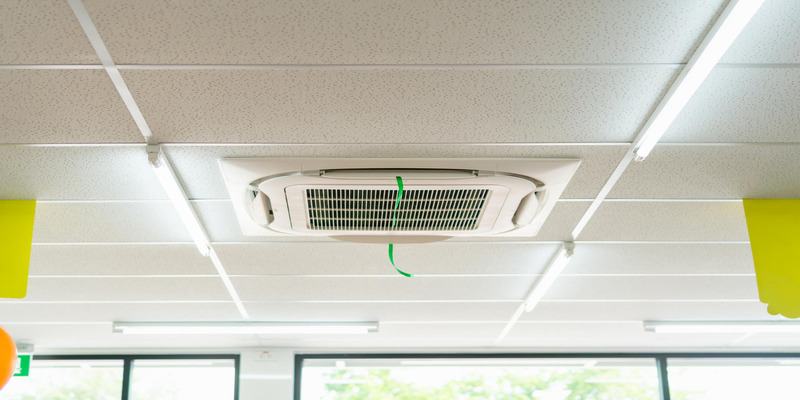
Most air conditioning systems for schools were installed decades ago. The average public school in the U.S. is over 40 years old. HVAC systems from that era offer two modes: on or off. No room-by-room visibility. No occupancy detection. No way to know if the gymnasium is 68°F while a south-facing classroom hits 82°F.
Even buildings with programmable thermostats often run on fixed schedules — HVAC kicks on at 6 AM and runs until 6 PM regardless of actual occupancy.
The Maintenance Backlog
Deferred maintenance compounds the problem. Filters go unchanged. Ductwork leaks. Refrigerant levels drop. According to the U.S. Government Accountability Office, an estimated 36,000 schools need HVAC updates, with many relying on systems that no longer meet current ventilation standards.
Without routine servicing, efficiency drops year over year. A system that was adequate when installed may now struggle to maintain temperature — let alone manage humidity or air quality.
Budget Constraints
HVAC upgrades compete for funding against teacher salaries, classroom technology, and building security. Full system replacements can run $15–30 per square foot — potentially millions for a single building.
The result is patchwork. One wing gets updated while another waits. Portable AC units appear in the worst classrooms. Thermostats get replaced without addressing underlying ductwork issues.
Variable Occupancy
Schools aren't single-use buildings. A gymnasium packed with 300 students has different HVAC demands than the same space empty an hour later. Cafeterias spike at lunch. Computer labs run hotter than standard classrooms. Traditional systems can't adapt — they condition based on schedule, not need.
What Smart AC Controllers Do Differently
Retrofit Installation
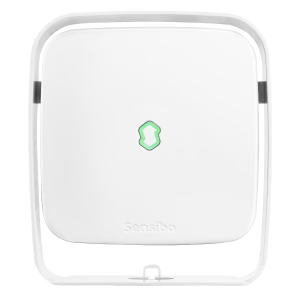
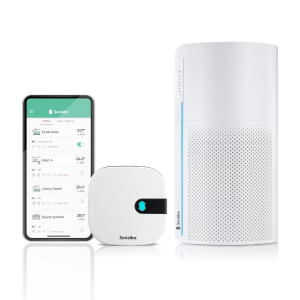
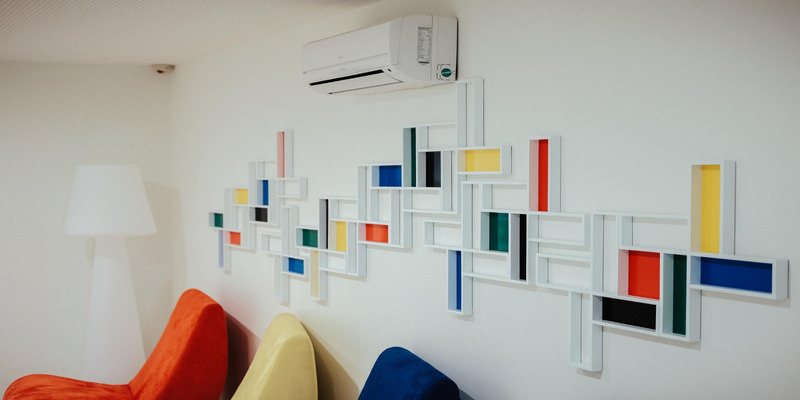
Smart controllers connect to existing HVAC equipment — window units, mini-splits, central air — via infrared, WiFi, or direct wiring. No system replacement required. A facility team can install most devices in under an hour per unit without contractors.
A $100–200 controller per classroom is a different budget conversation than $15–30 per square foot for new infrastructure.
Scheduling and Occupancy Response
Fixed schedules waste energy. Smart controllers tie HVAC operation to class periods, assembly days, holidays, and half-days — some integrate with school calendars automatically.
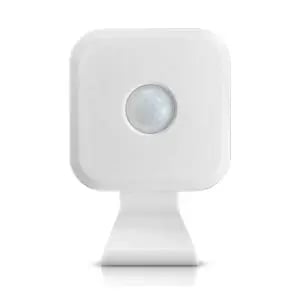
Occupancy detection takes it further. Motion sensors or CO2-based detection scale HVAC back when rooms empty and ramp up when students return. This handles the unpredictable: early dismissals, room changes, after-school programs.
Zoning and Centralized Control
A single building has dozens of microclimates. South-facing classrooms bake while north-side rooms stay cool. Computer labs run hot; gymnasiums need airflow only during use.
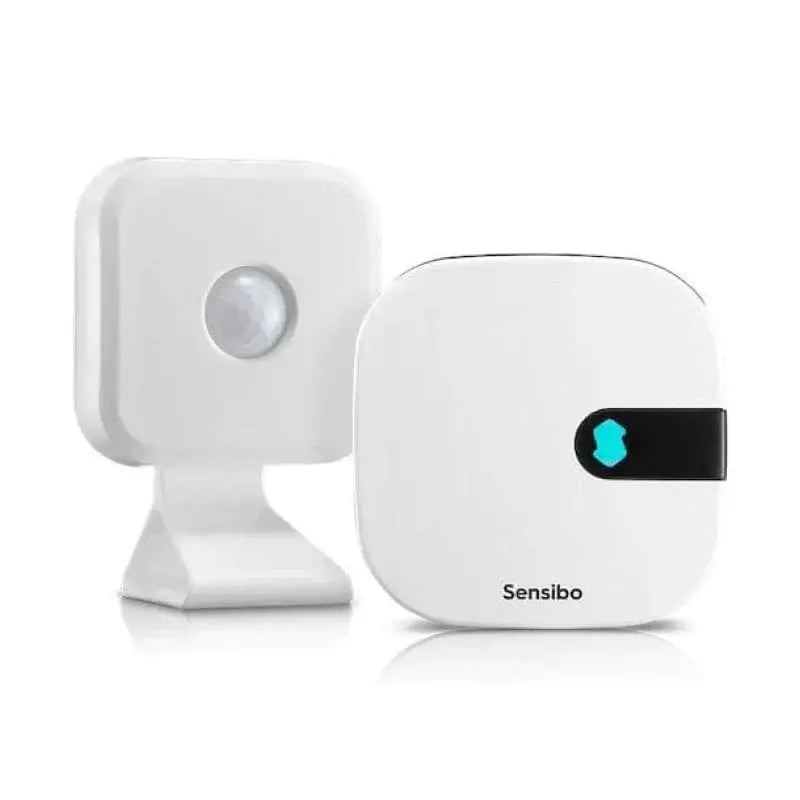
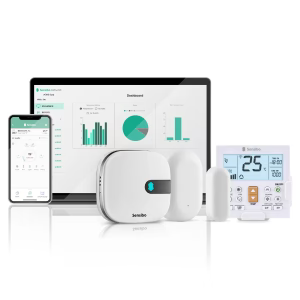
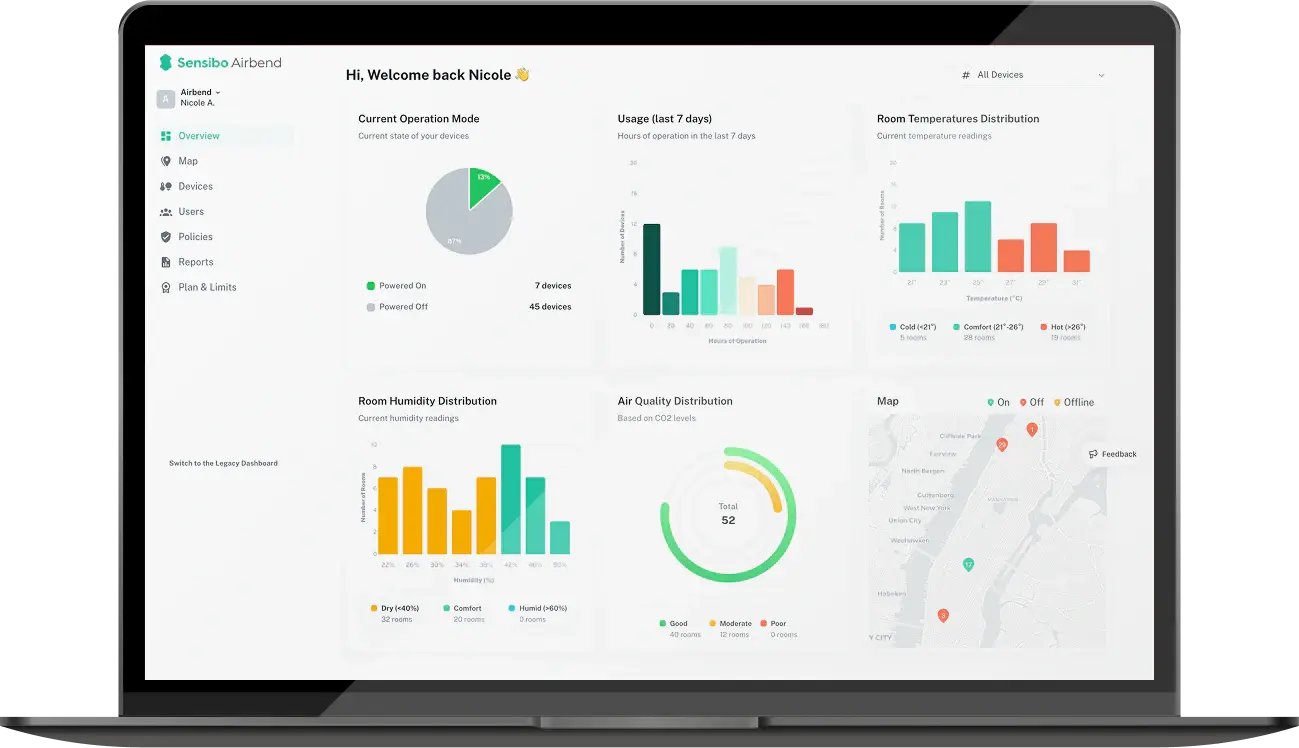
A commercial thermostat for schools enables room-by-room management from a central dashboard. Facility managers see which spaces are too hot, too cold, or running unnecessarily — and adjust remotely from any device. If a unit fails overnight or a classroom spikes to 85°F, they know before students arrive.
Air Quality Monitoring
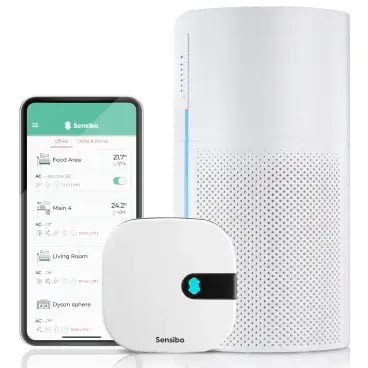
Some controllers include built-in sensors for CO2, humidity, and PM2.5. Others integrate with standalone monitors. When CO2 rises in a crowded classroom, the system can increase fresh air intake or alert staff — addressing comfort, health, and compliance in one layer.
Basic Thermostat vs. Smart Controller
|
Capability |
Basic Thermostat |
Smart Controller |
|
Temperature control |
Yes |
Yes |
|
Remote access |
No |
Yes |
|
Scheduling |
Fixed time blocks |
Calendar-synced, occupancy-based |
|
Room-by-room visibility |
No |
Yes |
|
Air quality monitoring |
No |
Available on some models |
|
Occupancy detection |
No |
Yes |
|
Alerts and diagnostics |
No |
Yes |
|
Works with existing HVAC |
Depends |
Yes (retrofit) |
Indoor Air Quality: Why It Matters More Now
 What Schools Are Expected to Monitor
CO2 concentration serves as a proxy for ventilation. High CO2 means exhaled air accumulates faster than fresh air replaces it. Median classroom levels sit around 1,086 ppm, with 20% exceeding 1,000 ppm.
Particulate matter (PM2.5) measures fine particles from wildfire smoke, vehicle exhaust, and dust. During fire season, schools without proper filtration bring outdoor air quality problems inside.
Humidity affects comfort and health. Below 30% increases respiratory infection risk. Above 60% encourages mold.
Volatile organic compounds (VOCs) off-gas from cleaning products, furniture, and flooring.
Ventilation Standards Are Tightening
ASHRAE Standard 62.1 specifies classroom ventilation using a two-part formula: 10 CFM per person plus 0.12 CFM per square foot. For a typical 900 sq ft classroom with 25 students, that's roughly 14 CFM per person when both components combine. Many older systems don't meet this.
States are adding requirements. California's AB 841 (CalSHAPE) mandates MERV-13 filters where feasible and requires CO2 monitors in classrooms for participating districts. The 2022 CALGreen code extends the CO2 monitor requirement to all new K-12 school construction. Other states have followed with similar rules or tied funding to IAQ upgrades.
Smart Controllers with Built-In Sensors
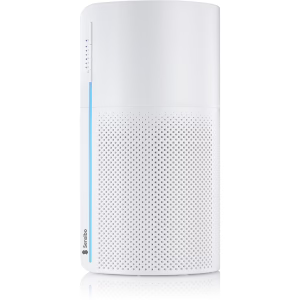
Dedicated air quality monitors like the Awair Element ($149–299) or IQAir AirVisual Pro (~$269) track CO2, PM2.5, and VOCs — but only monitor. Smart AC controllers with integrated sensors consolidate climate control and air quality monitoring into one device.
When sensors detect poor air quality, the system increases fresh air intake, triggers connected purifiers, or alerts staff — automatically logged for compliance reporting.
Managing Climate Across Multiple Buildings
Smart controllers solve the classroom problem. They don't solve the visibility problem: Which buildings are running HVAC during unoccupied hours? Which classrooms consistently exceed CO2 thresholds? Where is energy consumption spiking?
Districts manage dozens or hundreds of buildings, each with different equipment, schedules, and maintenance histories. Upgrading air conditioning systems for schools at this scale requires room-level controls and centralized oversight.
Centralized Control for Districts
Sensibo Airbend provides a single dashboard across all locations — currently deployed across 300,000+ devices in 120+ countries. Facility managers can:
- Set district-wide policies — temperature limits, operating hours, holiday schedules — and push them to every device at once
- Monitor air quality and energy use by building, floor, or room in real time
- Generate compliance reports for IAQ audits, energy benchmarks, or board presentations
- Receive alerts when any classroom exceeds temperature or CO2 thresholds
The platform includes an AI assistant (powered by ChatGPT) that analyzes usage patterns and recommends schedule adjustments — answering questions like "Why did Building C use 40% more energy this month?"
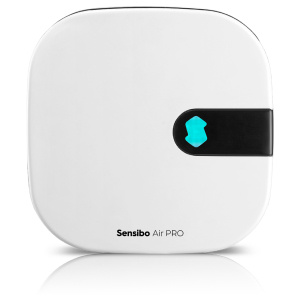
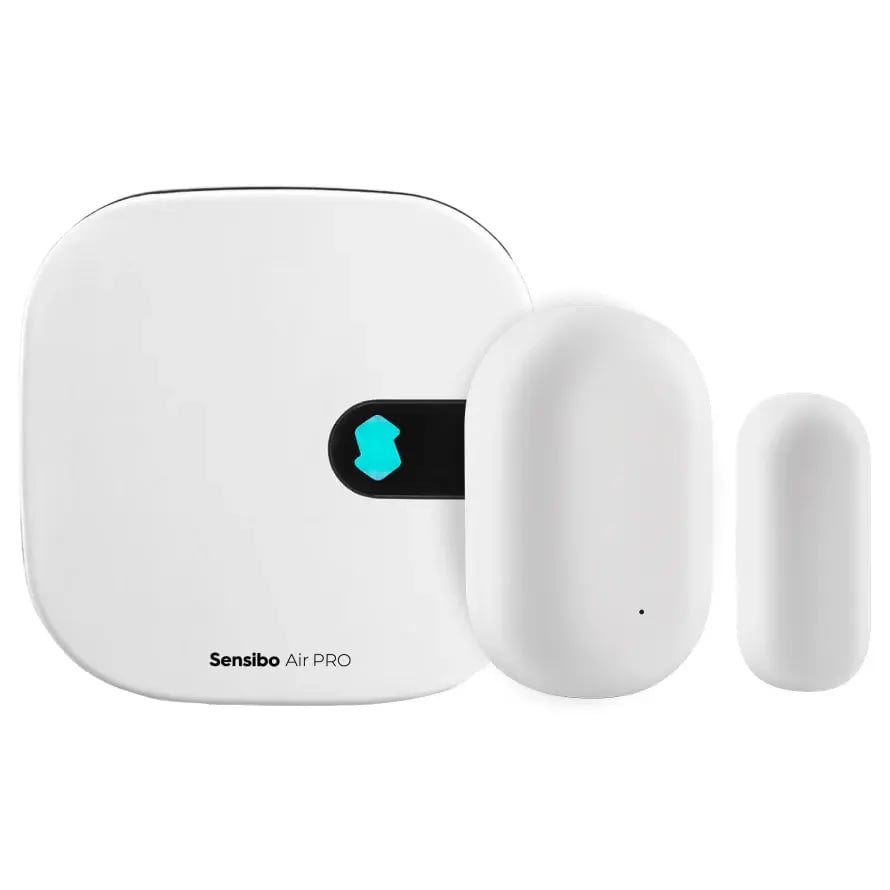
For districts tracking sustainability goals, the cumulative impact matters: Sensibo's network has documented 355 gigawatt-hours of energy savings and 111,011 tons of avoided CO2 emissions through 2024. The Sensibo Air Pro — the controller with integrated air quality sensors — was named a TIME Best Inventions honoree in 2023.



.jpg?height=200&name=photo_2024-08-23_13-37-19%20(1).jpg)